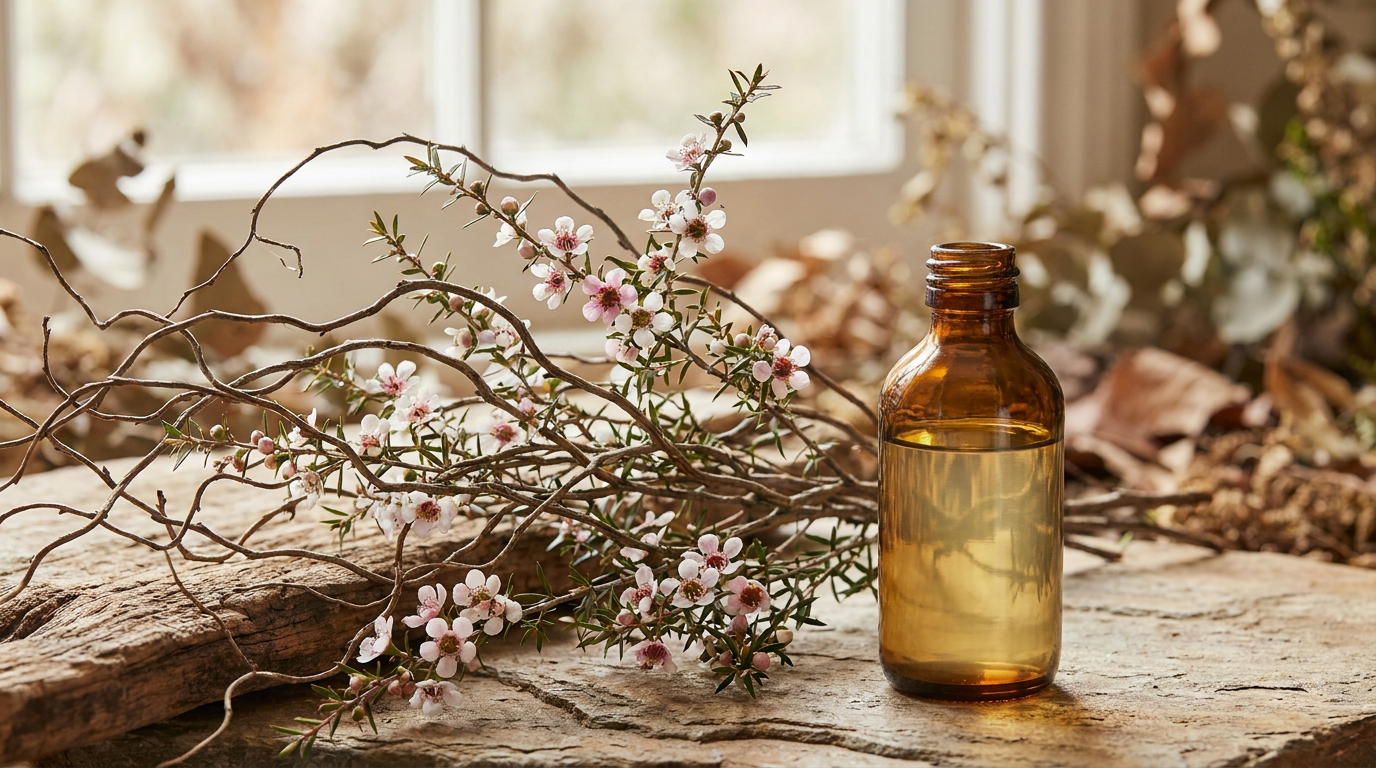
How to Make a Manuka Oil Linen and Room Spray, Step by Step
There is something grounding about walking into a room that smells like it has been cared for. In Aotearoa New Zealand, manuka has long been part of everyday life, and its essential oil carries a warm, earthy, slightly honeyed aroma that many people find calming in a home fragrance blend. A manuka oil room spray is one of the simplest DIY projects you can make with it: a handful of ingredients, a few minutes of mixing, and a bottle of fragrance you can mist over linens, curtains, or a quiet corner of a room. This guide walks through a manuka oil room spray recipe from start to finish, including the exact ratios, the tools you need, and the small mistakes that trip up most first-time makers.
Manuka Essential Oil
Our own Manuka Essential Oil, in sizes from 0.5 oz to bulk.
From $16.99
Shop Now →Why Make Your Own Manuka Linen Spray
Most bottled linen sprays on the shelf are alcohol, water, and a splash of synthetic fragrance. Making your own manuka oil linen spray DIY means you control exactly what goes into the bottle: the oil, the carrier, and nothing else. It is also a practical way to stretch a bottle of manuka essential oil across a use you will reach for often, since a well-mixed spray can last for weeks with proper storage. People who enjoy botanical home fragrance tend to like manuka because it sits apart from the more common lavender or eucalyptus blends. It has a woodsy, slightly resinous character that some describe as grounding rather than sweet.
This is a cosmetic and home fragrance project, not a health product. The goal is scent, atmosphere, and a small daily ritual, not a solution for any medical concern. If you have specific health questions about essential oils, a qualified healthcare provider is the right person to ask.
What You Will Need
The materials list for a manuka oil room spray recipe is short, and most of it can be found at a pharmacy, craft store, or online.
- Manuka essential oil (a small dropper bottle will make several batches)
- High-proof vodka, perfumer's alcohol, or witch hazel as a dispersant, so the oil blends into the water instead of floating on top
- Distilled or filtered water (tap water can introduce minerals that cloud the spray or clog the nozzle over time)
- A dark glass spray bottle, around 4 ounces (118 ml), amber or cobalt to help protect the oil from light
- A small funnel for pouring without spills
- Measuring spoons (a standard teaspoon and tablespoon set is enough)
- A label and marker to note the date and contents
- Optional: a second complementary oil such as cedarwood, lavender, or sweet orange, if you want to round out the aroma
A note on bottles: plastic spray bottles can degrade with repeated contact with concentrated essential oils, and the plastic can affect the scent over time. Glass is worth the small extra cost, especially for anything you plan to keep for more than a week or two.
Manuka Oil Room Spray Recipe: The Ratios
Essential oils are concentrated, so a little goes a long way. A commonly used starting ratio for a linen and room spray is:
- 2 tablespoons witch hazel or high-proof vodka
- 15 to 20 drops manuka essential oil
- 4 ounces (about 1/2 cup) distilled water
This lands the finished spray at roughly a 1 to 2 percent dilution, which is a reasonable range for a spray that will land on fabric and hang in the air of a room, rather than sit on skin. If you are new to DIY blending, start at the lower end of the drop count and adjust upward in future batches once you know how strong you like the scent.
Step-by-Step Instructions
Step 1: Clean and Dry Your Bottle
Wash the spray bottle and funnel with warm, soapy water, rinse thoroughly, and let them air dry completely. Any leftover moisture can affect how the ingredients combine and may shorten how long the spray keeps its scent.
Step 2: Add the Dispersant First
Pour the witch hazel or vodka into the bottle before adding the oil. This step matters more than it seems: essential oils do not dissolve in water on their own, and pouring the oil into plain water first tends to leave droplets floating on the surface that stick unevenly to fabric. Alcohol or witch hazel acts as a bridge that helps the oil disperse evenly through the water.
Step 3: Add the Manuka Essential Oil
Using the dropper, add your manuka oil directly into the dispersant, not into the water. Count the drops rather than eyeballing it, since consistency here is what makes a batch repeatable. If you are blending in a second oil like cedarwood or lavender, add it at this stage too, keeping the combined drop count within your target range.
Step 4: Swirl Before Adding Water
Gently swirl the bottle (without the spray top on yet) so the oil and dispersant mix together. This pre-blending step helps the oil disperse more evenly once the water goes in, rather than pooling at the surface.
Step 5: Top Up With Distilled Water
Use the funnel to add the distilled water, leaving a small amount of headspace at the top of the bottle. Filling it completely to the brim makes it harder to shake the contents properly.
Step 6: Secure the Sprayer and Shake
Screw the spray top on firmly and shake the bottle for 15 to 20 seconds. You should see the mixture turn slightly cloudy or swirl together rather than sitting in separate layers. This is normal. Because oil and water naturally want to separate again over time, every bottle of homemade manuka linen spray needs a shake immediately before each use.
Step 7: Patch Test Before Wide Use
Before spraying an entire room or a full set of linens, mist a small, hidden area first, such as the underside of a pillowcase corner or an inside seam of a curtain. Let it dry fully and check for any spotting, discoloration, or change in the fabric. Wait at least 24 hours before deciding the fabric is fine for regular use. This is especially important for silk, rayon, and other delicate or dyed fabrics, which are more prone to marking from any liquid, not just essential oil blends.
Step 8: Label and Date the Bottle
Write the contents and the date mixed directly on the bottle. A homemade manuka oil home fragrance spray is best used within four to six weeks, and a label makes it easy to track without guessing.
Step 9: Use With Distance and Restraint
Hold the bottle about 10 to 12 inches from the fabric or surface and mist lightly in a sweeping motion, rather than spraying directly at close range. For a room spray rather than a linen spray, aim upward into open air away from furniture, artwork, or electronics. Let linens air dry for a few minutes before making the bed or folding them away.
Tips for a Better Batch
- Keep it out of direct sun. Light and heat can shift the aroma of essential oils faster than you would expect. Store the finished bottle in a cupboard or drawer between uses.
- Batch small. A 4-ounce bottle is easier to use up within its ideal window than a large one that sits half-full for months.
- Layer scents thoughtfully. Manuka pairs well with warmer, woodsier notes like cedarwood or sandalwood, and also softens nicely against citrus oils like sweet orange. Add any second oil in small increments and test the scent on a cotton ball before committing a whole batch.
- Match the bottle to the sprayer. A fine-mist sprayer distributes more evenly across fabric than a stream-style nozzle, which can leave a concentrated wet spot.
- Write down what worked. If a particular ratio smells right to you, jot it down so future batches are consistent rather than a fresh guess each time.
Common Mistakes to Avoid
- Skipping the dispersant. Mixing oil directly into water without witch hazel or alcohol leads to an uneven spray where some mists carry almost no scent and others carry a concentrated drop of oil.
- Using tap water. Minerals in tap water can cloud the mixture and, over time, build up inside the sprayer mechanism. Distilled water is inexpensive and solves this from the start.
- Overloading the oil count. More drops does not mean a longer-lasting scent, and a heavily concentrated spray is more likely to leave marks on fabric or feel overwhelming in a small room. Stay within a moderate dilution and adjust gradually between batches.
- Forgetting to shake before each use. Because oil and water separate on standing, a bottle left untouched for a day will spray mostly water at first unless you give it a shake.
- Spraying too close. A direct, close-range spray tends to soak a single spot instead of distributing a light, even mist, and can increase the chance of spotting on delicate fabric.
- Skipping the patch test. This is the step people skip most often, and it is the one most likely to prevent a disappointing result on a favorite pillowcase or curtain.
What to Expect
A homemade manuka oil linen spray typically produces a light, warm, herbal aroma that fades gradually over a few hours rather than lingering all day at full strength. Many people report enjoying the scent as part of a bedtime wind-down routine, misting a pillowcase a few minutes before getting into bed, or freshening a living room before guests arrive. Because everyone's sense of smell and every home's ventilation is different, how strong or how long the scent lasts will vary from one space to another. Some research has looked at the aromatic compounds naturally present in manuka oil, and this is an evolving area of botanical study, but a DIY room spray is best approached as a fragrance and atmosphere project rather than anything more.
Storage and Shelf Life
Kept in a cool, dark place, a manuka oil linen spray blended with distilled water and witch hazel or vodka is generally good for four to six weeks. Signs it is time to mix a fresh batch include a change in scent, any cloudiness that does not clear after shaking, or a noticeably weaker aroma. Because the recipe does not include preservatives, it is meant to be made in small batches and used up rather than stockpiled.
Safety Notes
A few precautions are worth keeping in mind with any DIY essential oil project:
- Keep finished sprays and undiluted oil out of reach of children and pets.
- Ventilate the room after spraying, especially in small or closed spaces.
- Avoid spraying directly onto skin, eyes, or open flames, and keep the mist away from anything heat-sensitive.
- Always patch test on fabric before wide use, and stop use of any blend if you notice irritation on contact.
- If you are pregnant, nursing, or have specific sensitivities, a qualified healthcare provider is the best resource for guidance before introducing a new essential oil blend into your home.
Final Thoughts
A manuka oil room spray is a small project with a lot of room for personal touches. Once you have the base ratio down, it becomes easy to adjust the strength, blend in a second oil, or switch the carrier depending on what you have on hand. It is a simple way to bring a bit of Aotearoa's rare leaf into an everyday routine, one light mist at a time.