Manuka Oil in Cold Process Soap: A Soapmaker's Six-Batch Trial
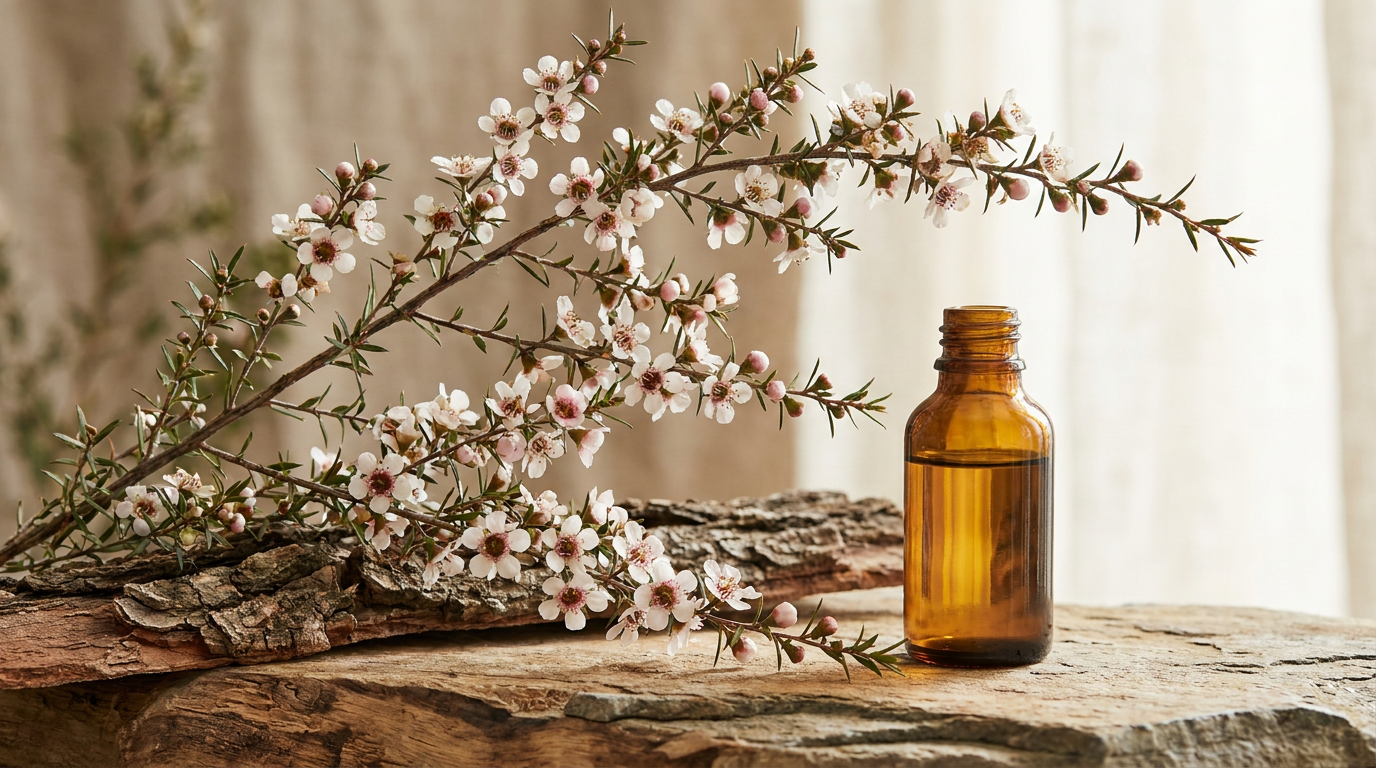
Manuka oil shows up on a lot of "interesting botanicals to try" lists for soapmakers, usually mentioned in the same breath as tea tree and kanuka. It has a reputation as an aromatic curiosity from Aotearoa New Zealand, distilled from the leaf and twig of Leptospermum scoparium, with a scent profile that reads as earthy, honeyed, and faintly medicinal in the aromatherapy sense of the word. But reputation and behavior in a lye-heavy, high-pH environment are two different things. A cold process bar isn't a diffuser. It's a chemical reaction, and essential oils don't always survive it the way a bottle label implies they will.
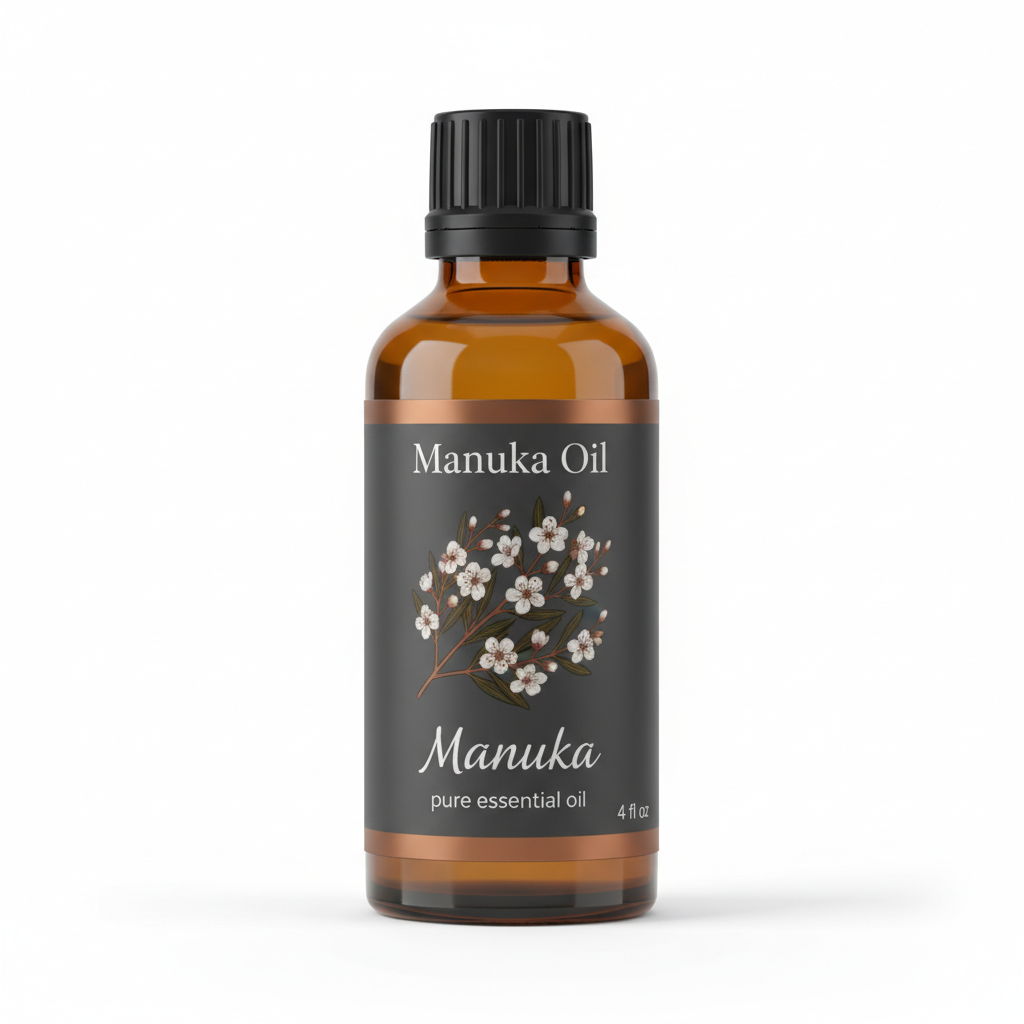
Manuka Essential Oil
Our own Manuka Essential Oil, in sizes from 0.5 oz to bulk.
From $16.99
Shop Now →This case study walks through six batches of manuka oil cold process soap made over several weeks, adjusting one variable at a time: usage rate, added-at-trace timing, superfat, and blend ratio against a fixative base note. The goal wasn't to produce a finished commercial recipe. It was to answer a narrower, more useful question for anyone weighing manuka oil in soap making: does the scent survive saponification, cure, and time on a shelf, and at what cost?
The Problem: Scent Throw Is the Real Variable
Anyone who has cured a batch of essential-oil soap knows the disappointment of unmolding a bar that smelled wonderful in the pot and smells like almost nothing four weeks later. Cold process soap is an unforgiving medium for aromatics. The saponification reaction generates heat, the mixture sits at a high pH for the first 24 to 48 hours, and then the bars spend three to six weeks losing moisture in open air. Lighter, more volatile fractions of an essential oil can evaporate off before the cure is even finished.
Manuka oil's chemistry (rich in sesquiterpenes and triketones) is heavier than, say, a citrus oil, which suggested it might hold up better than most. But sesquiterpene-heavy oils can also behave unpredictably in an alkaline base: some deepen and mellow, others go flat or shift character entirely. The only way to know was to run it through actual batches and track what happened at 1 week, 4 weeks, and 8 weeks post-cure.
Setting Up the Trial
All six batches used the same base recipe: a standard olive, coconut, and sustainable palm oil blend at 5% superfat, water discount at 33%, and a consistent 32-ounce batch size. Keeping the base constant meant any difference in outcome could reasonably be attributed to the manuka oil variable rather than the soap itself. Variables tested across the six batches:
- Batch 1: Manuka oil alone, added at light trace, 0.5 oz per pound of oils (roughly a 3% usage rate)
- Batch 2: Manuka oil alone, same rate, added at a much thinner trace (closer to emulsion)
- Batch 3: Manuka oil at a reduced 1.5% usage rate
- Batch 4: Manuka oil blended with patchouli at a 2:1 ratio as a fixative test
- Batch 5: Manuka oil blended with sweet orange at a 1:1 ratio, added at light trace
- Batch 6: Manuka oil at the original 3% rate, but stirred in by hand rather than stick blender, to see whether shear affected volatility
Each batch was poured into individual silicone loaf molds, unmolded at 24 hours, and cut into bars the following day. Bars were logged and smelled at set intervals by the same two people, using simple descriptive notes rather than a formal panel. This is a small, informal trial. It is not a controlled scientific study, and the observations below should be read as one soapmaker's field notes, not as generalizable data.
Observations Across the Six Batches
Trace Timing Mattered More Than Expected
Batch 1 (added at light trace) and Batch 2 (added closer to emulsion, essentially at the start of the pour) produced a noticeably different scent outcome. Batch 2, mixed in earlier and exposed to more time in the alkaline pot before the mixture set up, came out of the mold with a fainter aroma and lost more of it by the four-week mark. Batch 1 retained a more identifiable manuka character through the full cure window. The takeaway that emerged from this pairing: adding manuka oil at trace, closer to the point of pour, appears to preserve more of the original character than adding it earlier in the process. This lines up with general cold process guidance for volatile aromatics, and this trial's result was consistent with that pattern rather than contradicting it.
Usage Rate Had Diminishing Returns
Batch 3, at 1.5% usage, produced a scent that was pleasant on unmolding but had faded to barely perceptible by the four-week check. Batch 1, at 3%, held up considerably longer, still noticeable (if softened) at eight weeks. That suggests a usage-rate floor somewhere between 1.5% and 3% for manuka oil specifically if the goal is a scent that survives a full cure and some shelf time. It's worth noting cost scales directly with usage rate, and manuka oil is priced at a premium compared to many essential oils used in soap making, so this is a real tradeoff rather than a "just use more" answer.
Blending Changed the Outcome Meaningfully
The two blended batches told the most interesting story. Batch 4, paired with patchouli, held its scent noticeably longer than any of the manuka-only bars, still clearly present at the eight-week mark. Patchouli is a known fixative in perfumery, prized for its low volatility and its tendency to anchor lighter notes, so this result tracks with what would be predicted going in. Batch 5, paired with sweet orange, went the opposite direction: the orange note faded almost entirely within the first two weeks (unsurprising, citrus oils are notoriously fugitive in cold process), leaving behind a manuka character that read as more muted and slightly different than the manuka-only bars. Blending with a heavier, more grounding botanical looks like a promising direction for anyone chasing a manuka essential oil soap recipe with staying power, worth exploring further at a larger sample size before treating it as settled.
Field note, week 4: "Batch 4 still smells like something. Batch 5 smells like soap with a memory of orange in it. Batch 3 smells like a bar of soap."
Mixing Method Was a Non-Factor
Batch 6, mixed by hand instead of stick blender, showed no meaningful scent difference from Batch 1 at any checkpoint. If shear-related heat or oxygen exposure was a concern, this trial didn't turn up evidence of it. This is a small comfort for anyone without commercial-grade equipment: the mixing tool itself doesn't appear to be where manuka oil soap scent throw is won or lost. Trace timing and usage rate look like the bigger levers.
Color, Texture, and Trace Behavior
A few side notes worth recording for anyone planning their own trial. Manuka oil's natural color (a pale straw to light amber, depending on the batch and supplier) did not noticeably tint any of the six batches; the base recipe's own saponification color dominated. None of the batches accelerated trace in a way that caused problems, though Batch 1's light-trace addition did require working a little faster than a fragrance-oil batch typically demands, simply because there was less working time before the mixture set up further. No ricing, seizing, or separation was observed in any batch, which is a reasonably good sign for manuka oil's general compatibility with a standard cold process base, at least at the usage rates tested here.
What This Trial Does and Doesn't Show
It's worth being direct about the limits of six batches made by one person over a few weeks. This is not a study. There was no third-party sensory panel, no gas chromatography to verify what compounds actually survived the cure, and no attempt to control for ambient humidity or storage conditions between batches. The descriptive notes above reflect what two people smelled and wrote down, which is inherently subjective. Anyone using this as a starting point for their own manuka oil cold process soap recipe should treat these observations as a hypothesis to test in their own workshop, not a guarantee of results, since supplier variation, base recipe differences, water discount, and even regional humidity during cure can all shift the outcome.
Key Learnings
- Adding manuka oil at trace, rather than earlier in the mixing process, appeared to preserve more scent through cure in this trial.
- A usage rate below roughly 2% produced a scent that faded quickly; higher rates held on longer but raised the cost per batch considerably.
- Blending with a heavier fixative note (patchouli, in this case) looked more promising for longevity than pairing with a lighter, more volatile note like citrus.
- Hand mixing versus stick blending didn't show a meaningful difference in this small trial.
- No adverse reactions in the soap batter itself (no seizing, ricing, or separation) were observed at any tested usage rate.
Safety Notes for Anyone Trying This
Essential oils, including manuka oil, are concentrated botanical extracts and should always be measured by weight and used within recognized cosmetic usage guidelines for the finished product category, whether that's a wash-off soap bar or a leave-on product. A finished cold process bar carries the essential oil at a small fraction of its original concentration once diluted through the full batch, but it's still good practice to patch test a cured bar on a small area of skin before regular use, especially for anyone with sensitive skin or known sensitivities to botanical fragrance ingredients. If you are formulating for sale rather than personal use, check your usage rate against IFRA guidance for the relevant product category, and label ingredients clearly so buyers with sensitivities can make an informed choice. As with any new botanical ingredient in a skincare project, a qualified healthcare provider or dermatologist is the right resource for questions about individual skin sensitivities, not a soap-making forum or a blog post.
Where This Leaves the Recipe
If a sixth trial were run tomorrow, it would probably combine what worked best across these six: manuka oil added at trace, at something close to a 2.5 to 3% usage rate, blended with a fixative note rather than used alone. That's not a finished, tested-a-hundred-times recipe. It's a reasonable next hypothesis, built from six data points and some careful note-taking. For soapmakers weighing whether manuka oil earns a place in the botanical lineup, the honest answer from this trial is: it can hold a scent through a full cure, but it takes deliberate technique to get there, and it's not a "dump it in and hope" kind of oil. Anyone starting their own trial would do well to log trace timing, usage rate, and cure-week checkpoints from the very first batch. That's the data that actually answers the question.