What Blends Well with Manuka Oil: A Complete Pairing Guide
Manuka essential oil has a scent profile unlike almost anything else in the aromatics world. Earthy, slightly sweet, softly medicinal in character without being sharp, it sits somewhere between the green brightness of tea tree and the warm depth of frankincense. That unusual personality is part of what makes essential oil pairing with manuka so rewarding. Once you understand how its aromatic notes behave, you can build blends that are genuinely beautiful rather than just functional.
This guide walks through the best companion oils for manuka, the practical steps for building a blend from scratch, and the common missteps that can push a promising formula in the wrong direction. Whether you are blending for a facial serum, a diffuser ritual, or a body oil, the principles are the same.
Understanding Manuka Oil's Aromatic Profile First
Before you reach for any companion oil, it helps to sit with manuka on its own. Place a single drop on a scent strip or the back of your wrist. Notice the layers as it dries down.
- Top note: A brief, almost citrusy green lift that fades quickly.
- Heart note: Warm, honeyed earthiness with a faint woody quality.
- Base note: A soft, slightly resinous drydown that lingers pleasantly.
This structure means manuka essential oil blends well with ingredients from several fragrance families: citrus, floral, woody, and resinous. The challenge is proportion. Because manuka has a distinctive character, it can easily dominate a blend or, conversely, disappear if you use too little against a strong dominant oil like peppermint.
A useful principle: in most blends, manuka works best as a heart note anchor. Let citrus or light florals open the blend, allow manuka to carry the middle, and choose a soft resin or wood to ground the base.
The Best Oils That Pair Well with Manuka
Citrus Oils
Lemon, sweet orange, bergamot, and grapefruit all pair beautifully with manuka. Their brightness lifts its earthiness without competing with the heart notes. Bergamot is a particularly elegant partner: its slightly floral, tea-like quality echoes manuka's honeyed side.
Floral Oils
Lavender is the classic companion for most essential oils, and manuka is no exception. The pairing softens manuka's intensity and creates a round, calming scent well suited to evening diffuser blends or a relaxing body oil. Geranium adds a rosy, green complexity that plays nicely with manuka's botanical character. Rose absolute, used sparingly, brings a luxurious depth to skin-focused formulas.
Woody and Earthy Oils
Cedarwood, sandalwood, and frankincense share manuka's resinous, grounding quality, which makes them natural allies rather than competitors. Vetiver is worth experimenting with if you enjoy earthy, smoky compositions. Patchouli can work, but use it at low percentages because its sillage (the scent trail it leaves) is powerful enough to overwhelm everything else.
Herbaceous Oils
Rosemary and clary sage add a clean, herbal brightness that balances manuka's sweetness. These combinations work especially well in hair care formulas. You can read more about incorporating manuka into those kinds of routines in our guide on how to use manuka oil in your skin and hair care routine.
Spice Oils
Black pepper and cardamom bring warmth and a gentle bite that complements manuka's depth. These are exciting additions to winter body oil blends. For a full look at cold-season formulations, see our article on winter skin care with manuka oil.
Materials You Will Need
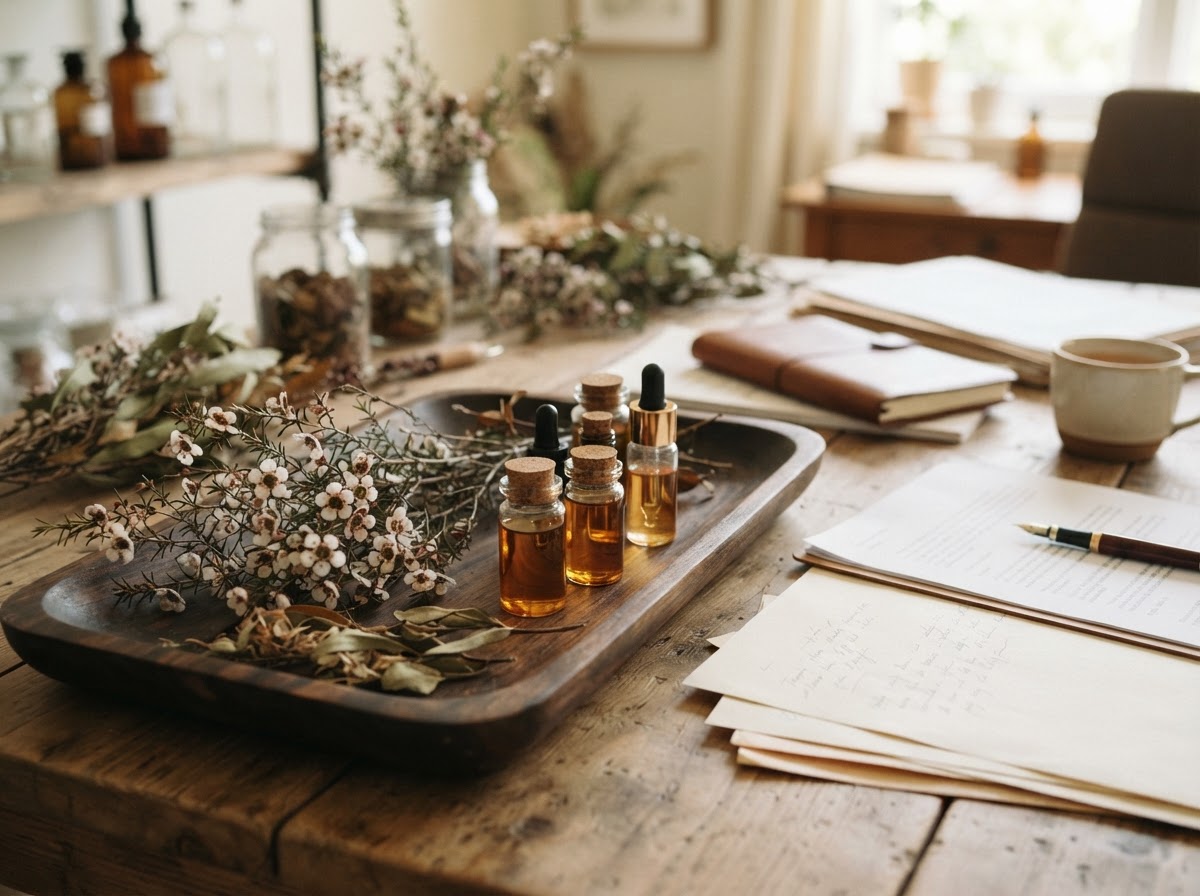
Before starting any blend, gather everything in advance. Reaching for bottles mid-process often leads to measurement errors.
- Manuka essential oil (New Zealand sourced, wildcrafted or certified where possible)
- Your chosen companion essential oils (see pairing suggestions above)
- A carrier oil appropriate to your application: jojoba, rosehip, squalane, or fractionated coconut oil for skin; sweet almond or argan oil for hair
- Small amber or dark glass dropper bottles (5 ml or 10 ml for testing)
- A digital scale or calibrated dropper pipettes
- Scent testing strips (also called blotter strips)
- A notebook and pen for recording formulas
- Labels with the date and ingredient list
Safety note: Essential oils are highly concentrated botanical extracts. They should always be diluted in a carrier oil before any skin contact. Never apply undiluted essential oil directly to skin. If you are pregnant, nursing, or have a known skin sensitivity, consult a qualified healthcare provider before use.
Step-by-Step: How to Build a Manuka Oil Blend
Step 1: Define the Purpose of Your Blend
Your first decision shapes everything that follows. A diffuser blend for a calm evening atmosphere has very different requirements from a facial serum or a body oil for dry winter skin. Write down one clear sentence describing what you want the blend to do and how you want it to smell. This prevents scope creep once you are working with open bottles.
Step 2: Choose Your Companion Oils (Limit to Three or Four)
Restraint is the most underrated skill in blending. New blenders often add too many oils hoping to create complexity, but the result is usually a muddy, undifferentiated scent. Start with two or three companion oils. You can always add a fourth on a second iteration once you have evaluated the base formula.
For a beginner-friendly starting point, try this simple structure:
- One citrus oil (brightness, top note)
- Manuka (anchor, heart note)
- One wood or resin oil (depth, base note)
Step 3: Test on Scent Strips Before Committing to a Batch
Place a single drop of each oil on a separate scent strip. Label each strip. Hold them together and wave them gently in front of your nose. Notice whether the scent combination feels coherent. If something jars, swap it out before you measure anything into a bottle. This saves both oil and frustration.
Step 4: Calculate Your Dilution Ratio
Dilution ratios depend entirely on the intended application. As a general guide:
| Application | Suggested Dilution | Drops of Essential Oil per 10 ml Carrier |
|---|---|---|
| Face oil or serum | 0.5% to 1% | 1 to 2 drops total |
| Body oil | 2% to 3% | 4 to 6 drops total |
| Scalp or hair oil | 1% to 2% | 2 to 4 drops total |
| Diffuser blend (no carrier needed) | N/A | 4 to 8 drops total in diffuser well |
These are starting points, not fixed rules. Adjust based on your skin's response after a patch test.
Step 5: Measure Manuka First, Then Add Companions
Add manuka to your bottle before the companion oils. This lets you smell the base note first and adjust the surrounding oils to flatter it, rather than dropping manuka into an already established scent and hoping it fits.
As a proportion guide within your total essential oil count, manuka often works well at 30% to 50% of the blend. For example, in a 6-drop body oil blend, 2 to 3 drops of manuka with 1 to 2 drops each of bergamot and cedarwood is a good starting point.
Step 6: Add the Carrier Oil Last
Once all essential oil drops are in the bottle, add your carrier. Cap the bottle and roll it gently between your palms for 20 to 30 seconds. Avoid shaking vigorously, which can introduce air bubbles and oxidize the oils faster.
Step 7: Patch Test Before Full Use
Apply a small amount of the diluted blend to the inside of your elbow or behind your ear. Wait 24 hours. If you notice any redness, itching, or discomfort, discontinue use and consult a healthcare provider. This step is non-negotiable, especially for facial formulas.
Step 8: Allow the Blend to Mature
Essential oil blends change as the molecules interact and settle. Store your test bottle in a cool, dark place and smell it again after 24 to 48 hours. You may find that an oil you thought was too sharp has softened, or that a note you expected to emerge is still too quiet. Adjust the next iteration accordingly.
Step 9: Record Everything
Write down the exact number of drops of each oil, the carrier oil used, the total volume, and the date. Include your sensory notes: what it smells like fresh, and what it smells like after 48 hours. This information is invaluable when you want to replicate a successful batch or troubleshoot one that missed the mark.
Three Starter Blend Formulas to Try

Blend 1: Calm Evening Diffuser Blend
A softly grounding blend suited to winding down before sleep. Add to your diffuser well and run for 30 to 60 minutes.
- 3 drops manuka essential oil
- 3 drops lavender
- 2 drops bergamot
Blend 2: Woodsy Body Oil
A 2% dilution in 10 ml jojoba oil. Warm and earthy, suitable for a post-shower body ritual.
- 2 drops manuka essential oil
- 1 drop cedarwood
- 1 drop black pepper
- 10 ml jojoba oil
Blend 3: Botanical Facial Serum Base
A 1% dilution in 10 ml rosehip oil. Delicate and skin-compatible. For more on working manuka into your full skin care routine, the article on manuka oil benefits for skin covers the broader context of how this botanical is used cosmetically.
- 1 drop manuka essential oil
- 1 drop geranium
- 10 ml rosehip oil
Patch test reminder: Always perform a patch test 24 hours before applying any new blend to your face or a large area of skin. Consult a qualified healthcare provider if you have known sensitivities or are using prescription skincare products.
Common Mistakes to Avoid
Using Too Many Oils at Once
More ingredients rarely mean a better blend. They usually mean a confusing one. Stick to three or four oils while you are learning how manuka behaves in combination.
Skipping the Scent Strip Test
Smelling oils in the bottle tells you very little about how they will interact in combination. Always test on strips first.
Overdoing Patchouli or Ylang-Ylang
Both of these oils are intense. A single extra drop can take a blend from interesting to overwhelming. When using either alongside manuka, start with one drop and evaluate before adding more.
Using Too High a Dilution for Facial Application
Facial skin is more sensitive than body skin. Keep essential oil concentrations at or below 1% for face-contact products. When in doubt, go lower.
Not Labeling Your Bottles
It sounds minor, but unlabeled bottles are a genuine hazard. You may not remember which blend is which, and without a date, you have no way to know whether an oil has oxidized. Label everything immediately after you fill the bottle.
Expecting Instant Results
A blend you make today may smell noticeably different in two days. Some blends need 48 to 72 hours to harmonize. Evaluate after resting, not immediately after mixing.
A Note on Sourcing Quality Manuka Oil
The pairing results you get depend in part on the quality of the manuka oil you start with. New Zealand-sourced manuka oil, particularly from wild-harvested Leptospermum scoparium, tends to have a more complex aromatic profile than lower-grade alternatives. Look for a supplier who provides botanical origin information, harvest region, and batch-specific testing data. A diluted or adulterated oil will behave differently in a blend, and the results will be harder to replicate or evaluate.
Quality sourcing matters for the scent experience, for how well the oil integrates with companions, and for the integrity of anything you apply to your skin. Start with the best raw material you can access, and your blending process becomes considerably more straightforward from there.
Moving Forward with Your Manuka Blends
Blending is a practice, not a one-time formula. Keep notes. Revisit blends after they have rested. Adjust one variable at a time so you can track what changed and why. Manuka essential oil rewards patience: the more you work with it, the more clearly you will understand how it moves within a composition and where it genuinely shines.
The pairings covered here, citrus for lift, lavender for softness, cedarwood for depth, are starting points. Your own preferences, and the specific batch of manuka oil you are working with, will guide you toward combinations that are distinctly your own.