Manuka Oil for Ringworm? Location Decides the Plan
A round, scaly, slightly raised patch that seems to be spreading outward is one of the most recognisable rashes there is, and it is also one of the most misnamed. Ringworm is a fungal skin infection, not a worm at all. Because it is so common, plenty of people wonder whether an essential oil from the cupboard might help, so we want to give you the useful answer first: where the rash is on the body decides almost everything.
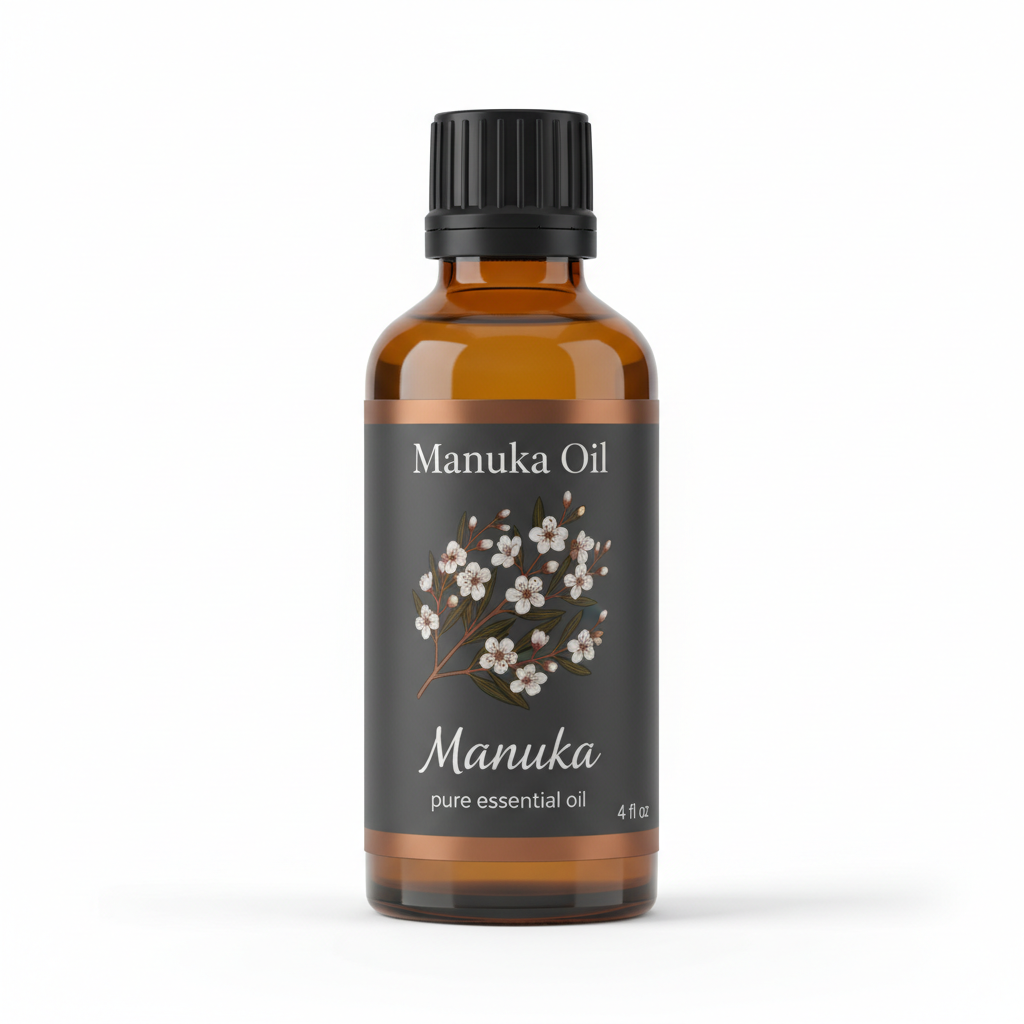
Manuka Essential Oil
Our own Manuka Essential Oil, in sizes from 0.5 oz to bulk.
From $18.99
Shop Now →The location sets the plan
The CDC's guidance on treating ringworm is organised by body site, and it is a handy way to see why a one-size answer does not exist. For ringworm on the body, including athlete's foot and jock itch, the usual route is a non-prescription antifungal cream, ointment, lotion or powder, applied for 2 to 4 weeks and continued even once the skin starts to look better. For the scalp, the CDC says treatment is usually a prescription antifungal taken by mouth for 1 to 3 months, and that creams, lotions and powders do not work there. For nails, it points to a prescription medicine by mouth as usually the best option, with treatment that can run from several months to a year.
That last point is the one most worth remembering. A scalp or nail infection is not something to experiment on at home, because a month spent on the wrong thing is a month added in front of a course that is already long. A pharmacist can help with an ordinary patch on the body, and a doctor or other healthcare provider is the right call for the scalp, for nails, for a rash that keeps spreading or for anyone with a weakened immune system.
If you are anxious about a rash, a photo helps. Take one in good light today and another in a few days, with a coin or ruler beside it for scale. When you see a pharmacist or doctor, the pictures show them how it changed, and you will not have to rely on memory.
One surprising rule: skip the steroid cream
If you have an itchy, red, ring-shaped patch, a leftover tube of hydrocortisone feels like a natural first move. The CDC specifically says not to use steroid creams or ointments on ringworm or on a rash that might be ringworm. They can make the infection worse, and they can change how the rash looks, which makes it harder for a clinician to identify later. The sensible habit is the same for any product: get the rash looked at first, then choose.
Where essential oils fit in the picture
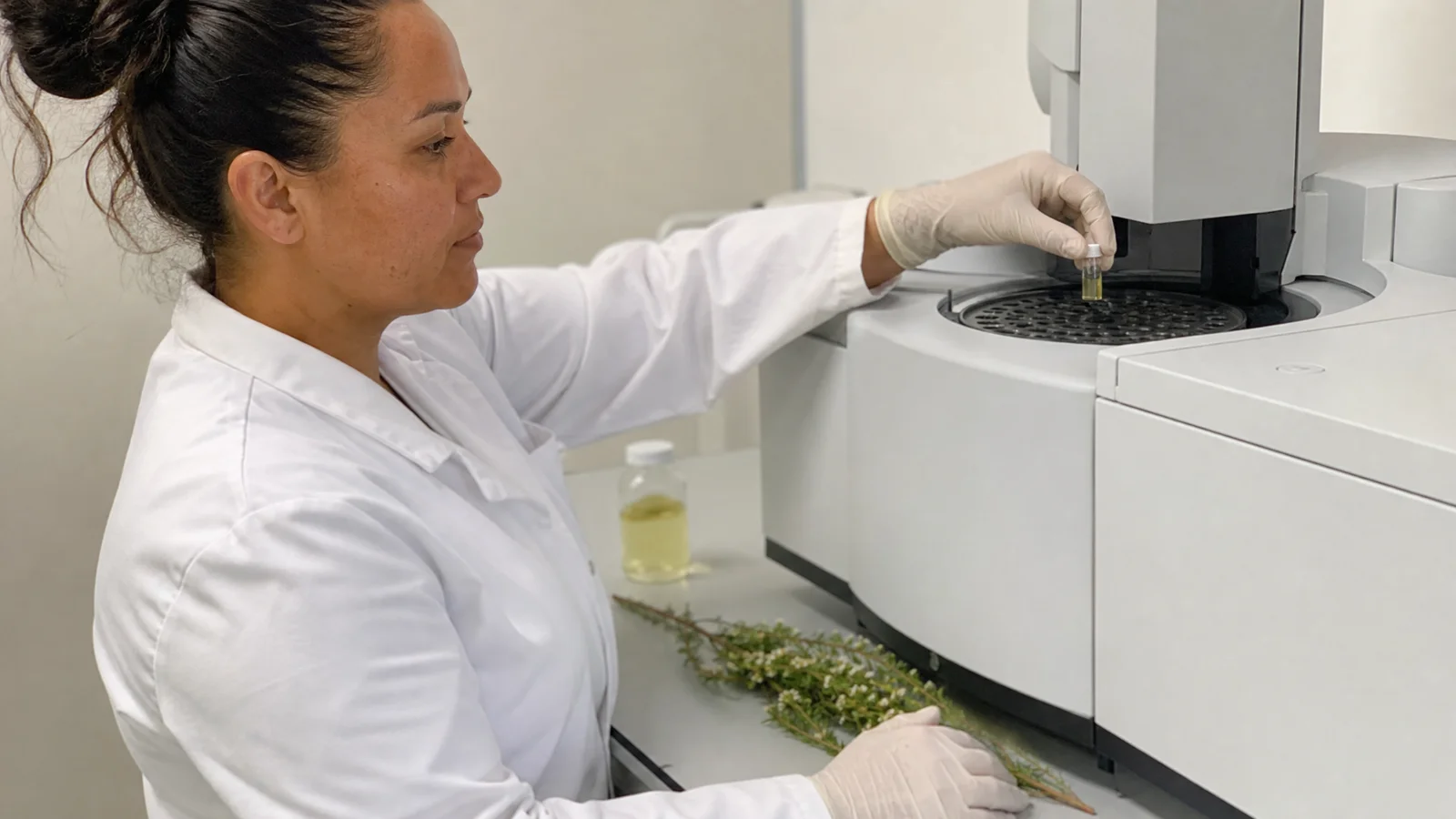
Researchers have looked at essential oils in the lab against the fungi that cause ringworm. One large screen put 65 single oils and 21 blends on agar plates seeded with clinical samples of Microsporum and Trichophyton, and cassia, cilantro, cinnamon, thyme and oregano were the standouts, holding every strain at bay for 21 days after a single application. Manuka was not among them. What matters more than which oil won is the setting: a disk-diffusion test in a closed dish. Skin has a barrier, sweat, oils of its own and, on the scalp, hair follicles, and none of which were in the dish. A dish result is a clue for researchers; reasoning from the setup, it cannot tell us what a bottle will do on a person.
For manuka itself, the 2020 review of the oil's literature concludes that clinical evidence in people is still limited. That is a reason for patience, and it is why we leave the topic to people who can examine the rash.
Keeping an infection from spreading
Practical habits matter as much as products. Wash your hands after touching the patch, keep your own towel and do not share it, and change clothes and bedding that touched the area. Dry the skin well after bathing, since fungi like damp. They are ordinary, low-key habits, and they cost nothing.
What we do sell, and what we do not
We sell one product, a manuka essential oil that you dilute in a carrier oil for scent and cosmetic use, with our recommendation of 0.5% to 2% and a patch test first. It is an aroma and craft ingredient, and we make no claim that it treats, clears or prevents any skin infection. The FDA explains the reason for that line: what a product is intended to do, as shown by its labelling and the claims around it, decides whether it counts as a cosmetic or a drug. The antifungal creams that treat ringworm come from a pharmacy, and for pets, a veterinarian is the person to ask, since animals can pass ringworm along and some essential oils are hazardous to them.
If your interest is the foot side of the story, our posts on athlete's foot and feet and nails keep the same approach, and the reactions guide covers dilution and patch testing for the oil's everyday cosmetic use.
Pets and the household
If a pet has patchy fur or scaly skin, or the rash appeared after contact with an animal, a vet visit is part of the plan, because animals can pass ringworm along. Keep any scented oil well away from them in the meantime.
A ring-shaped patch deserves a quick look from someone qualified; once you know what it is, everything else gets easier.
Manuka Essential Oil
Manuka Essential Oil from our own shop, in sizes from 0.5 oz to bulk.
From $18.99
Shop Now →Sources & Further Reading
- CDC, Treatment of Ringworm
- FDA, Is It a Cosmetic, a Drug, or Both? (Or Is It Soap?)
- Parrish et al., Activity of Various Essential Oils Against Clinical Dermatophytes of Microsporum and Trichophyton (Frontiers in Cellular and Infection Microbiology, 2020)
- Mānuka Oil-A Review of Antimicrobial and Other Medicinal Properties (Pharmaceuticals, 2020)