Manuka Oil for Athlete's Foot? What the Evidence Shows
Athlete's foot is, at heart, a moisture story. The fungus behind it loves a warm, damp, closed-in space, which is exactly what a sweaty sock inside a plastic-lined shoe provides. That is why the most useful advice has very little to do with bottles and a lot to do with towels, socks and shoes.
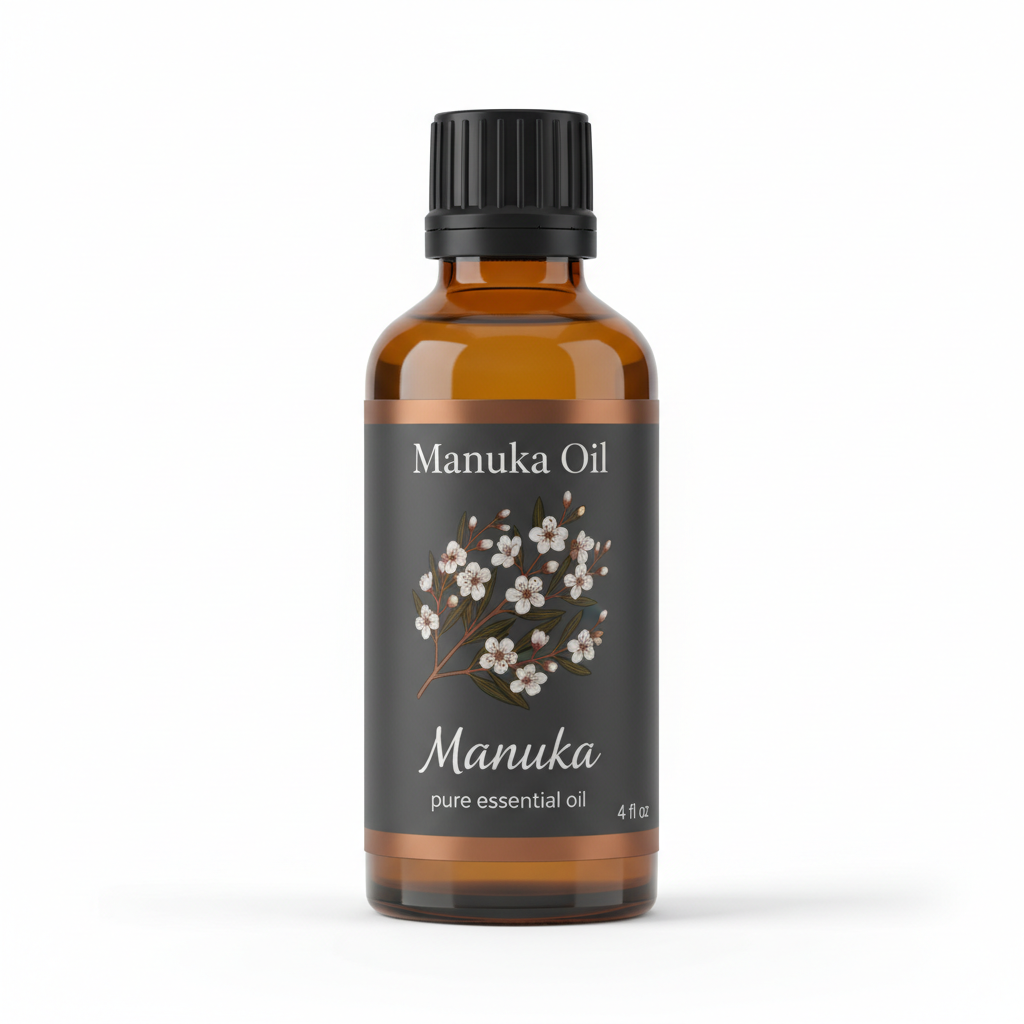
Manuka Essential Oil
Our own Manuka Essential Oil, in sizes from 0.5 oz to bulk.
From $18.99
Shop Now →What the health services lead with
The NHS describes athlete's foot as itchy white patches between the toes, sometimes with sore, flaky or cracked skin, and says a pharmacist can supply antifungal creams, sprays or powders. They usually take a few weeks, and you may need to try more than one (NHS). MedlinePlus names the active ingredients to look for on the packet: miconazole, clotrimazole, terbinafine or tolnaftate. It suggests carrying on for one to two weeks after the skin looks clear, and seeing a provider if two to four weeks of self-care have not helped (MedlinePlus).
Both pages put equal weight on habits. Dab between the toes dry rather than rubbing, keep a separate towel for the feet, wear clean cotton socks every day, wear flip-flops in changing rooms, and do not wear the same shoes more than two or three days running. MedlinePlus adds breathable leather over plastic-lined shoes and alternating pairs so each one dries out fully. It is humble advice, and it does most of the work.
When a pharmacy shelf is not the right stop
The NHS asks you to see a GP if pharmacy treatments have not worked, if you are in a lot of pain, if the foot or leg is hot, red and painful, if the infection has spread to your hands or elsewhere, or if you have diabetes or a weakened immune system. Peeling feet are not always fungus, either, so a persistent rash deserves a proper look.
Making the dry-feet habits stick
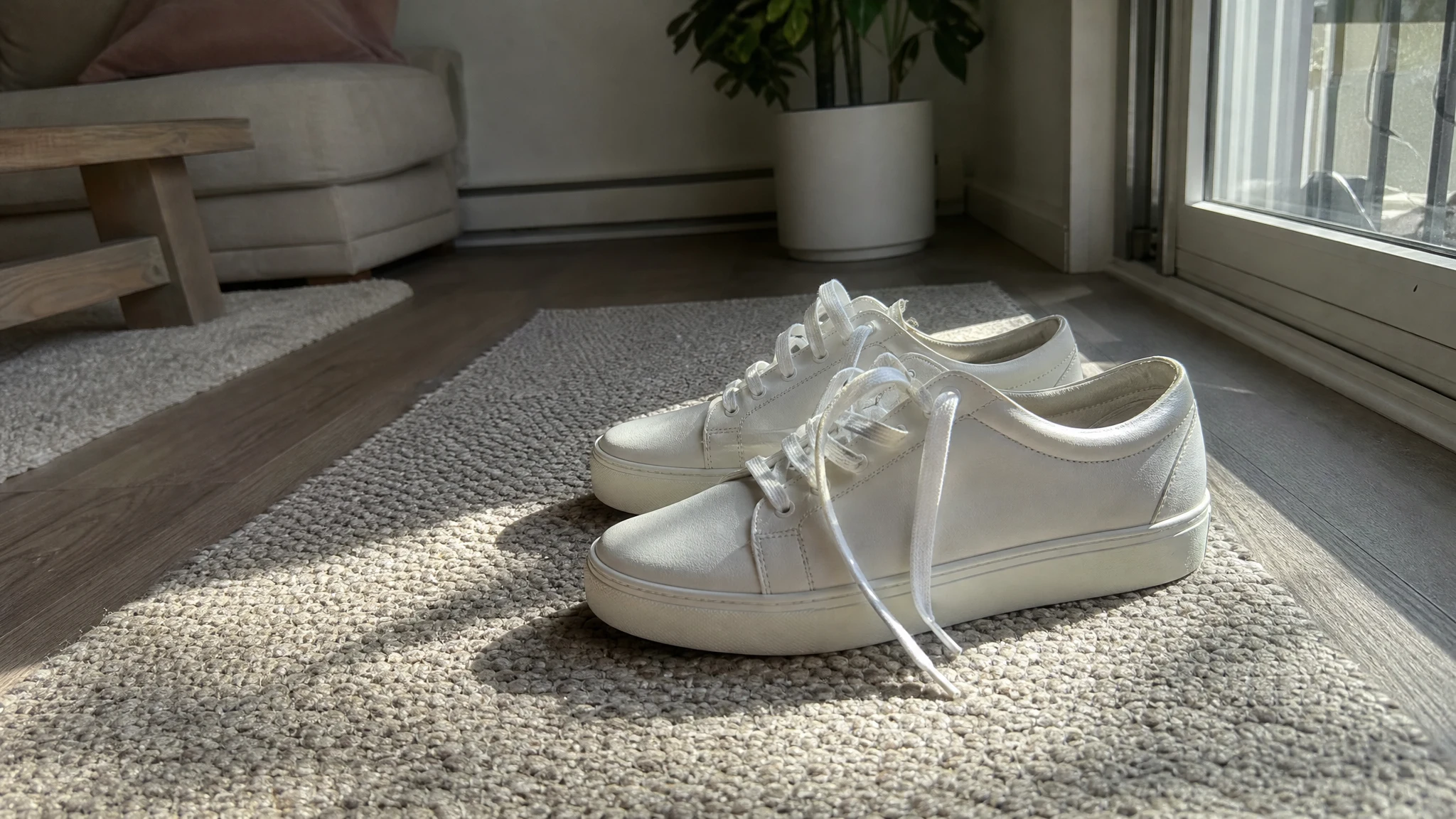
Habits are easier to keep when they are set up in advance. Put a spare towel on a hook near the bath, labelled for feet only, and keep clean socks in the drawer closest to the shoes. Stand on a mat, not bare tile, while you dry, and take your time between the toes, because that is the spot that stays damp. Leave shoes open by a door overnight, with the tongue pulled forward and the insoles lifted out if they come out, so air can get in.
After a workout or a long day, take shoes and socks off as soon as you can instead of sitting in them. It sounds almost too simple, and it is the part people skip.
What a good trial record looks like
To see why the pharmacy products are the starting point, look at the Cochrane review of topical treatments for foot fungal infections. It pooled 67 trials. For skin infections, treatment failure with allylamines (the family that includes terbinafine) was about a third as likely as with placebo, and azoles came out similarly, at 0.33 and 0.30 on the review's risk-ratio scale (Crawford and Hollis, 2007). That is the yardstick any essential oil has to be held against.
The oil people usually mean is tea tree
Tea tree is a different plant from manuka, but it is the essential oil with athlete's foot trials behind it, and they make an instructive pair. In a 1992 trial, 104 people used a 10% tea tree oil cream, a 1% tolnaftate cream or a placebo cream. Symptoms eased more with the oil and with tolnaftate than with placebo, but culture-confirmed clearance was 85% with tolnaftate, 30% with tea tree oil and 21% with placebo, and the oil was not statistically different from placebo on that measure (Tong and colleagues, 1992). A 2002 trial of 158 people used 25% and 50% tea tree solutions twice a day for four weeks. Mycological cure was 64% with the 50% solution against 31% with placebo, and four people developed moderate to severe dermatitis that settled once they stopped (Satchell and colleagues, 2002).
Look at the strengths: 10%, 25% and 50%. We recommend diluting manuka oil to 0.5% to 2% in a carrier, so those trial concentrations are anywhere from five to a hundred times what we would ever suggest. Whatever tea tree showed at those levels cannot be borrowed for manuka at ours, and we would not go there.
Where manuka oil fits
Manuka oil has an impressive laboratory literature, and a review of it concludes that clinical evidence in people is still limited (Mathew and colleagues, 2020). For us it is an aroma and cosmetic ingredient with an earthy, honeyed scent, so we leave athlete's foot to pharmacists and podiatrists. If you enjoy the oil on healthy, intact skin elsewhere, the usual rules apply: dilute to 0.5% to 2% in a carrier, patch test first, keep it away from eyes, children and pets, and never take it internally. Cracked or peeling skin between the toes is a good place to leave scent out entirely.
Our safety basics cover the patch test step by step, and the broader foot picture is in manuka oil for feet and nails. If shoe smell is your actual complaint, foot odor is the better read, and toenail fungus has its own page.
If you just like the scent
There is nothing wrong with enjoying manuka oil's earthy, honeyed aroma in other parts of your routine, such as a diffuser blend or a diluted body oil on healthy skin. Just keep the two jobs apart in your mind: scent is one thing, and treating a foot problem is another, and the second belongs with a pharmacist or podiatrist.
Dry socks, a cotton towel of their own and a rotation of shoes will take you further than any bottle, and the scent can wait until your feet are happy.
Manuka Essential Oil
Manuka Essential Oil from our own shop, in sizes from 0.5 oz to bulk.
From $18.99
Shop Now →Sources & Further Reading
- NHS, "Athlete's foot - NHS"
- MedlinePlus, "Athlete's foot: MedlinePlus Medical Encyclopedia"
- Crawford F, Hollis S, 2007, "Topical treatments for fungal infections of the skin and nails of the foot"
- Tong MM, Altman PM, Barnetson RS, 1992, "Tea tree oil in the treatment of tinea pedis"
- Satchell AC and colleagues, 2002, "Treatment of interdigital tinea pedis with 25% and 50% tea tree oil solution: a randomized, placebo-controlled, blinded study"
- Mathew C and colleagues, 2020, "Mānuka Oil - A Review of Antimicrobial and Other Medicinal Properties"