Manuka History: From Māori Plant Use to Global Name
Manuka is a shrub you could walk past a hundred times on a New Zealand hillside and never think twice about, yet it has been a roof, a broom, a comb, a bed and a medicine chest, and today it is the source of an oil people ask about all over the world. Its story is worth telling carefully, because the record is richer and more specific than the usual one-line version.
Manuka Essential Oil
Our own Manuka Essential Oil, in sizes from 0.5 oz to bulk.
From $18.99
Shop Now →The plant itself
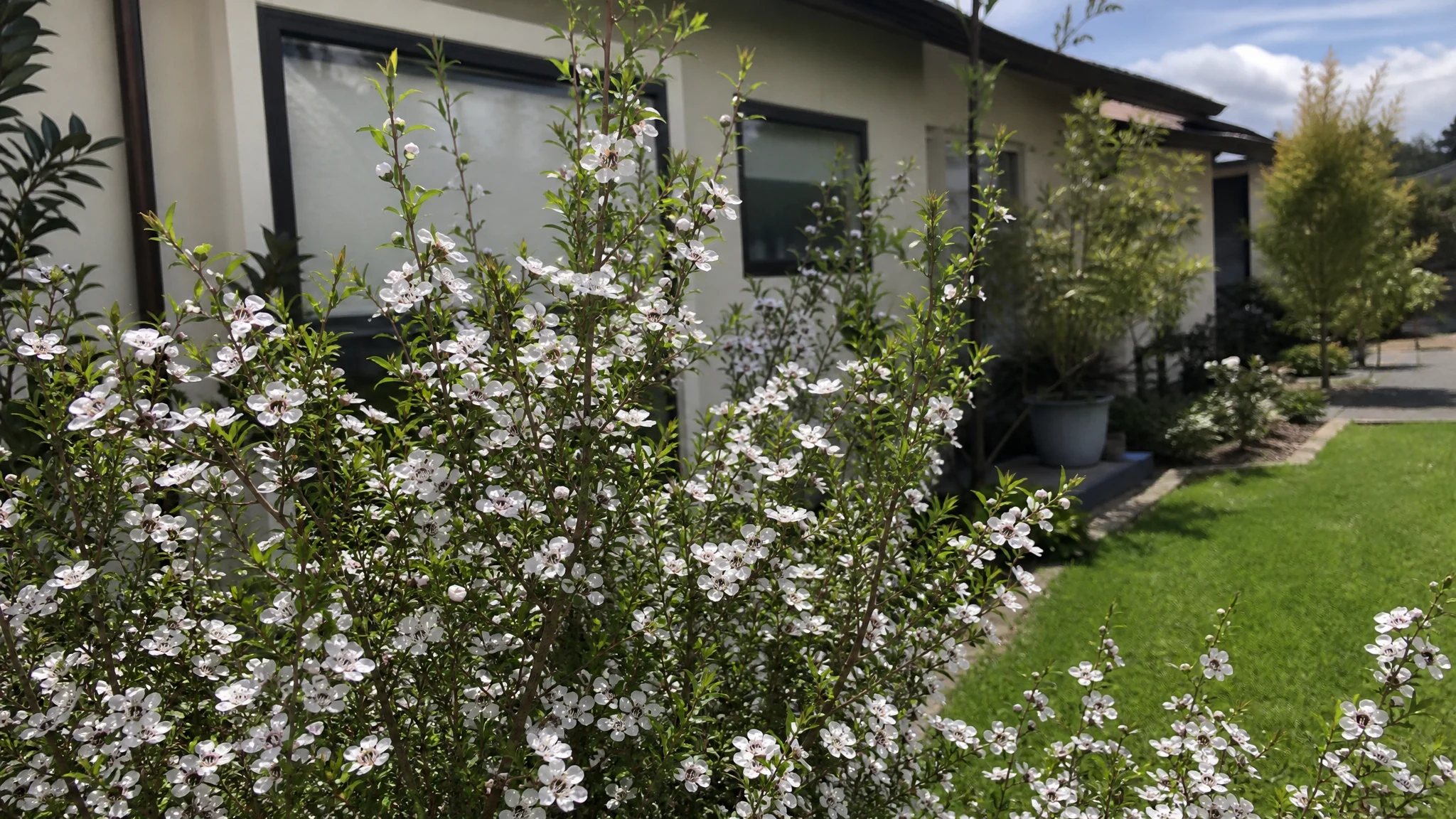
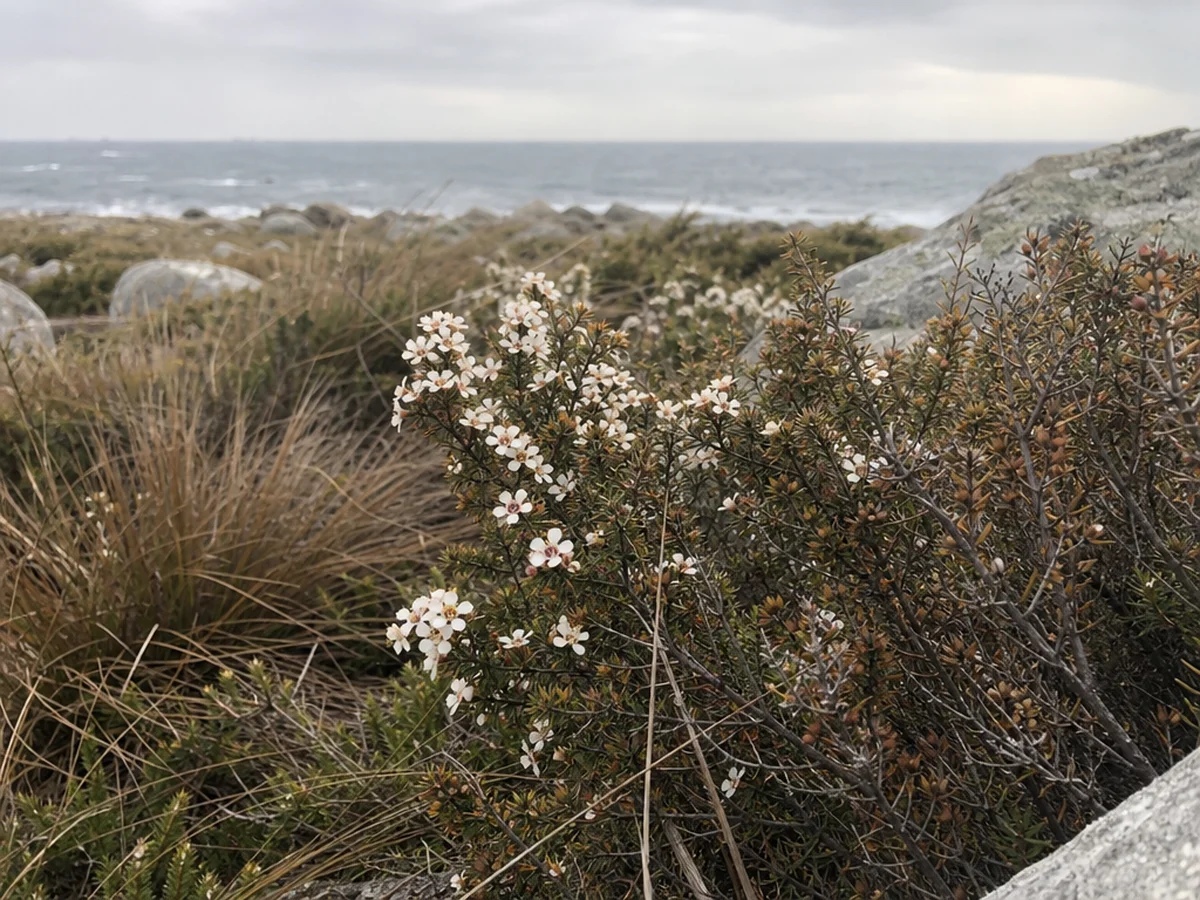
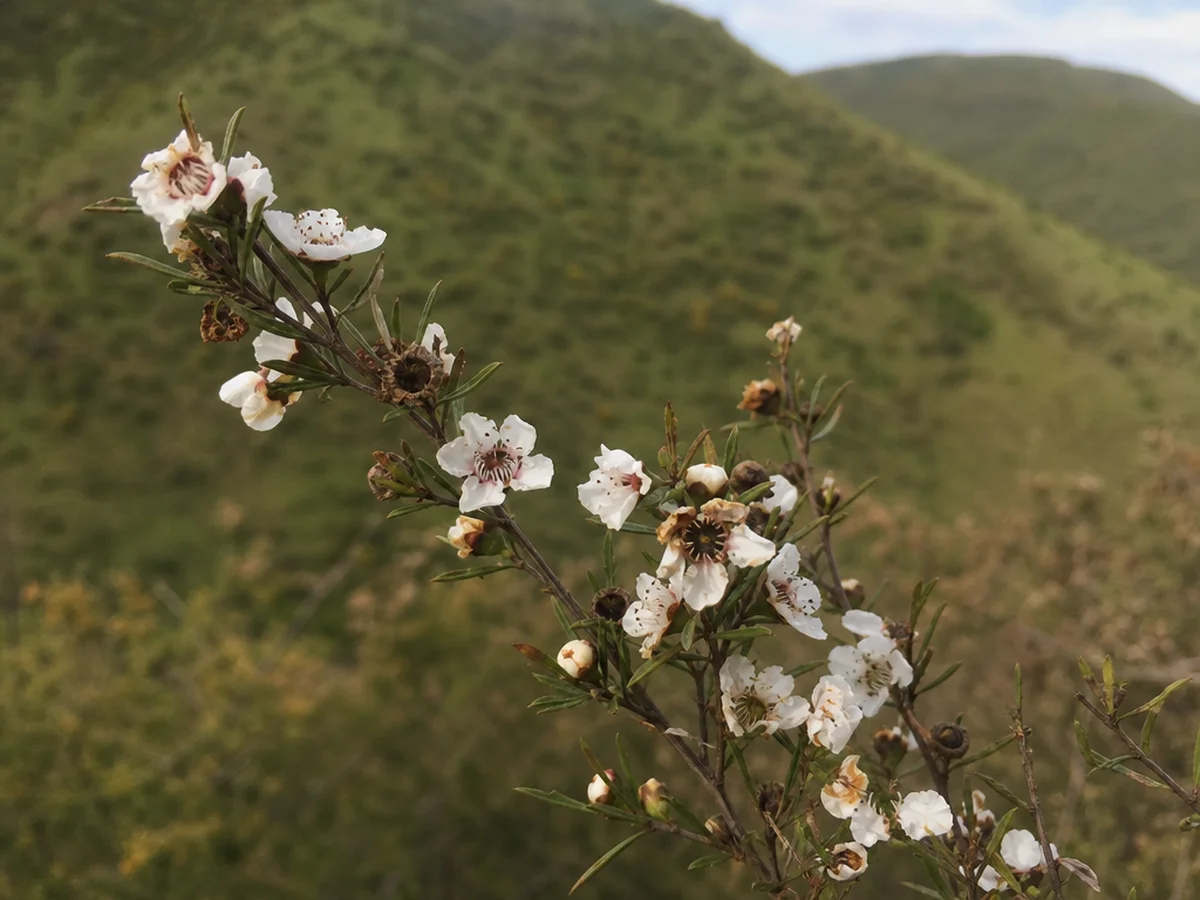
Manuka is Leptospermum scoparium. The New Zealand Plant Conservation Network gives its Māori names as mānuka and kahikātoa and glosses the Latin name as "slender seed" and "like a broom", a fitting description for a plant whose twiggy branches were once bundled for sweeping. It grows in New Zealand and Australia, from the coast up to low alpine country, and flowers throughout the year. The same factsheet adds that a modern taxonomic assessment of the species is urgently needed, which hints at something we come back to: "manuka" covers a varied group of plants, not one fixed thing.
What the Māori record lists
The most useful source we know of is the Landcare Research database of Māori plant use, because every entry names an author and a year, from the 1840s onward. Read it and you find that manuka was above all a practical plant.
- Building: durable bark for roofing, particularly in high country where tōtara was scarce; timber for house battens, storage platforms and beams; and branches worked into ramparts to bind the soil.
- Everyday life: firewood, brooms, combs, husbandry implements, branches used as bedding, bark for domestic vessels and even a bark rain cape.
- Fragrance: crushed leaves soaked in tītoki oil and rubbed on the skin for their scent, which is a nice reminder that people have long enjoyed the plant's aroma.
- Rongoā: a long list of traditional preparations from bark, leaves, gum and seed capsules, recorded by ethnographers and observers.
Two reading notes. The rongoā entries record what people did, not clinical outcomes, and we do not suggest any of them as uses of our oil. And none of the entries describes a steam-distilled essential oil. The database refers to the plant's essential oil only in passing, citing chemistry from the 1970s and 1980s. The distilled oil is a more modern product than the leaves and bark of the older records.
The plant also carries the common names "tea tree" and "red mānuka". That first name is shared with a different plant, Melaleuca alternifolia, whose oil is not the same as ours. Our tea tree comparison sorts out the two.
Why the old record matters to us
We love a plant with a past, and manuka has one that rewards slow reading. What stands out in the Landcare entries is how ordinary the uses are: a roof, a broom, a comb, a bed. It is a reminder that people knew this shrub through daily contact, season after season, long before anyone bottled its oil. We would rather you came to the oil with that picture in mind than with a list of promises.
A good way to explore it yourself is to read the entries slowly and note the author and year beside each one. Doing that keeps the stories in their proper place, as records of what people said and did at a given time, and it makes the timeline clear: the plant is old in human use, and the distilled oil is the newcomer.
When chemists started counting
The measurable history of manuka oil begins late in the twentieth century. In 1999, Porter and Wilkins reported that commercial manuka oil is mainly sesquiterpene hydrocarbons, that a fraction of compounds called triketones was linked to its antimicrobial activity in the laboratory, and that density in their oils tracked those levels. In 2004, Douglas and colleagues analysed oils from individual plants collected across New Zealand. They found a high-triketone type concentrated on the East Cape, moderate levels in the Marlborough Sounds, and ten further chemotypes besides.
The lesson is the same as the botanists' one: manuka oil is not a single chemistry. Where a plant grew, and which type it is, shapes the oil. Our articles on East Cape and other origins and triketones go into the detail.
If you are holding a bottle of manuka oil, open it and smell it with all of that in mind. The aroma is earthy, honeyed and warm, with a slightly spicy edge, and it feels deeper and sweeter than tea tree. It is a heavier, lower note, the sort that makes you slow down for a moment. That is the part of the story we can offer you without caveats: how it smells.
Oil, honey and the global name
Much of manuka's modern fame comes from honey, a separate product with its own science. If that is how you first met the name, our oil versus honey piece explains how the same plant yields two very different things, and manuka versus kanuka covers its close relative. As a 2020 review notes, there is a clear need for standardization of manuka oil, which is a fair summary of a field still being worked out.
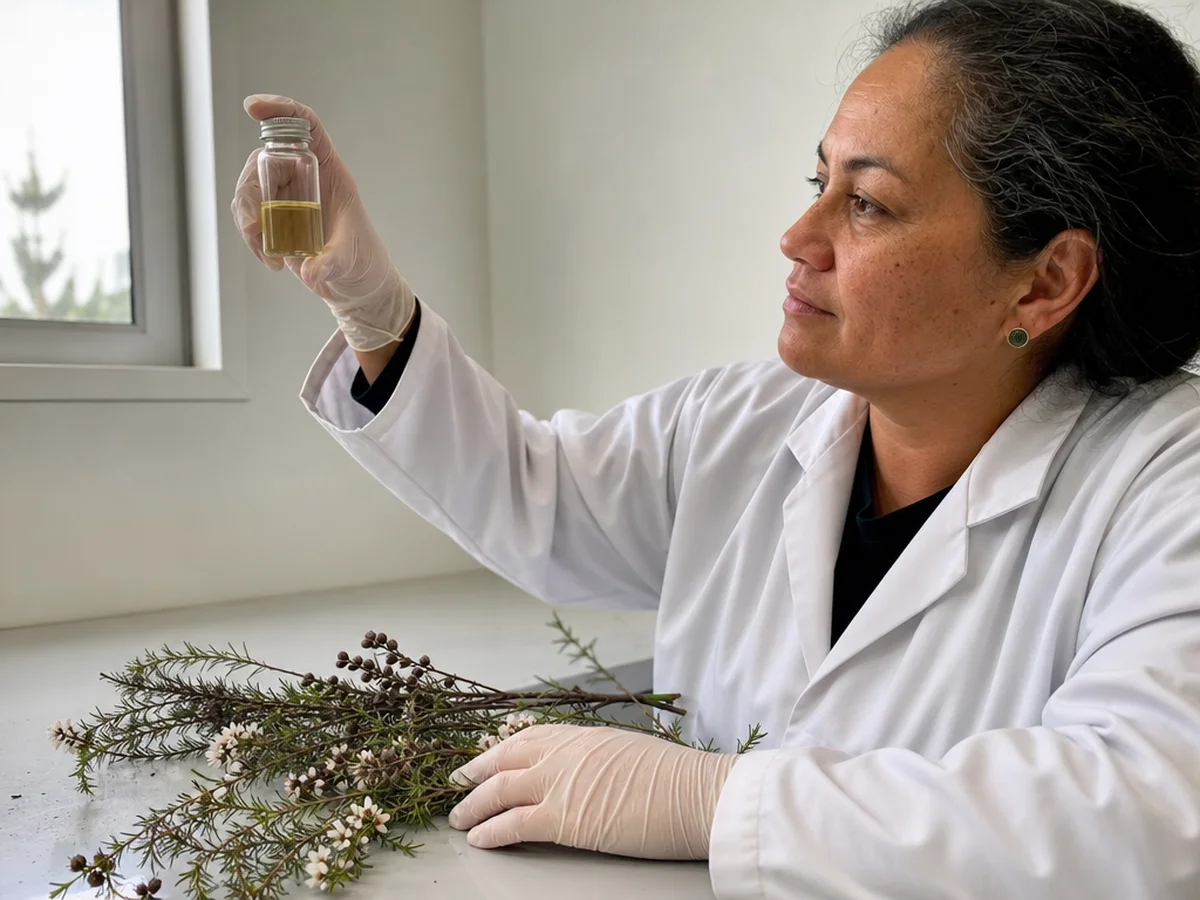
Names travel faster than facts, and a plant that began as a roof and a broom now turns up on labels in many countries. When you see the word manuka on a product, a little curiosity goes a long way: ask which plant, which part of the plant, and which product, because oil and honey are two different things.
We sell one manuka oil, for external cosmetic use, and we offer this history as background to enjoy, not as a claim about what the oil does.
Manuka Essential Oil
Manuka Essential Oil from our own shop, in sizes from 0.5 oz to bulk.
From $18.99
Shop Now →Sources & Further Reading
- New Zealand Plant Conservation Network, Leptospermum scoparium var. scoparium
- Ngā Rauropi Whakaoranga, Leptospermum scoparium. Mānuka. Kahikatoa.
- Porter and Wilkins, Chemical, physical and antimicrobial properties of essential oils of Leptospermum scoparium and Kunzea ericoides (Phytochemistry, 1999)
- Douglas et al., Essential oils from New Zealand manuka: triketone and other chemotypes of Leptospermum scoparium (Phytochemistry, 2004)
- Mathew et al., Mānuka Oil-A Review of Antimicrobial and Other Medicinal Properties (Pharmaceuticals, 2020)