Manuka Oil on Sensitive Skin: Irritation or Allergy?
"Sensitive skin" is a phrase most of us use about ourselves, yet it is not a diagnosis, and it can mean several quite different things. If your face stings when you try a new cleanser, that is not the same event as a rash that blooms three days after a lotion, and the right response to each is different. Before asking whether a fragrant oil like manuka suits you, it helps to know which kind of sensitive you are.
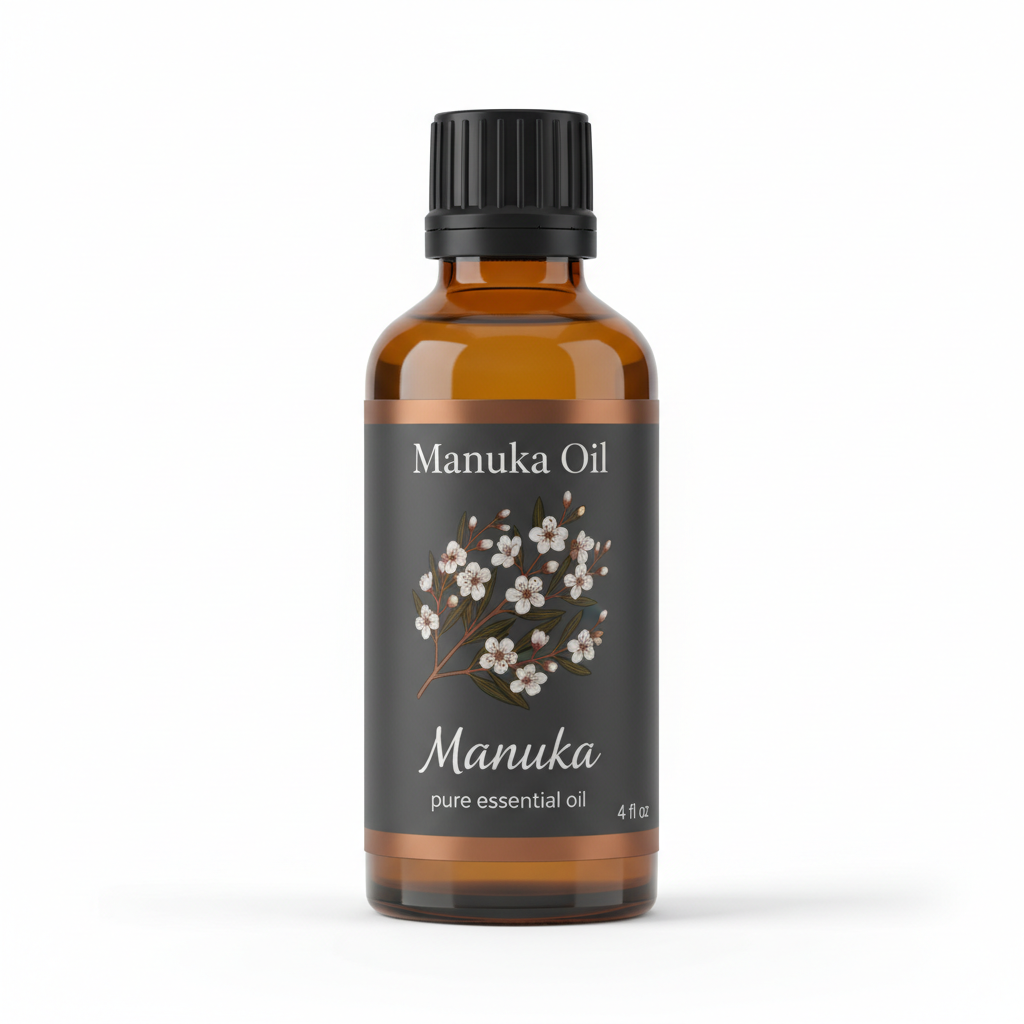
Manuka Essential Oil
Our own Manuka Essential Oil, in sizes from 0.5 oz to bulk.
From $18.99
Shop Now →Stinging, irritation or allergy?
DermNet's page on contact dermatitis draws a useful line. Irritant dermatitis can follow a single exposure but more often follows repeated contact, and at least at first only the skin that touched the irritant is affected. It is more common in people with a history of eczema and in skin whose barrier is already compromised. Allergic dermatitis behaves differently: it usually appears unexpectedly, after a product you tolerated for a while, and it can spread beyond the spot where the product went.
In practice that gives you a simple map. Burning or stinging within minutes, right where the product sits, points toward irritation. A rash that shows up days or weeks into using something familiar points toward allergy. Redness, flushing and visible small vessels in the middle of the face that flare again and again may be something else, such as rosacea, which is a diagnosis for a doctor to make.
Why scented products get extra attention
Manuka oil is a plant fragrance material, and fragrance is the ingredient class that dermatology sources single out. DermNet says fragrance allergy is common, affecting around 1% of adults and around 1.8% of children and adolescents, and that it ranks second only to nickel as a cause of allergic contact dermatitis. It also points out that a "fragrance-free" label can still hide masking fragrances, and that words like "botanical," "herbal" or "natural" on a label can conceal an unidentified fragrance. None of that is specific to manuka; it simply means a naturally scented oil is not automatically a gentler choice, and we would rather say so than leave you guessing.
The Certificate of Analysis we publish for one batch lists appearance, smell, relative density, refractive index and optical rotation. It does not include allergen data, so we leave allergen questions to your dermatologist's patch testing, which is the tool built for them.
It might help to keep a short list of what you already know about your skin: which cleansers it likes, which ones it does not, whether sun, cold or heat set it off. People often know a surprising amount about their own skin without ever writing it down, and a list gives you something to hold up against any new product.
If your skin reacts easily, here is how we would approach it
This is our editorial judgment, reasoned from the dermatology sources rather than from any manuka study. If you have been diagnosed with a fragrance or botanical allergy, or your rosacea is active, or you have eczema on the area, or the skin is broken or sunburned, talk to a dermatologist before trying a new scented oil. That conversation will tell you more than any dab on the wrist.
If your skin is simply on the reactive side and you would like to try manuka in a face blend, go slowly and start low. We recommend diluting to 0.5% to 2% in a carrier oil, patch testing first, keeping it away from the eyes, and starting at the low end for anything that goes on the face. For a feel of what that looks like, one drop in an ounce of carrier is roughly 0.17%, three drops is about 0.5% and twelve drops is about 2%. That is arithmetic at around 20 drops per millilitre, so a drop count is always approximate. Because very small amounts are hard to count in a teaspoon of carrier, it is easier to make a full ounce and resist adding a fourth drop.
Give the patch test time. DermNet notes that clinic patch tests are removed after 48 hours and read again 48 to 96 hours later, because allergic reactions are delayed. A quick dab that looks fine within the hour answers a smaller question than most people assume: it tells you the oil did not sting right then, not that you will never react. If you notice redness, itching, burning or a rash, stop, wash the area, and do not retest on the same spot.
Fewer products, calmer skin
If you tend to react, a simpler shelf often makes your life easier. Fewer products means fewer variables, and a short routine is easier to read when something goes wrong. A short routine is also much easier to read when you are trying to work out what your skin is telling you.
Questions worth bringing to an appointment
If you do see a dermatologist, three questions make the visit productive. Is what I have irritant, allergic, rosacea or something else? Should I be patch tested to fragrance and botanical ingredients before I try more scented products? And which of my current products contain fragrance or essential oils? Those answers shape every product choice afterwards, including whether our oil belongs on your shelf at all.
We sell manuka essential oil for scent and for formulating, and we make no claim that it helps any skin condition. Carriers and fragrance-free moisturisers come from a pharmacy or craft supply shop. Our reactions article covers what a reaction looks like and what to do next, and the facial oil post shows what a simple evening blend looks like for readers without these concerns.
Knowing your own skin is the best product advice there is, and a patient patch test is the quiet way to learn it.
Manuka Essential Oil
Manuka Essential Oil from our own shop, in sizes from 0.5 oz to bulk.
From $18.99
Shop Now →