Manuka Oil for Toenail Fungus? Why a Diagnosis Comes First
A thick, yellowing or crumbling toenail is an easy thing to want to fix with whatever is on the bathroom shelf. We understand the instinct, and we want to be straightforward: manuka oil is a scented cosmetic oil that we sell for aroma and diluted skin use, and a changed toenail is a question for someone who can examine it. The reasons are more interesting than they sound, and they start with how a nail grows.
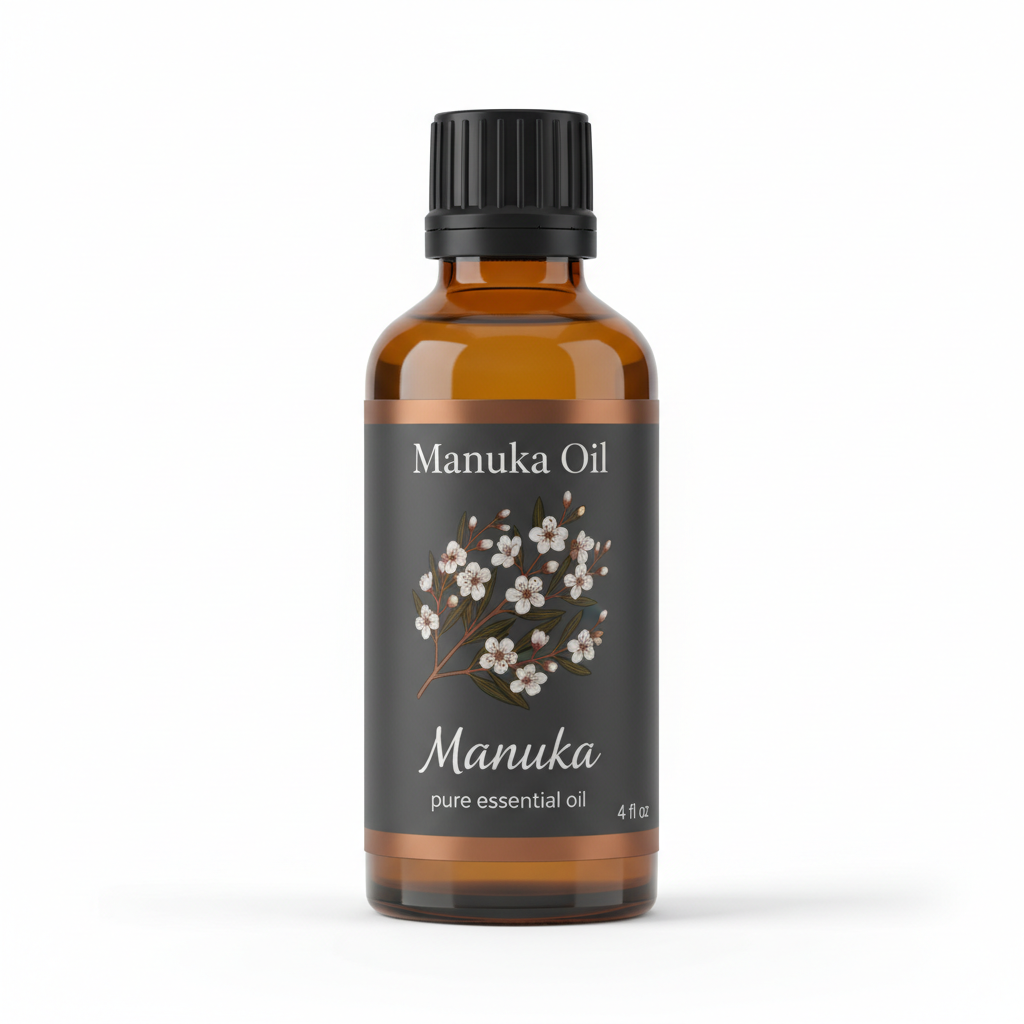
Manuka Essential Oil
Our own Manuka Essential Oil, in sizes from 0.5 oz to bulk.
From $18.99
Shop Now →A slow nail makes slow answers
The NHS describes brushed-on pharmacy nail products for fungal nail infection as something used daily or weekly for 6 to 12 months, and says it may take several months before any improvement shows. The infection counts as cured when healthy nail grows back from the base. The CDC says treatment of nail infections can take several months to a year, and that early treatment works best.
That timeline is the first filter for any claim you read online. A page promising a change in a few weeks is describing something a toenail simply cannot do yet, whatever is applied to it. It is a good reason to be gentle with yourself about progress and sceptical about quick promises.
Not every discoloured nail is fungal
Another reason to start with a professional is that several things can mimic a fungal nail. Nails can change after a knock or alongside other skin conditions, so appearance alone is an unreliable guide. That is why we would expect a clinician to want to confirm a suspected fungal infection with a test rather than a glance. A dark streak, bleeding, or a single nail that changed after an injury is a reason to book a visit and skip the shelf entirely. A podiatrist or dermatologist can look at the nail, and the NHS suggests seeing a GP if you have diabetes or a weakened immune system, since foot problems can be more serious in those cases.
What the strongest evidence looks like
If you want to see what a solid answer looks like, look at the Cochrane review of topical and device-based treatments for toenail infections. It pooled 56 randomised trials with 12,501 participants. Notice the design: it compares treatments with placebo, vehicle or other treatments, in people whose infection was confirmed by culture, microscopy or nail examination, and it follows them for most of a year. That is the bar for any product that wants to stand beside established treatments: a confirmed diagnosis, a comparison group, and enough time for a nail to grow out.
Where manuka oil sits
The research on manuka oil is mostly laboratory work, and the 2020 review of the literature says the lab evidence for antimicrobial activity is extensive while clinical trials are lacking and dosing and toxicology data are limited. Lab-dish studies measure what happens to fungus in broth, which is a very different thing from what reaches the tissue under a nail plate. Tea tree oil is a different oil, and we do not carry its results over to manuka. So the fair summary for manuka is that it is an interesting plant oil with a lot of chemistry to explore, and no established role in nail care.
Questions worth bringing to the appointment
Going in with a few notes makes the visit more useful. Jot down when you first noticed the change, whether more than one nail is involved, whether it hurts, and what you have already put on it. Take a photo today so you can show how it looks over time, since a slow change is easy to misjudge from memory. Mention any diabetes or circulation problems, and the shoes you wear for long hours.
If you are given a plan, ask how long to expect before the nail looks different and what would be a sign to come back. Nails reward patience, and a clinician can tell you what normal progress looks like for your situation.
Everyday foot habits
Whatever the cause of a changed nail, plain foot habits are a comfortable place to put your energy. Dry between the toes after washing, change socks when they are damp, and give your shoes a day to air out between wears. That is everyday common sense, not a treatment, and it costs nothing.
What we do suggest
See a clinician first for any nail that is thick, discoloured, lifting, painful or spreading, and sooner if you have diabetes, circulation problems or a weakened immune system. Antifungal products come from a pharmacy on a pharmacist's or clinician's advice, and we sell none. The FDA explains why our pages stay away from nail claims: whether something is a cosmetic or a drug depends on its intended use, and a claim about treating a disease makes a product a drug.
If you simply enjoy manuka oil for its warm, honeyed aroma, our guidance is the same as always: dilute it to 0.5% to 2% in a carrier oil, patch test first, keep it away from eyes, children and pets, and do not take it internally. Our feet and nails post looks at the wider picture, the tea tree comparison sets the two oils side by side, and the ringworm post covers the skin version of the same question.
A nail that is slow to change is not failing; it is behaving like a nail, and the best first step is simply learning what is going on.
Manuka Essential Oil
Manuka Essential Oil from our own shop, in sizes from 0.5 oz to bulk.
From $18.99
Shop Now →Sources & Further Reading
- NHS, Fungal nail infection
- CDC, Treatment of Ringworm
- Topical and device-based treatments for fungal infections of the toenails (Cochrane Database of Systematic Reviews, 2020)
- Mānuka Oil-A Review of Antimicrobial and Other Medicinal Properties (Pharmaceuticals, 2020)
- FDA, Is It a Cosmetic, a Drug, or Both? (Or Is It Soap?)