Manuka Oil for Dandruff? What Dermatologists Advise
Few things are as visible on a black jumper as a dusting of flakes, and few have as many home remedies attached. Before reaching for an essential oil, it helps to know that dandruff already has a well-worn, well-studied route, and that it is a more interesting condition than it looks.
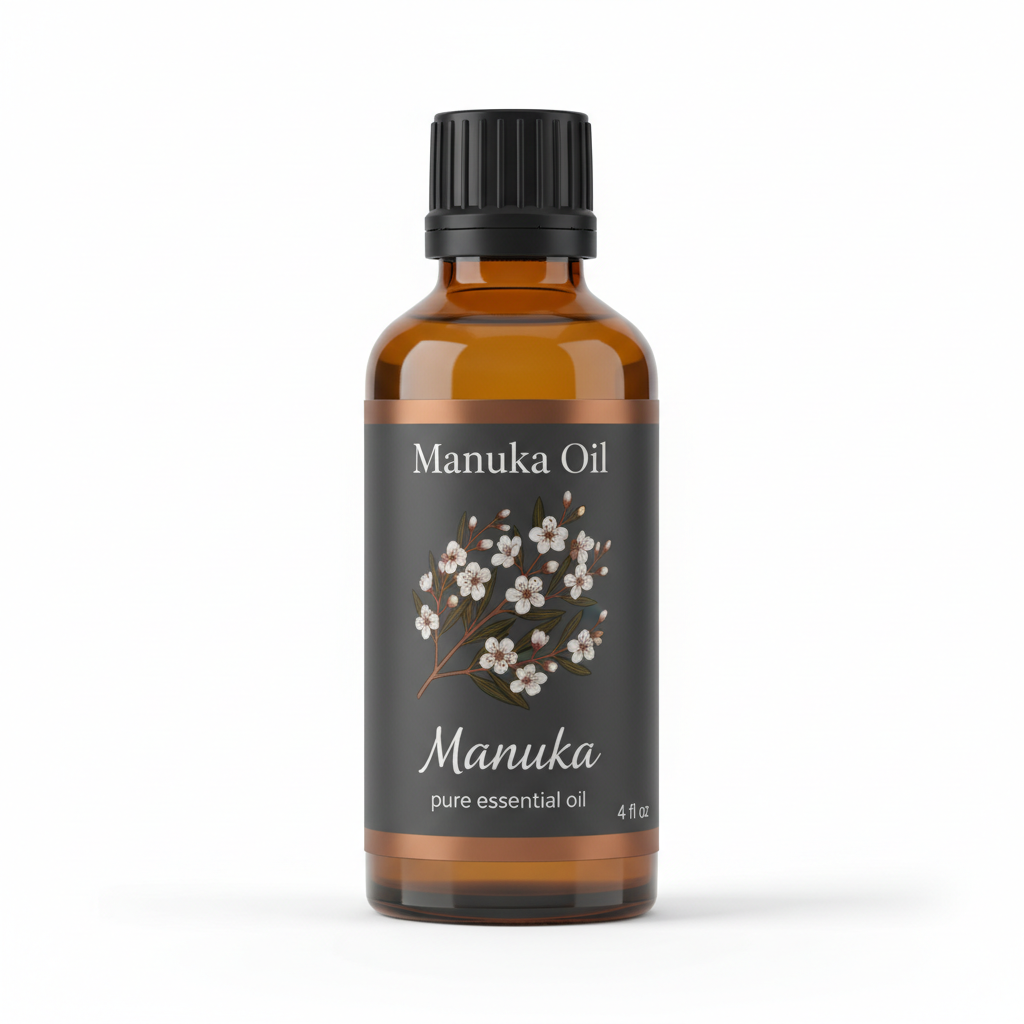
Manuka Essential Oil
Our own Manuka Essential Oil, in sizes from 0.5 oz to bulk.
From $18.99
Shop Now →What dermatologists point to first
The American Academy of Dermatology recommends an over-the-counter dandruff shampoo with one of these active ingredients: zinc pyrithione, salicylic acid, sulfur, selenium sulfide, ketoconazole or coal tar. If one stops working, it suggests switching to a different active, letting some shampoos sit on the scalp for five to ten minutes, and using the medicated shampoo about twice a week on fine or oily hair or about once a week on coarse, curly or coily hair (AAD). The NHS keeps it just as simple: choose a shampoo with ketoconazole, coal tar or salicylic acid, give it up to four weeks, and see a GP if things have not improved, if the scalp is red or swollen, or if you have itchy flaky patches on your face or body (NHS). Both are clear that flaking can also come from conditions such as seborrheic dermatitis, psoriasis or eczema, which is a good reason to ask a dermatologist if it persists.
Why an anti-dandruff shampoo is special
The FDA uses anti-dandruff shampoo as its own example of a product that is two things at once: a cosmetic because it cleanses hair, and a drug because it is used against dandruff (FDA). That is the reason we describe manuka oil by its scent and cosmetic uses and leave flakes to the products built for them.
What is actually going on up there
Dandruff is closely tied to Malassezia, a yeast that lives on nearly everyone's skin. It turns up at higher numbers on scalps with dandruff, but a review in PLoS Pathogens points out that how it interacts with skin is still largely unknown, and that it is a normal resident, not an intruder (Velegraki and colleagues, 2015). In plain terms, dandruff tends to come and go, so a single product that seemed to work once does not tell you much, and a lab result that something slows a yeast in a dish answers only a slice of the question.
The essential oil trial people cite
The best-known essential oil study used tea tree oil, not manuka. In a 2002 trial, 126 people aged 14 and over with mild to moderate dandruff used either a 5% tea tree oil shampoo or a placebo shampoo daily for four weeks. The dandruff severity score improved 41% in the tea tree group and 11% in the placebo group, with no adverse effects reported (Satchell and colleagues, 2002). It is a respectable result for one trial, and a useful reminder that the study used five percent. We suggest 0.5% to 2% for manuka oil in a carrier, so that trial strength is two and a half times our top figure and ten times our lowest. It is a number to understand, not a recipe to copy.
What exists for manuka
For manuka oil, the evidence on the yeast side is laboratory work. A review of the literature tabulates a minimum inhibitory concentration of 1.56% against Malassezia furfur, meaning the lowest strength that stopped visible growth in a broth test, and notes that clinical trials are lacking and that dosing and toxicology data are limited (Mathew and colleagues, 2020). A broth figure does not tell you how much oil reaches yeast sitting in sebum on a scalp, and it says nothing about comfort or sensitivity. We know of no study of manuka oil on dandruff in people.
Keeping it simple at the sink
Whatever shampoo you pick, a tidy approach helps you learn what works. Change one thing at a time, and write down the date you start. Follow the directions on the bottle, including how long to leave it on the scalp, and give it the full time the label or your pharmacist suggests before you decide. A calendar note is enough. If you switch products every few days, you will never know which one did what, and your scalp will not thank you for it.
It also helps to be kind to the scalp while you wait: rinse thoroughly, avoid scratching, and keep hot water for the bath rather than the head. None of that is a treatment, only good manners toward your own skin.
A scented scalp is a different goal
If you love the warm, earthy, honeyed aroma of manuka oil and want it in a hair product, that is a scent decision, and it comes with the usual care: we recommend a carrier, a patch test, and keeping the oil away from eyes, children and pets. Our shampoo post covers drops and grams, the weekly scalp routine covers patch-test timing, and scalp bumps are a different question with their own page. Medicated shampoos come from a pharmacy or supermarket, and we do not sell them.
As for manuka oil, think of it as something to enjoy. If you like the aroma, the best way to meet it is on its own in the bottle, a slow sniff from a few inches away, and then in a small diluted blend you have patch tested. Earthy, honeyed and warm is a lovely note, and it is happiest with that job.
If the flakes are still there after a month of a proper anti-dandruff shampoo, that is the moment for a GP or dermatologist, not a stronger essential oil.
Manuka Essential Oil
Manuka Essential Oil from our own shop, in sizes from 0.5 oz to bulk.
From $18.99
Shop Now →Sources & Further Reading
- American Academy of Dermatology, dandruff advice page (scalp care section)
- NHS, "Dandruff - NHS"
- FDA, "Is It a Cosmetic, a Drug, or Both? (Or Is It Soap?)"
- Velegraki A and colleagues, 2015, "Malassezia Infections in Humans and Animals: Pathophysiology, Detection, and Treatment"
- Satchell AC and colleagues, 2002, "Treatment of dandruff with 5% tea tree oil shampoo"
- Mathew C and colleagues, 2020, "Mānuka Oil - A Review of Antimicrobial and Other Medicinal Properties"