How Many Drops of Manuka Oil in Shampoo?
For a 250 ml bottle of shampoo, the low end of our dilution guidance comes to about 28 drops of manuka oil. That is a surprisingly modest number, and it is the one we would start with. If you like to personalise a shampoo you already use, a little arithmetic keeps it enjoyable and keeps the amounts sensible.
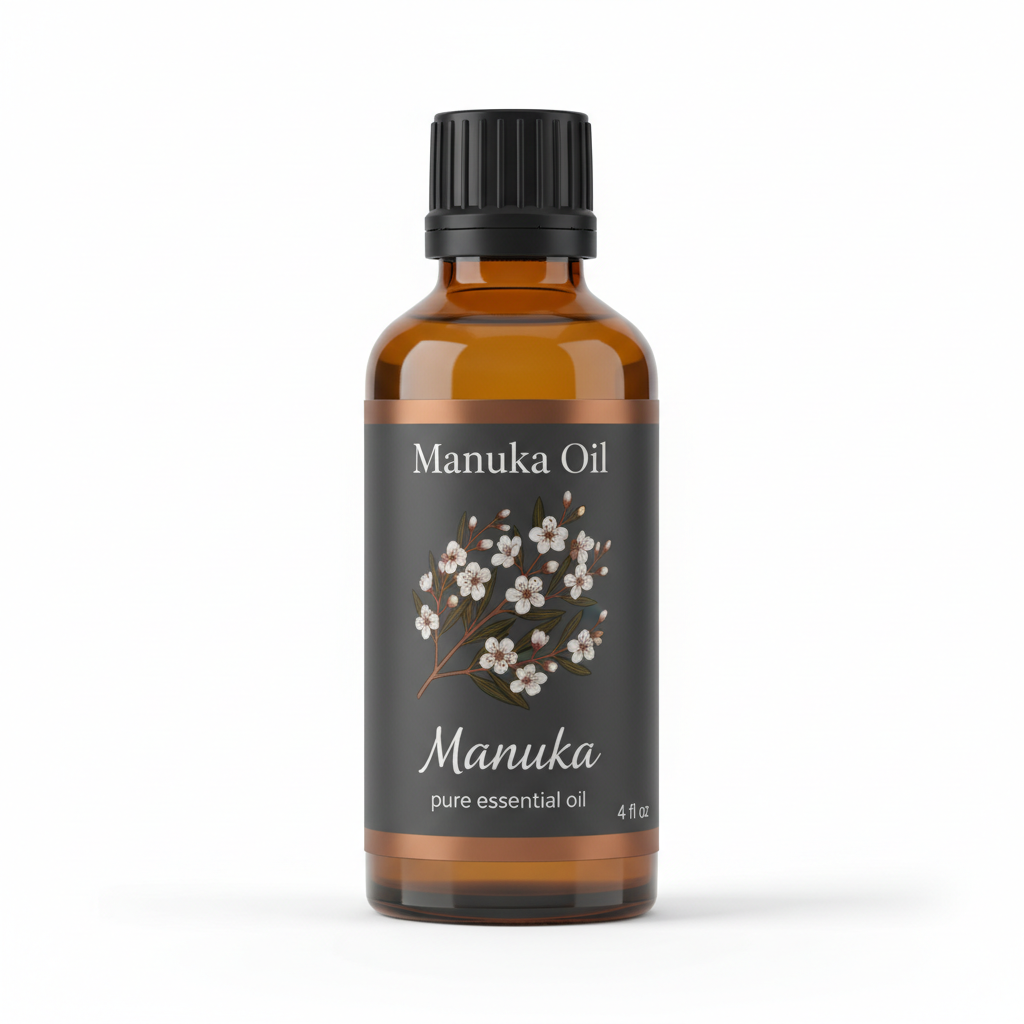
Manuka Essential Oil
Our own Manuka Essential Oil, in sizes from 0.5 oz to bulk.
From $18.99
Shop Now →The numbers, by weight
Drops differ from dropper to dropper, so we convert to grams first. The table assumes your shampoo weighs about 1 g per millilitre (weigh your bottle to check), a relative density of 0.896 for the batch on our Certificate of Analysis, and roughly 20 drops per millilitre.
| Share of a 250 g bottle | Oil | About how many drops |
|---|---|---|
| 0.5% | 1.25 g (1.4 ml) | 28 |
| 1% | 2.5 g (2.8 ml) | 56 |
| 2% | 5 g (5.6 ml) | 112 |
One supplier of cosmetic ingredients puts a typical rate for essential oils in rinse-off products like shampoo at 0.5% to 1%, and suggests starting at 0.5% and testing. We agree with starting at the first row. The 2% row, 112 drops, would mean more than 5 ml of oil in one shampoo bottle, which a rinse-off product does not need.
What you will notice in the shower
Expect the aroma to be soft. Warm water lifts the scent for the first few seconds, and then most of it goes down the drain with the lather. You may catch a gentle honeyed note on the towel afterwards. If the scent seems to vanish, resist adding more to the bottle; make a fresh test batch with a slightly higher number and compare.
Why rinse-off makes sense for a first try
A shampoo spends a minute or two on the scalp before it goes down the drain. Work it through: if one wash uses 5 g of shampoo, 0.5% manuka oil is 0.025 g, or about half a drop. That is a small exposure compared with a leave-on scalp oil, which is part of why we think shampoo is a gentle format for a first trial. It also means the scent will be soft. We say a drop or two goes a long way in a blend, but a rinse-off product washes most of its fragrance away. If you want more, go up in small steps in a new test batch rather than adding oil to the finished bottle by eye.
Choose a bottle that is easy to shake and easy to label, and write the date and the percentage on it. Think of it as a kitchen jar of homemade jam. Future you will want to know exactly what is inside.
Start with a preserved base
Oil does not preserve a water-based product. The same supplier notes that a broad-spectrum preservative is essential for any water-based formula, so begin with a shampoo that already has one, either your usual bottle or an unscented base from a cosmetic supply shop or pharmacy. We do not sell shampoo bases or preservatives, so that shop is the place to ask which preservative a base contains and what it recommends.
A small test batch
- Weigh 50 g of shampoo into a clean bottle and add 0.25 g of manuka oil, about five or six drops. That is 0.5%.
- Shake it, then leave it overnight. The shampoo's surfactants help the oil mix in, and the supplier's advice is to check stability, clarity, viscosity, foam and scent in a small batch before anything bigger.
- Look for beads of oil on the surface after a day. If you see them, ask the supply shop about a solubiliser rather than guessing a ratio.
- Label the bottle and shake before each wash.
- Scale up only if the small batch behaves.
Patch test the finished shampoo
Skin reactions to essential oils are usually delayed, appearing 24 to 72 hours after exposure according to DermNet NZ. So dab a little of the finished shampoo on your inner arm or behind your ear, rinse as you would in the shower, and wait three days before using it over your whole scalp. The step-by-step version is in our scalp patch test guide. Keep shampoo out of the eyes, and skip a modified shampoo for children and pets, since our guidance is to keep the oil away from both. If your scalp is currently itchy, flaky or sore, or you have reacted to fragrance before, check with a dermatologist first; DermNet notes that people who react to one oil often react to several.
Keep a recipe card
Write the base you used, the weight of shampoo, the weight of oil, the date and what you noticed about the scent. When you want to repeat a batch or change it by a small step, the card saves you from guessing. A kitchen scale that reads to 0.1 g is a small, practical investment for this kind of work.
If you plan to sell it
Mixing a bottle for yourself is a household project. Selling the result puts your name on a product whose formula you changed, and cosmetic rules in the United States then apply to you. A regulatory consultant or product-safety attorney is the right person to ask. If you are looking at a custom or private-label formulation, our wholesale page explains what we can help with.
For other ways to use the oil at skin strength, see carrier oils for manuka oil, and for the general safety picture, side effects and reactions.
Manuka Essential Oil
Manuka Essential Oil from our own shop, in sizes from 0.5 oz to bulk.
From $18.99
Shop Now →