Manuka Oil Scalp Patch Test: A Seven-Day Plan
The scalp is the one place where patience pays off. A scalp product spreads over a big area, runs toward your eyes in the shower, and if your skin is going to object, it often waits a couple of days before saying so. A little planning up front makes trying manuka oil there a calm, easy thing.
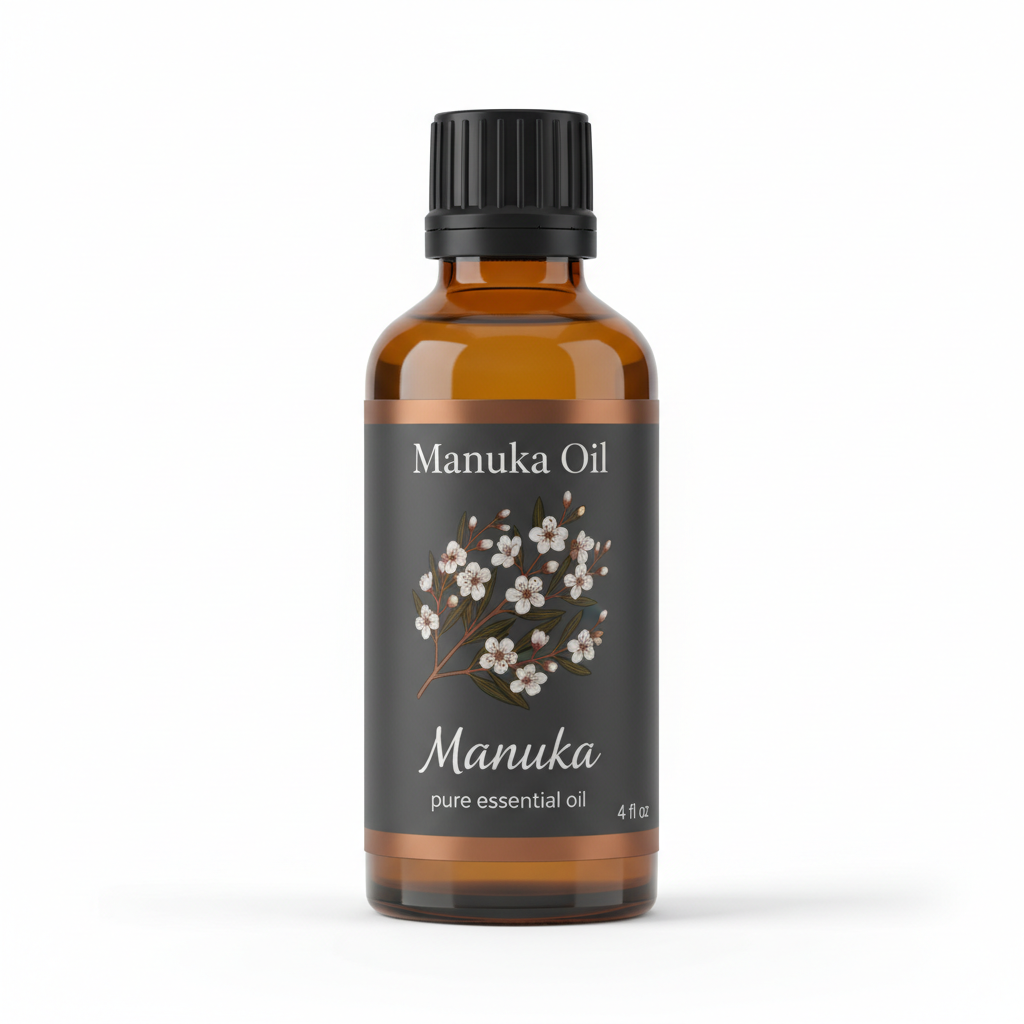
Manuka Essential Oil
Our own Manuka Essential Oil, in sizes from 0.5 oz to bulk.
From $18.99
Shop Now →Why we watch the calendar, not the clock
DermNet NZ explains that allergic reactions to essential oils are delayed. They generally show up 24 to 72 hours after the skin meets the oil, and a clinical patch test is removed at 48 hours and read again somewhere between 48 and 96 hours. DermNet also advises against putting neat, undiluted oils on the skin, because that can lead to sensitisation. That is the same reason we describe our manuka oil as a concentrate and recommend diluting it to 0.5% to 2% in a carrier oil.
A home patch test is not a clinical one, but it can borrow the timing. A check after ten minutes tells you very little. A check on day three tells you a lot.
A week that works
- Day 0. Mix your carrier and oil at the lowest rate in the table below. Dab a small amount on the inner forearm, or behind the ear if you are testing a scalp blend, and leave it alone. No bandage, no new soap on the spot.
- Days 1 to 3. Look at the spot morning and evening. Itching, redness, bumps, flaking or swelling means wash it off and stop.
- Day 4. If the spot is clear, try the same blend on a small part of the scalp, parted hair, not the whole head.
- Days 5 to 7. Watch for another 72 hours before you use it more widely.
Change one thing at a time. If a new shampoo, a hair dye or a second essential oil joins the same week, you will not know which one is responsible for anything that happens. Forearm skin and scalp skin are not the same, so a clear forearm is a good sign rather than a guarantee, and it is one more reason to take the steps slowly.
Before you start, choose your carrier with your nose as well as your head. Jojoba and sweet almond are the two our guidance mentions, and they feel quite different on the fingers. Jojoba feels light and slightly silky, and sweet almond feels a little richer. Rub a drop between your fingers and see which you like. You will be wearing it for a week of testing, so enjoy the feel.
Amounts for the carrier you already own
Our guidance is roughly 3 to 12 drops per ounce of carrier. Here is that worked out for common jar sizes, using the usual convention of 20 drops per millilitre. Drop sizes vary, so a small scale is more dependable than counting.
| Carrier | 0.5% | 1% | 2% |
|---|---|---|---|
| 15 ml (1 tablespoon) | about 1.5 drops | about 3 drops | about 6 drops |
| 30 ml (1 oz) | about 3 drops | about 6 drops | about 12 drops |
| 50 ml | about 5 drops | about 10 drops | about 20 drops |
Half a drop is hard to measure, so for small amounts mix a larger batch and use some of it. We suggest starting in the first column and staying there for a scalp. A drop or two goes a long way with this oil, which makes the low end a sensible place to begin anyway. Ask IFRA or the Tisserand Institute for the limits that apply to your own formulation; we do not call any percentage safe for everyone.
Keep a small notebook or a note on your phone for the week. Jot the date, the spot and a quick line each morning and evening: nothing, pink, itchy. It is surprisingly easy to forget on day three whether the spot looked different on day one, and a written line settles it.
Eyes, children and old bottles
The Tisserand Institute notes that undiluted essential oil dripped into the eyes can cause a chemical burn, and our own guidance is to keep the oil away from eyes, children and pets. Even a diluted scalp oil runs when you rinse, so tip your head back and keep your eyes closed. If an eye stays irritated afterwards, call a doctor.
Freshness matters too. A study of tea tree oil, a different oil, found that oil left on a window sill built up peroxides within days and that the oxidised oil was a stronger sensitiser in guinea pigs than the fresh oil. We cannot say the same holds for manuka, but it is reasonable to think a bottle that has sat open for months, or smells different from when you bought it, is not the one to use on your head. Our storage article covers keeping a bottle in good shape.
When to stop and who to ask
Stop at the first sign of itching, burning, redness, flaking or swelling on the scalp, hairline, ears or neck, and do not restart because it settled. If the same reaction returns when you try again, take the bottle and the blend list to a dermatologist. Anyone who has reacted to fragrance or to tea tree oil before should speak to one first; DermNet notes people allergic to one essential oil often react to several, because oils share constituents. We sell a cosmetic oil for external use, so flaking, itching, sore patches or changes in your hair belong with a doctor rather than a bottle.
Making the scent part of the routine
Once the test is clear and you are happy, notice how the aroma behaves on your hair: warm and honeyed at first, then fading to a soft background. If it feels like too much, drop to the lower end of the range and leave it there. A drop or two goes a long way, and nobody wins a prize for strength. Our manuka oil is in our shop, and if you end up using it regularly there are bulk sizes too.
For more on how reactions look and how to sort them, see our notes on sensitive skin and the broader side effects overview. Once your patch test is clear, our piece on adding manuka oil to shampoo shows another low-dose way in, and carrier oils will help you choose what to mix it with.
Manuka Essential Oil
Manuka Essential Oil from our own shop, in sizes from 0.5 oz to bulk.
From $18.99
Shop Now →