Manuka Oil and Acne: What Lab Numbers Cannot Tell You
If you have been scrolling for a natural answer to breakouts, manuka oil will have come up. It has a respectable set of laboratory numbers behind it, so it is fair to ask what those numbers can and cannot tell you about your face.
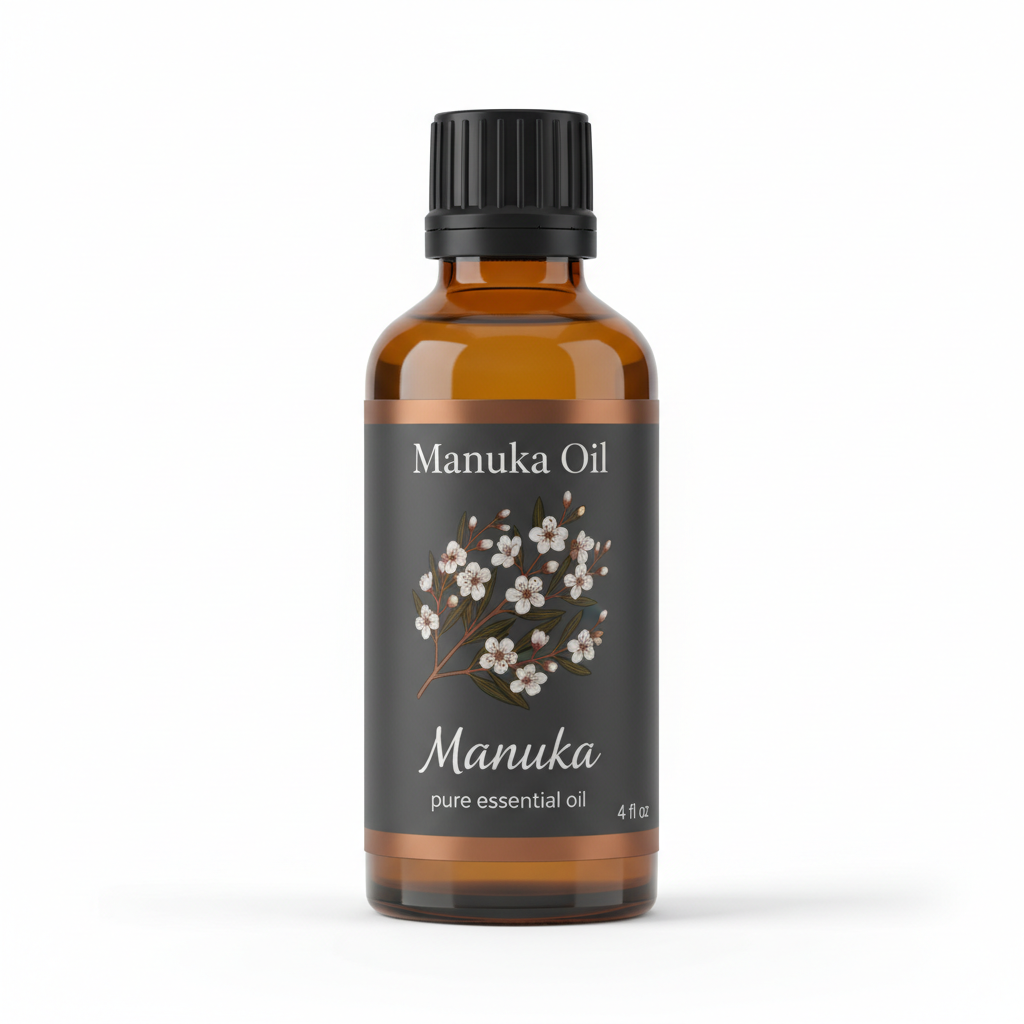
Manuka Essential Oil
Our own Manuka Essential Oil, in sizes from 0.5 oz to bulk.
From $18.99
Shop Now →Start with what dermatology says
The American Academy of Dermatology lists the mainstream options: topical retinoids, benzoyl peroxide and topical antibiotics, with oral medicines for some people. It also sets an expectation that surprises many: it takes at least six to eight weeks of sticking to a plan before you see fewer breakouts. Some conditions that look like acne, such as perioral dermatitis or folliculitis, need different care, which is another reason to have a dermatologist look (AAD). The NHS suggests a gentle cleanser twice a day, non-comedogenic skincare, and a pharmacist's advice on salicylic acid or benzoyl peroxide. It says not to pick, squeeze or scrub, and to see a GP if self-care is not working, spots are deep or painful, or acne is affecting your mental health (NHS).
What the manuka numbers measure
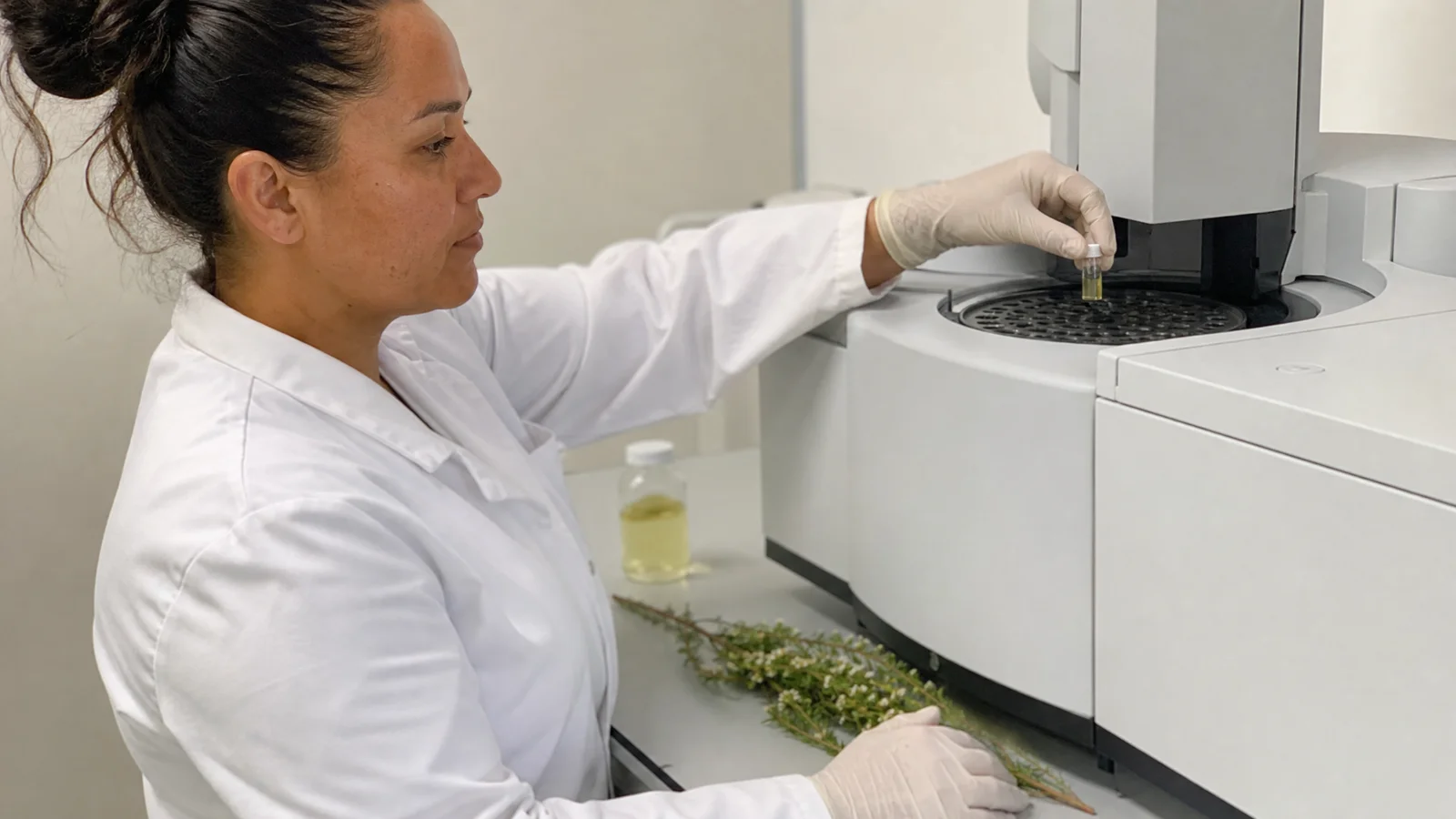
A review of the manuka oil literature collects the figures. Against the acne-associated bacterium formerly called Propionibacterium acnes, one study reports a minimum inhibitory concentration of 0.211%, and a minimum bactericidal concentration of 0.25%; another reports 0.055% for a reference strain. Those are the strengths at which growth stopped, or bacteria died, in a broth culture. The review also notes that clinical trials are lacking, that dosing and toxicology data are limited, and that many entries do not state the oil's chemistry, which makes numbers from different papers hard to compare (Mathew and colleagues, 2020).
A broth culture is a clean, uncomplicated place. A breakout involves oil glands, skin cells, inflammation and the way your skin reacts to what you put on it. The dish tells us the oil is lively against a bacterium. It does not tell us what happens in a follicle, and we are not aware of a published trial of manuka oil on acne.
A practical thought before the comparison: whatever you choose to do about breakouts, change one thing at a time. If you start a new cleanser, a new moisturiser and a new oil in the same week, nobody, including you, will be able to tell which of them your skin liked or minded. A boring, steady routine and a note on your phone about what you changed and when is more useful to a dermatologist than any product list.
The oil with a human trial is tea tree
Tea tree is a different plant, but it is the essential oil people measure against. In a 1990 single-blind trial of 124 people with mild to moderate acne, 5% tea tree oil gel was compared with 5% benzoyl peroxide lotion. Both reduced inflamed and non-inflamed spots, the oil acted more slowly, and fewer side effects were reported with the oil (Bassett and colleagues, 1990). That is an encouraging line for tea tree, and it is a formulated gel at five percent. Our suggested range for manuka oil in a carrier is 0.5% to 2%, so the trial strength sits two and a half times above our upper figure. It is a different oil and a different strength, so we would not read it as a guide for manuka.
Things that quietly make skin grumpy
Many everyday habits matter more than a bottle on the shelf. Over-washing leaves skin tight, hot water is harder on it than lukewarm, and a pillowcase or hat that sits against the face all day can add to the problem. Plenty of people find a simpler routine easier to read, which is a good thing to keep in mind when a new product catches your eye.
Skin in the middle of acne care is often a delicate skin
Acne routines frequently include retinoids or benzoyl peroxide, which can leave skin dry and easily irritated. DermNet notes that irritant dermatitis is more common where the skin barrier is compromised, and that allergic reactions usually appear unexpectedly after something was previously tolerated (DermNet, contact dermatitis). Fragrance allergy is believed to affect around 1% of adults and ranks second only to nickel as a cause of allergic contact dermatitis (DermNet, fragrance allergy). If you use a prescription retinoid, ask your dermatologist before adding any scented product to the same skin.
Where manuka oil belongs in our shop
We sell one thing, manuka essential oil, neat, as an aroma and cosmetic ingredient with a warm, earthy, honeyed scent. We recommend diluting it to 0.5% to 2% in a carrier, starting at the low end for the face, patch testing first and keeping it away from eyes, children and pets. Benzoyl peroxide, salicylic acid and adapalene come from a pharmacy, not from us. Our sensitive skin guide and safety basics go through patch testing, and scalp acne has its own page for bumps up in the hairline.
If you simply like the scent
Some people like manuka for what it is: a warm, earthy, honeyed aroma. If that is you, a diffuser blend or a scented body oil on skin that is not currently flared up is a cosmetic pleasure that does not need to be tied to a skin goal. Keep it away from the areas that are actively breaking out, start low, and give the patch test its full three days.
Breakouts reward patience and a good plan from someone who has examined your skin. A scented oil can wait until that plan is working.
Manuka Essential Oil
Manuka Essential Oil from our own shop, in sizes from 0.5 oz to bulk.
From $18.99
Shop Now →Sources & Further Reading
- American Academy of Dermatology, "Acne: Diagnosis and treatment"
- NHS, "Acne - NHS"
- Mathew C and colleagues, 2020, "Mānuka Oil - A Review of Antimicrobial and Other Medicinal Properties"
- Bassett IB, Pannowitz DL, Barnetson RS, 1990, "A comparative study of tea-tree oil versus benzoylperoxide in the treatment of acne"
- DermNet, "Contact dermatitis"
- DermNet, "Fragrance allergy"