Does Manuka Oil Go Bad? Signs and Shelf Life
Open a bottle of manuka oil a year after you bought it and the first thing you notice is usually the smell. Sometimes it is just as honeyed and warm as you remember. Sometimes something has shifted, a little flatter or sharper, and you wonder whether the oil is still any good. That small moment of doubt is what this piece is for.
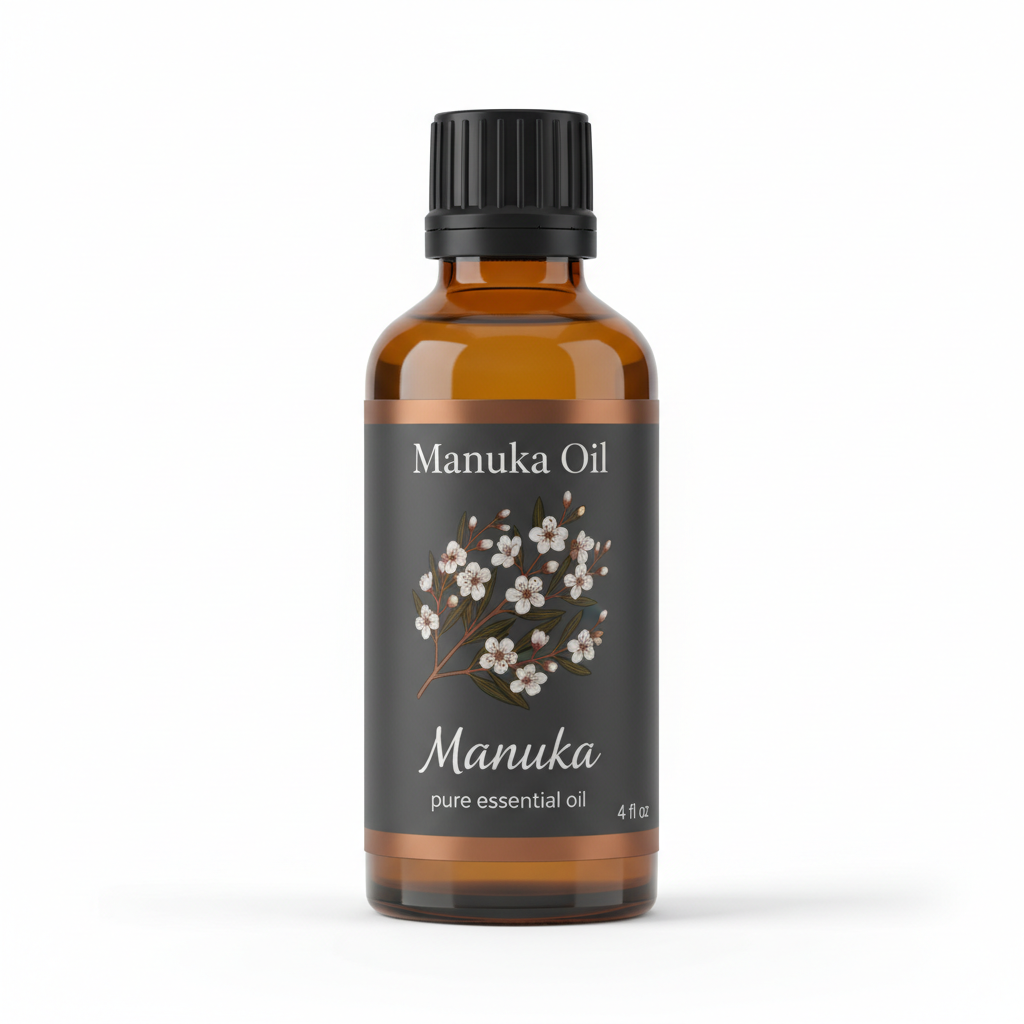
Manuka Essential Oil
Our own Manuka Essential Oil, in sizes from 0.5 oz to bulk.
From $18.99
Shop Now →Oils do not spoil, they change
An essential oil is not food and it does not go mouldy in the bottle. What happens instead is chemistry. The review by Turek and Stintzing describes essential oils as lipophilic, volatile mixtures that are prone to oxidation and polymerisation, and it names temperature, light and oxygen as the main drivers of those changes (Turek and Stintzing, 2013). Put simply, oxygen slowly reacts with the fragrant molecules, and heat and light speed it up. The oil does not turn into something else overnight. It drifts.
That drift has two consequences. The aroma changes, and the make-up of the oil changes, which is why the Tisserand Institute says oxidation products tend to be slightly toxic and to increase the risk of adverse skin reactions (Tisserand Institute). The aroma is the part you enjoy, but the skin point is the one that matters for what you do with an old bottle.
How long we say it lasts
We say manuka oil typically keeps for 2 to 3 years when it is tightly capped and stored somewhere cool and dark. Treat that as a planning figure and not a guarantee, because the way you store the bottle moves the number. The Tisserand Institute itself calls its own figures rough guidelines, saying most essential oils keep well for at least one to two years before oxidation starts to take effect, with a wide variation between oils.
Where does manuka sit in that range? Manuka oil is made largely of sesquiterpene hydrocarbons, the heavier, slower-evaporating compounds, with comparatively few of the light monoterpenes that fill a citrus or conifer oil (Porter and Wilkins, 1999). That suggests it may age more gently than the lightest oils, though we are reasoning from its make-up here, because we do not know of an ageing study on manuka itself. The best-known ageing work in this family was done on tea tree oil, a different oil. In that study, tea tree oil left on a window sill developed rising peroxide levels within four days, and the oxidised oil was about three times stronger as a skin sensitiser than fresh oil in guinea pigs (Hausen, 1999). It tells you how fast light and air can act on a monoterpene-rich oil, and it is a good reason to be careful with any oil, but it is not a measurement of ours.
What to check on an older bottle
You do not need a lab. Run through this in order:
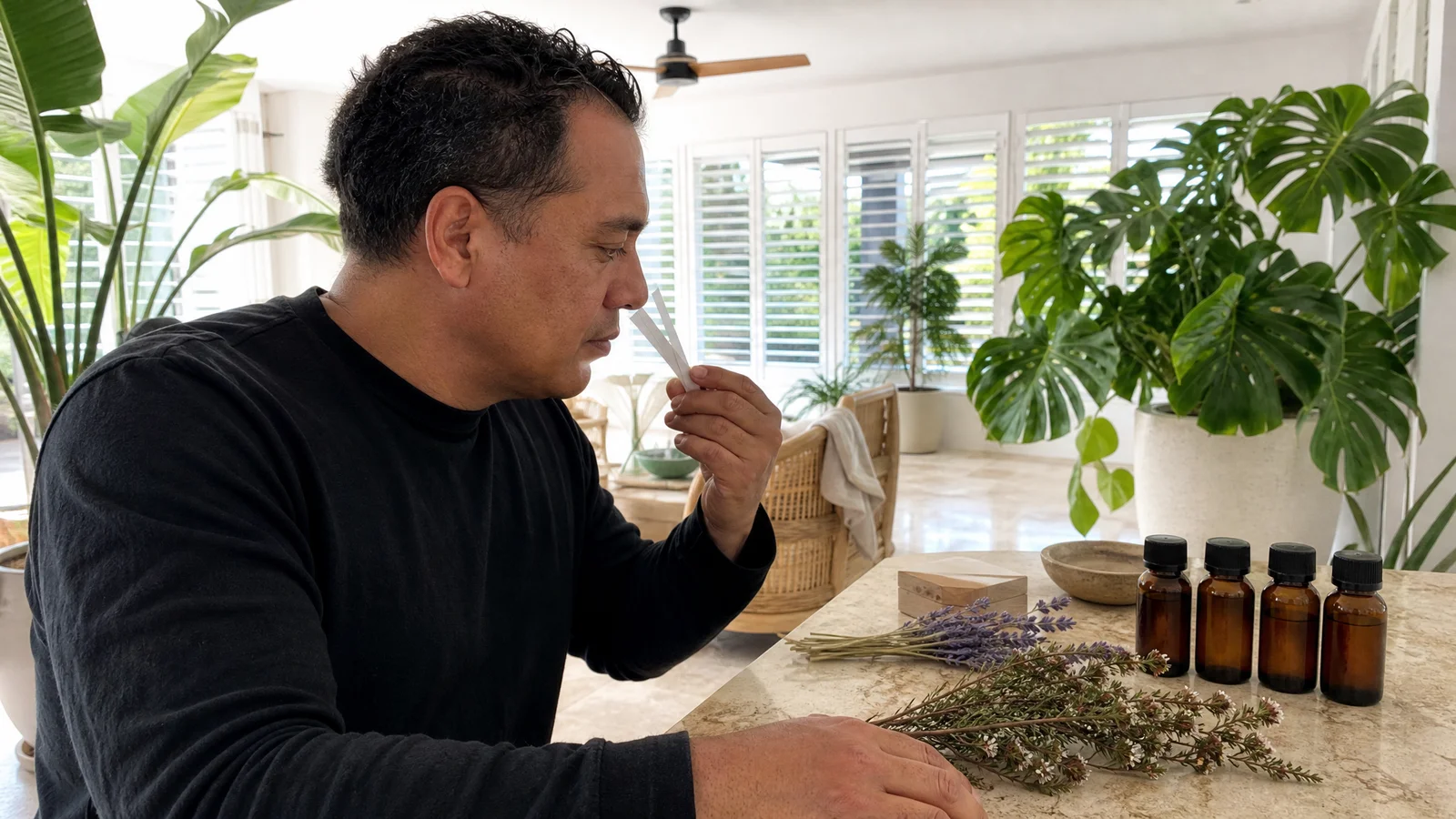
- Smell it from a few centimetres away. Compare it with what you remember, or with a newer bottle if you have one. We describe the aroma as earthy, honeyed and warm with a slightly spicy edge. The Tisserand Institute says the smell changes a little as an oil oxidises, so a flatter, sharper or sourer note, or a loss of that warmth, is a sign the oil has moved on.
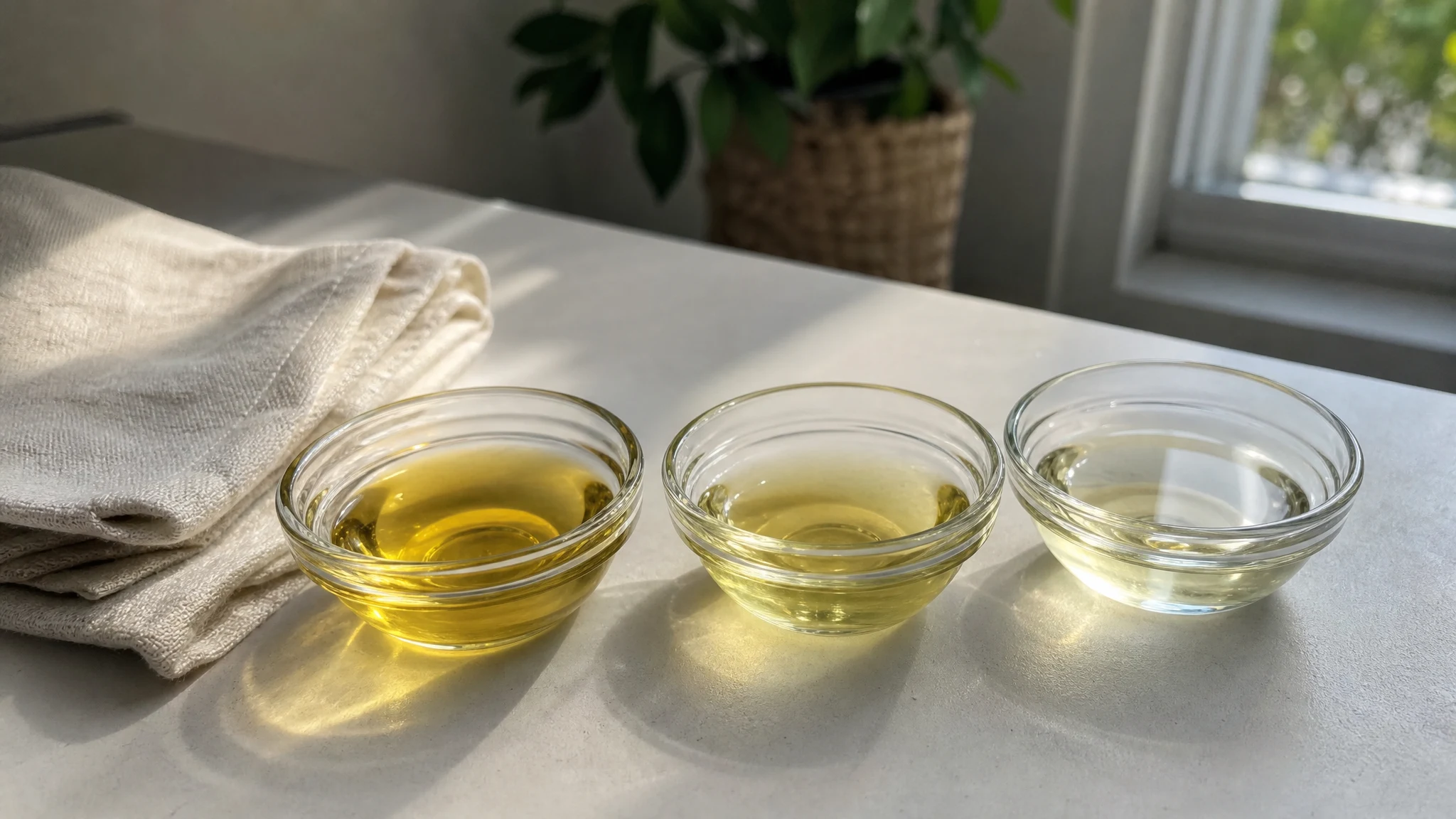
- Look at the liquid. Cloudiness or a sticky ring of residue around the neck of the bottle is worth noticing; the Tisserand Institute links cloudiness in citrus oils to moisture getting into the bottle.
- Feel the viscosity. The Tisserand Institute notes that very old oils may become more viscous, eventually solidifying. If the oil is thick or sticky when it used to pour freely, it has aged.
- Think about how it has been kept. A bottle that sat on a sunny sill or beside a stove for months has aged faster than the date suggests.
None of these tells you the exact chemistry, but together they are a sensible screen. When in doubt, the cautious call is the right one.
What we would do with an older bottle
If a bottle smells right and looks right, there is no reason to throw it away because the calendar says so. If it has changed, we would stop putting it on skin, in lotions or in soap, since skin is where the sensitiser worry lives. If the smell has become unpleasant, a fresh bottle is the better choice, and your local household waste service can tell you how to dispose of the old one.
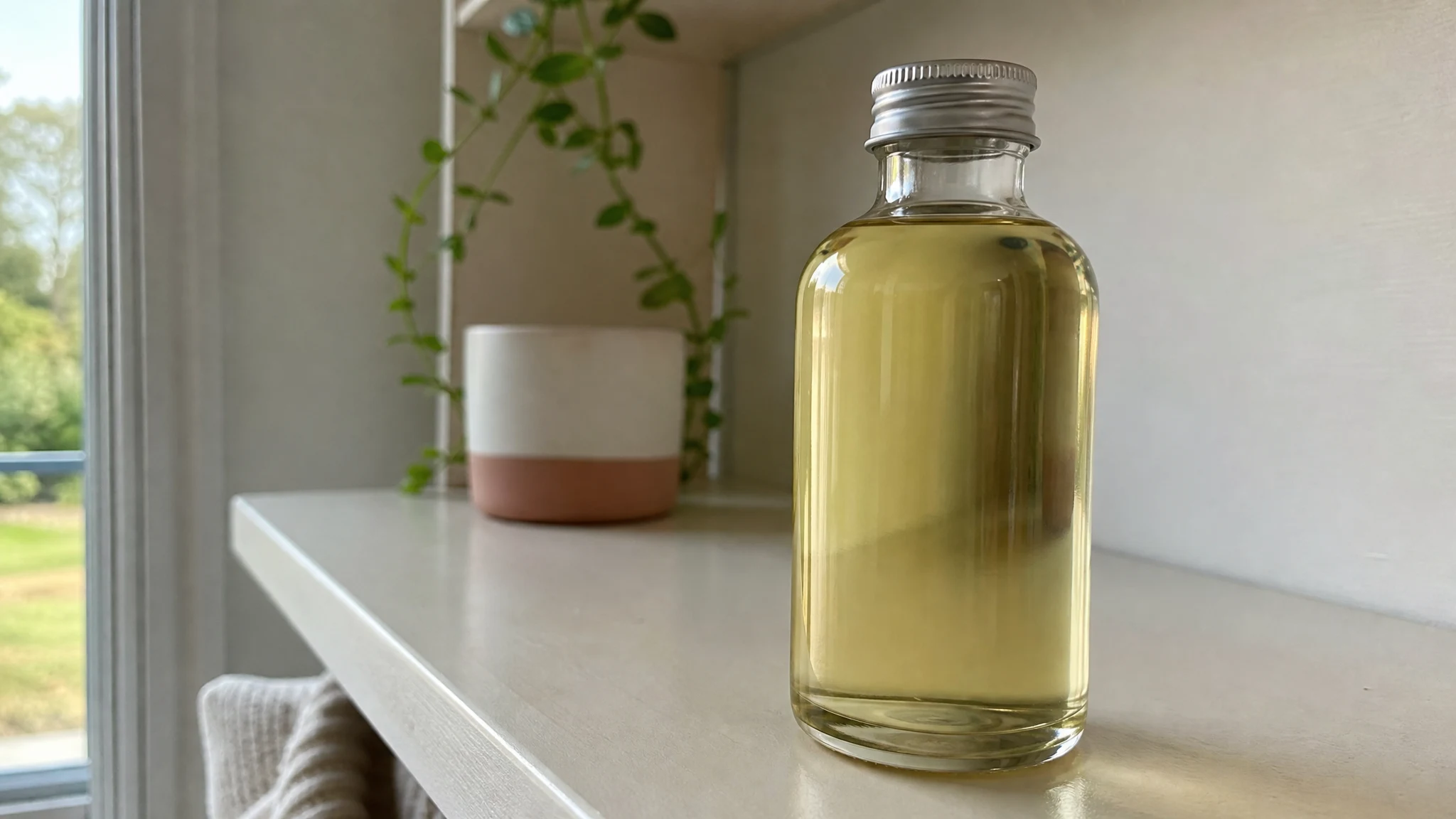
The Tisserand Institute suggests that refrigeration extends the useful life of an oil, but we would keep manuka in a cool, dark cupboard instead, because opening a cold bottle in a warm room can draw moist air in. Our storage guide walks through the habits that matter: cap it right away, keep it out of the light, and move it to a smaller bottle as it empties so there is less air in the headspace.
Buying with ageing in mind
If you only use a few drops at a time, a small bottle is a better fit than a large one, and our piece on bottle sizes by drops shows the arithmetic. A bottle you finish in a year or two never gets the chance to age much. The published Certificate of Analysis for one of our batches shows a best-by date, which is a useful marker for that batch, though a date on paper does not replace your nose.
The simplest habit is the best one: write the day you open a bottle on a piece of tape, keep it capped, and trust your senses. An oil you enjoy smelling is usually an oil that is still doing its job.
Manuka Essential Oil
Manuka Essential Oil from our own shop, in sizes from 0.5 oz to bulk.
From $18.99
Shop Now →Sources & Further Reading
- Stability of Essential Oils: A Review, Turek and Stintzing, Comprehensive Reviews in Food Science and Food Safety, 2013
- Is my bottle of essential oil oxidized or no longer good to use?, Tisserand Institute
- Degradation products of monoterpenes are the sensitizing agents in tea tree oil, Hausen et al., American Journal of Contact Dermatitis, 1999
- Chemical, physical and antimicrobial properties of essential oils of Leptospermum scoparium and Kunzea ericoides, Porter and Wilkins, 1999