How to Store Manuka Oil So It Stays Fresh
An oil bottle looks like the most patient thing in your cupboard, but air, heat and light are quietly at work on it every time it sits open or by a window. The good news is that the habits that keep manuka oil fresh are small and easy, and they all follow from one idea: keep it away from what ages it.
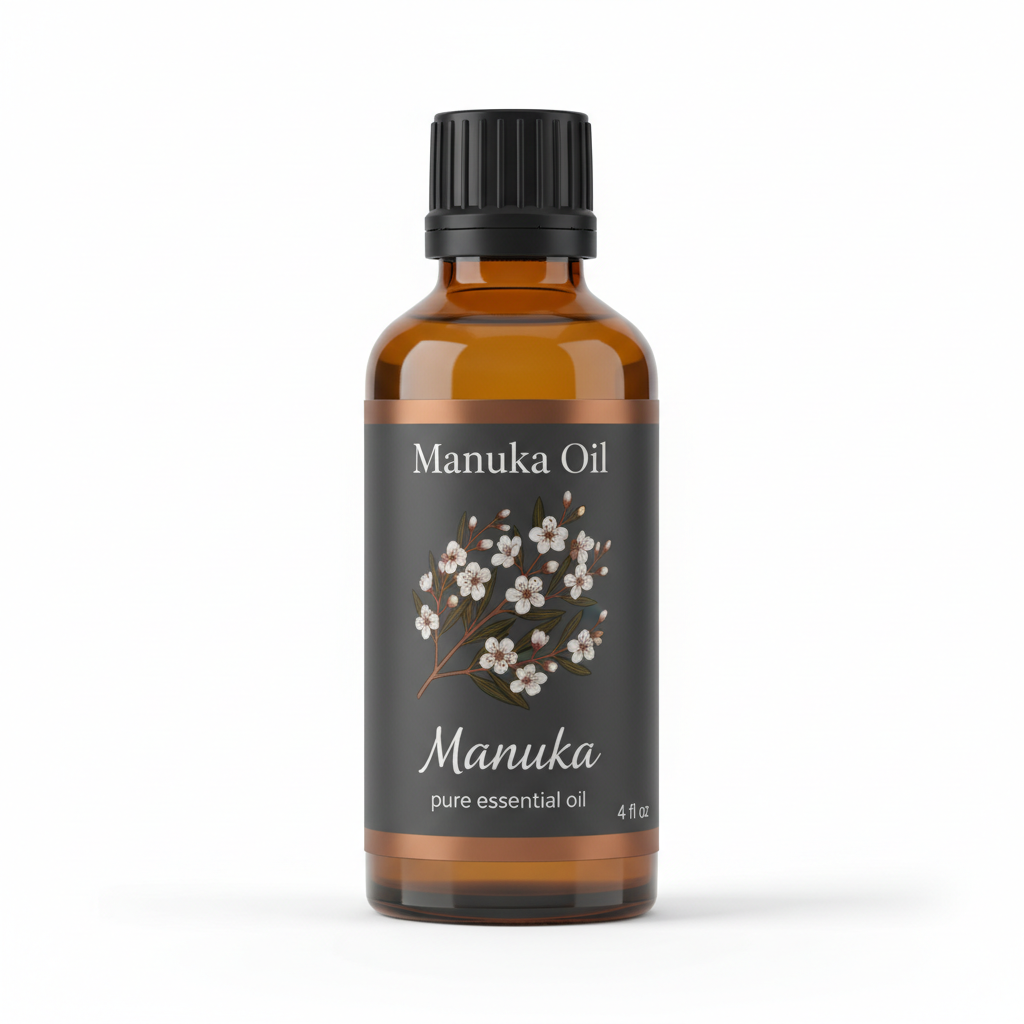
Manuka Essential Oil
Our own Manuka Essential Oil, in sizes from 0.5 oz to bulk.
From $18.99
Shop Now →What we recommend
Our guidance is simple: keep the bottle tightly capped in a cool, dark place away from heat and sunlight. Handled that way, manuka oil typically keeps for 2 to 3 years. That is our estimate, not a promise about every bottle in every kitchen, so think of it as a target to help you plan, not a deadline.
Why air, light and heat matter
The best evidence comes from tea tree oil, a different oil that has been studied for ageing. Researchers found that tea tree oil exposed to air developed rising peroxide levels within days, and that the oxidised oil was about three times stronger as a skin sensitiser than fresh oil in guinea pigs (Hausen et al.). The NCCIH says much the same thing in everyday terms: redness or irritation is more likely when a tea tree product is old or has been exposed to heat, light or air (NCCIH).
Manuka oil is a different mixture, rich in heavier sesquiterpenes rather than the lighter compounds that dominate tea tree oil, so it may age more slowly. We do not claim that, but the lesson carries over: air, light and time change an oil, so give it as little of each as you can.
Habits that help
- Cap it right away. Wipe the neck of the bottle so the cap seats cleanly, and close it after every use.
- Choose the spot. A closed cupboard away from windows, stoves and radiators is ideal.
- Downsize as it empties. A half-empty bottle holds a lot of air, so moving the rest to a smaller, clean, dry, dark glass bottle limits what the oil can react with.
- Decant bulk. If you hold a large container, fill the small bottles you use through a season and keep the rest sealed, so you open the big one less often.
- Write the date. Note the day you open a bottle. It is a fact you hold, and it is more useful than guesswork.
We would skip the refrigerator. Cold is not harmful in itself, but a cold bottle brought into a warm room can draw moist air in when you open it, and a cool interior cupboard does the job.
Where to keep it, room by room
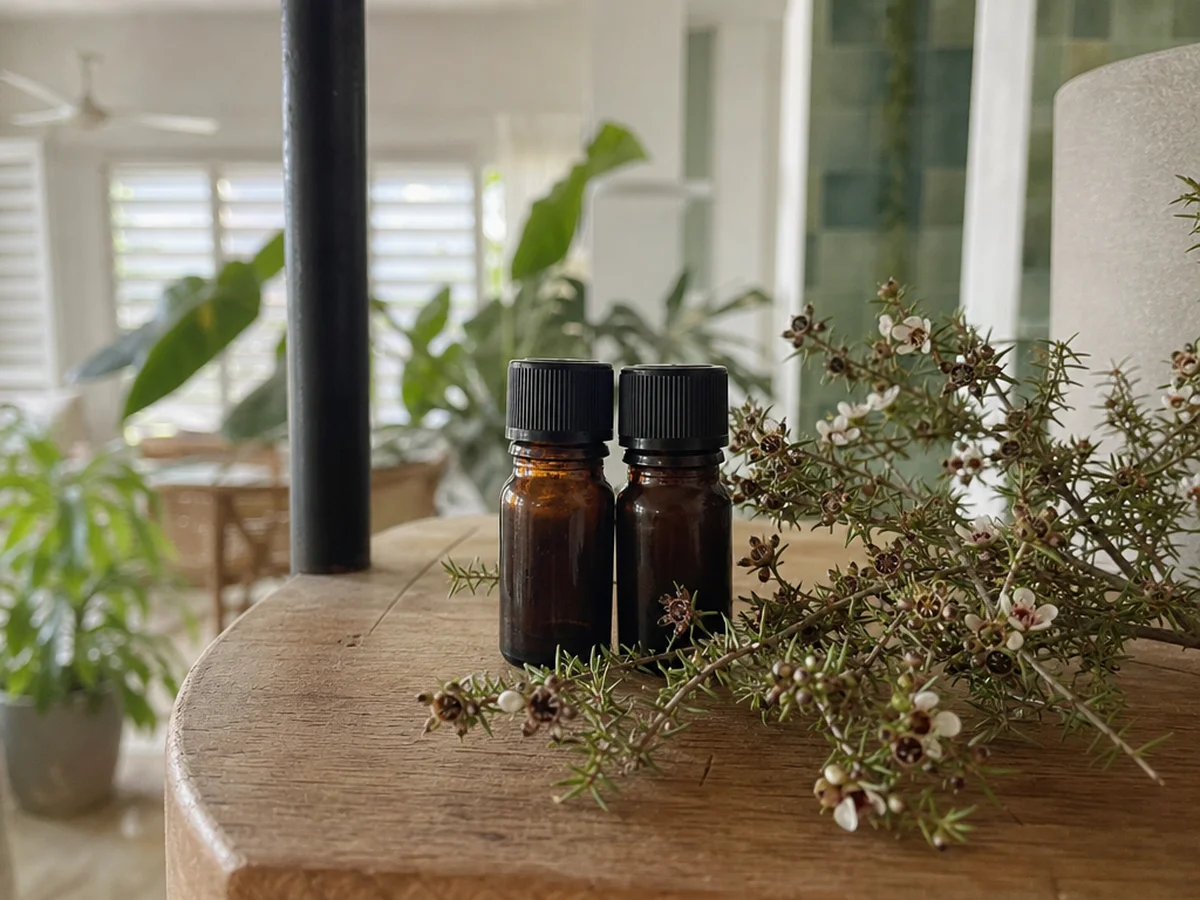
It is tempting to keep oils where you will use them, and that is where trouble starts. The bathroom shelf gets steam and warmth. The kitchen counter by the kettle gets heat. A sunny windowsill gets both. A bedroom drawer or a shelf in a hallway cupboard is usually the quiet, cool, dark spot you are looking for.
Think of it like a pantry for your oils: somewhere you walk to, take what you need, and put it back. If you travel with a bottle, keep it upright and capped, and wrap it in a sock or small pouch so it stays out of the light and the heat of a bag in a warm car.
Size the bottle to your use
Here is where arithmetic helps. A 1 oz bottle holds about 26.5 g of oil, roughly 591 drops at 20 drops to the millilitre. A 1 oz (30 ml) batch of carrier at 2% takes about 12 drops, so one bottle covers around 49 batches. At 0.5%, about 3 drops, it stretches to nearly 200. Someone mixing one batch a month at the top rate would need about four years to finish a 1 oz bottle, longer than our 2 to 3 year guidance. The takeaway is to order for about a year of use, rather than chasing the biggest bottle. Our bottle sizes article walks through each size the same way.
Keep it out of small hands
The Tisserand Institute says all essential oils should be sold in bottles with child-proof caps, and our own guidance is to keep manuka oil away from children and pets. A high shelf is the minimum; a closed cabinet is better. If anyone swallows the oil, our swallowing article explains the steps.
Smell it when it is new
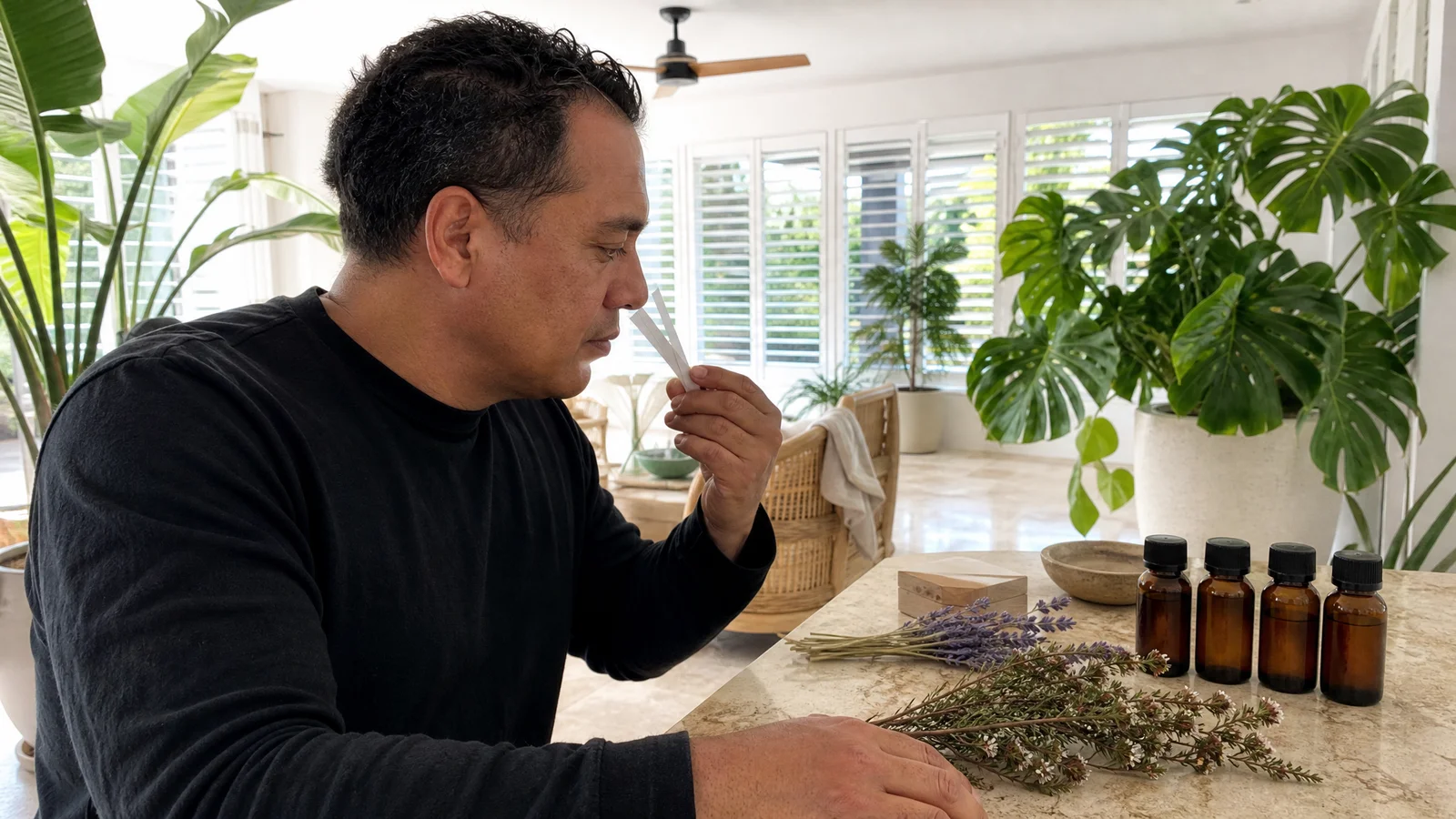
Make a habit of smelling the oil the day you open it. The warm, honeyed, slightly spicy aroma is your baseline. Months later, a quick sniff against what you remember is the simplest check you have, and it only works if you took notice at the beginning.
Is an old bottle still good?
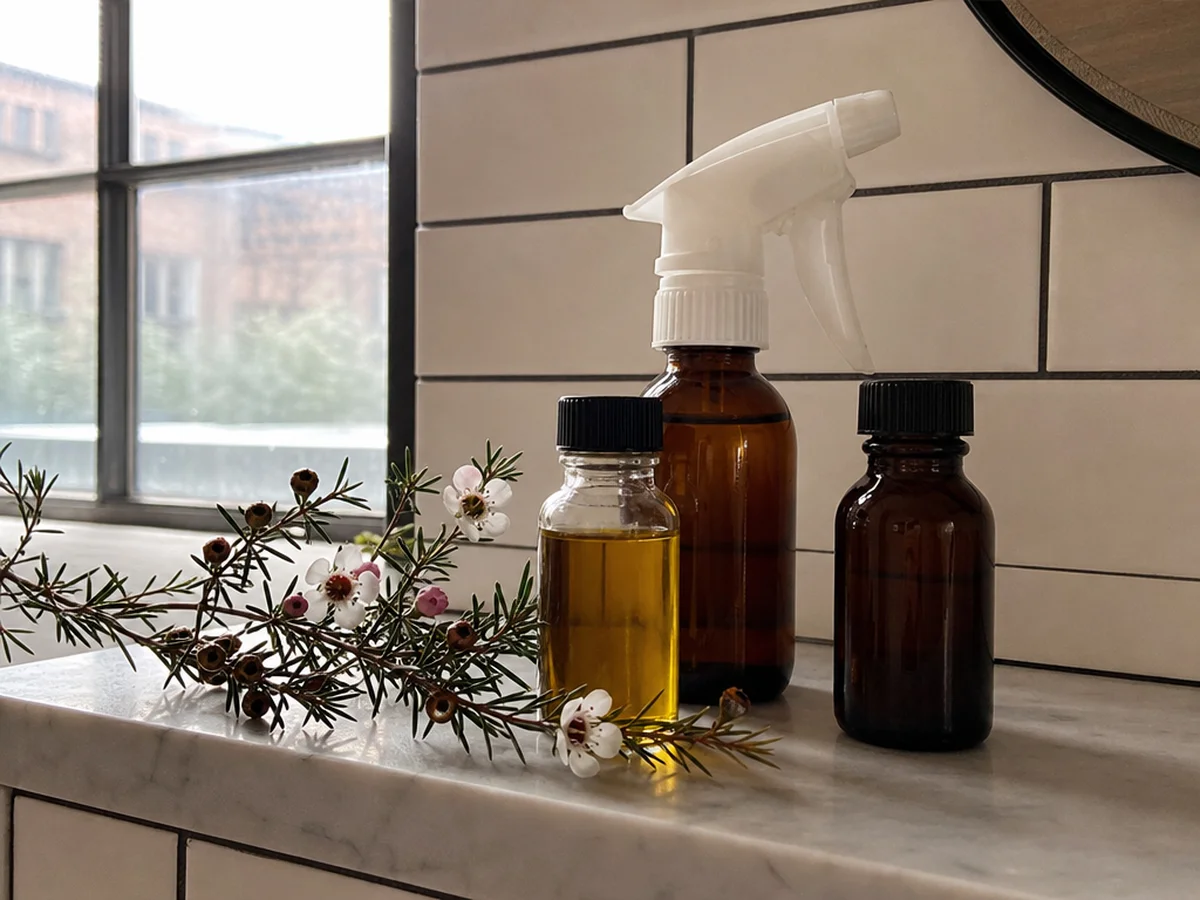
There is no simple home test, so we suggest a common-sense rule. If the smell or look has changed from what you remember, retire it from skin use. DermNet NZ adds a useful point: if you react to a product, patch testing your own products can help, because the allergen may be an oxidised component. Our certificate walkthrough shows the best-by date on the batch we document, which is another handy marker.
Treat a bottle kindly and it will repay you with a steady, honeyed aroma for a long time.
Manuka Essential Oil
Manuka Essential Oil from our own shop, in sizes from 0.5 oz to bulk.
From $18.99
Shop Now →Sources & Further Reading
- Degradation products of monoterpenes are the sensitizing agents in tea tree oil, Am J Contact Dermat, 1999
- Tea Tree Oil: Usefulness and Safety, NCCIH
- The composition of commercial manuka oils from New Zealand, Journal of Essential Oil Research, 1999
- How to Use Essential Oils Safely, Tisserand Institute
- Allergic contact dermatitis to essential oils, DermNet NZ