Manuka Oil COA: What Each Line Tells You
A Certificate of Analysis looks reassuring: a table, a batch number, a line that says everything complies. Ours reports five test lines, and the useful thing is to know exactly what each one tells you. Here is our own certificate, read line by line, along with the questions it invites you to ask us.
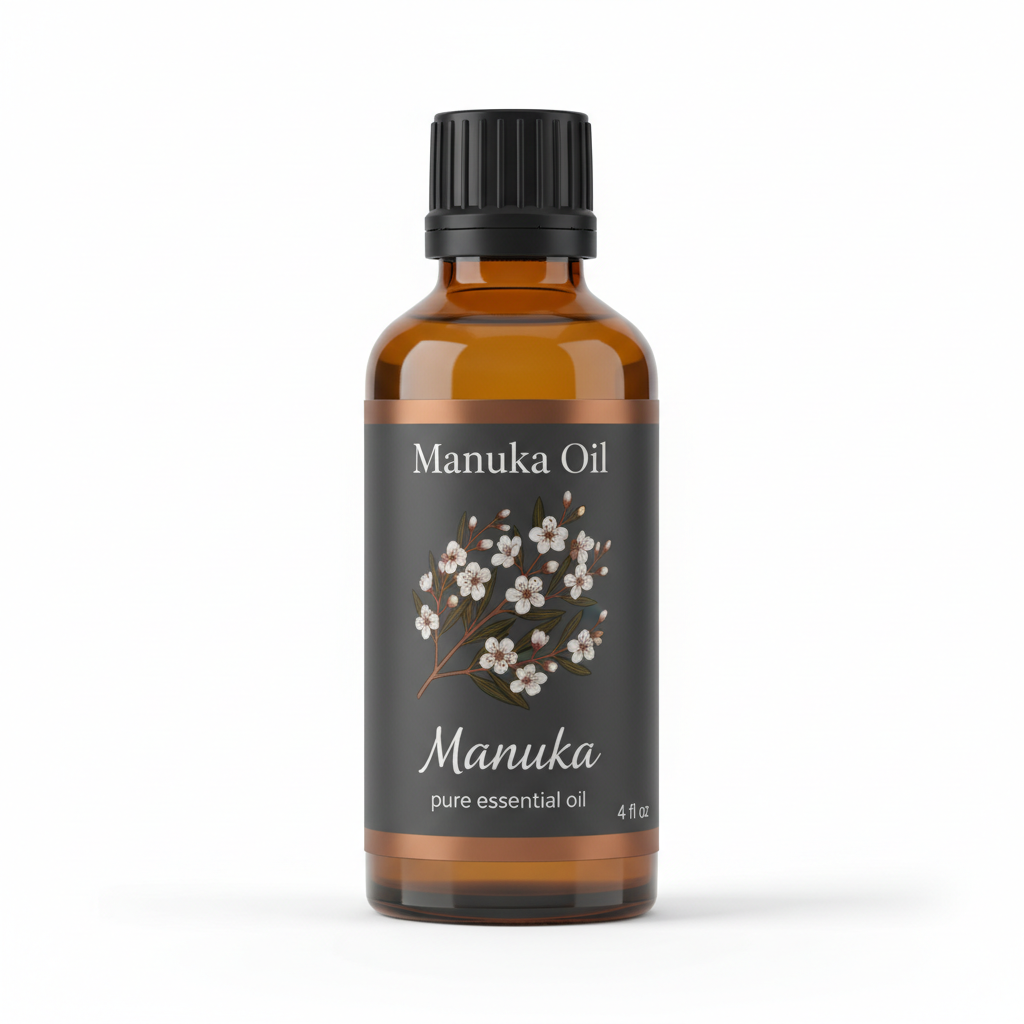
Manuka Essential Oil
Our own Manuka Essential Oil, in sizes from 0.5 oz to bulk.
From $18.99
Shop Now →The five lines
The certificate we publish is for batch MNKLUUUNUNC010A, botanical name Leptospermum scoparium, parts used leaf, best by 11/30/2027. Its criterion is listed as "Pharmacopoeia".
| Line | Result | What it tells you |
|---|---|---|
| Appearance | Clear liquid | No visible cloudiness, water or particles at inspection |
| Smell | Sweet, Honey, Herbal | A sensory description, which is not a measurement of compounds |
| Relative density, 20 C | 0.896 | A millilitre of this batch weighs about 0.9 g, the number behind our drops-to-grams sums |
| Refractive index, 20 C | 1.489 | A physical property of the whole liquid |
| Optical rotation, 20 C | -3.84 degrees | One net figure for how the batch turns polarised light |
Each of these is a single number describing a whole mixture. That makes them handy for sanity checks and for arithmetic, and it is why they cannot be a complete picture of composition on their own. The 2021 adulteration study makes the point about density: vegetable oils are chosen as diluents partly because their density and texture are similar to essential oil. It looked at lavender, lemon and tea tree rather than manuka, but the logic carries over.
The best-by date of 11/30/2027 is the date assigned to the batch, and it sits alongside our guidance that the oil typically keeps 2 to 3 years when stored tightly capped, cool and dark. The conclusion line says all tested parameters comply with pharmacopoeia standards for manuka oil. The standard column is blank and no pharmacopoeia is named, so the certificate gives you the results rather than the limits behind them.
The number to ask us about
Manuka oil varies more than most. A 2020 review notes that composition varies both between and within natural populations, that East Cape material is reported to be richer in beta-triketones, and that commercial oils list leptospermone anywhere from 0.8% to 19.4%. A survey of 261 plants described a triketone-rich East Cape type and ten other chemotypes. Those are literature figures about other oils and surveys, not statements about our batch.
The plain consequence is that a triketone percentage would place an oil among those types, and a density of 0.896 would not. Our certificate documents appearance, smell, density, refractive index and rotation, and carries no GC-MS chromatogram or constituent percentages, no extraction method, no origin and no laboratory name. For the compounds themselves see our triketones article, and for the regional question see East Cape versus other origins.
Is 0.896 typical?
We would love to tell you, but the 2020 review gives no density, refractive index or rotation values for manuka oil, and it calls for standardisation of the oil, naming ISO and AFNOR as possible bodies. Without a published reference range, you can read our numbers as a record of this batch, and compare them with whatever your own supplier reports for the same measurements.
Even GC-MS has limits
If you do ask for a GC-MS report, ask for it quantitative. The adulteration study found that diluting an oil with vegetable oil changes neither its qualitative composition nor the normalised percentages of its markers, so a list of peaks can look normal either way. A report with absolute quantities, the method named and tied to a lot is the useful kind.
Keeping the certificate with your records
A certificate is most useful when it lives next to the thing it describes. If you buy a bottle, save a copy of the document with the date, the lot you received and any notes about the aroma when you open it. Put them in the same folder you use for your recipes. When you come back to buy again, you will have a simple record to compare, and when you write to us you can quote the lot you are asking about.
Read the certificate slowly with a pencil. Underline the batch code and the best-by date, circle the test lines, and write your own questions in the margin. A page you have marked up is far more likely to lead to a useful question than one you have only skimmed.
One last practical tip: when you smell the oil from the bottle, compare it with the certificate's three words, sweet, honey and herbal. Your nose may find more or fewer of them, and that is fine. We describe the aroma as earthy, honeyed and warm with a slightly spicy edge, and noting where your impression lines up with either description is a pleasant way to get to know the oil.
How to ask us for more
- Say what you need before ordering: a triketone fraction, a chemotype, an origin or an allergen profile.
- Ask in writing through our contact page, for the batch you will receive, and keep the answer in writing.
- Ask for the method and the standard along with any value, so results from different suppliers can be compared.
- Remember that the batch code above belongs to the batch on the published document, so refer to the lot you are buying.
Our label reading article and our quality checks article cover the same ground from the buyer's side, and the bulk and wholesale pages are the place to start a conversation about volume. You can read the document itself at the published certificate.
A short, clear certificate is a good starting point for a conversation. Knowing what it covers helps you ask the right next question.
Manuka Essential Oil
Manuka Essential Oil from our own shop, in sizes from 0.5 oz to bulk.
From $18.99
Shop Now →Sources & Further Reading
- Mathew C et al., 2020. Mānuka Oil-A Review of Antimicrobial and Other Medicinal Properties. PMC7694078
- Douglas MH et al., 2004. Essential oils from New Zealand manuka: triketone and other chemotypes of Leptospermum scoparium. pubmed.ncbi.nlm.nih.gov/15184010
- Capetti F et al., 2021. Adulteration of Essential Oils: A Multitask Issue for Quality Control. Three Case Studies: Lavandula angustifolia Mill., Citrus limon (L.) Osbeck and Melaleuca alternifolia (Maiden & Betche) Cheel. PMC8471154