Manuka Linen Spray: A Recipe That Stays Mixed
Shake a bottle of water with a few drops of essential oil in it and you get a pretty cloud for about ten seconds. Then the oil climbs back to the top, and the first sprays are mostly water while the last ones leave oily beads on your pillowcase. A good manuka linen spray is really a mixing problem, and it has a tidy answer.
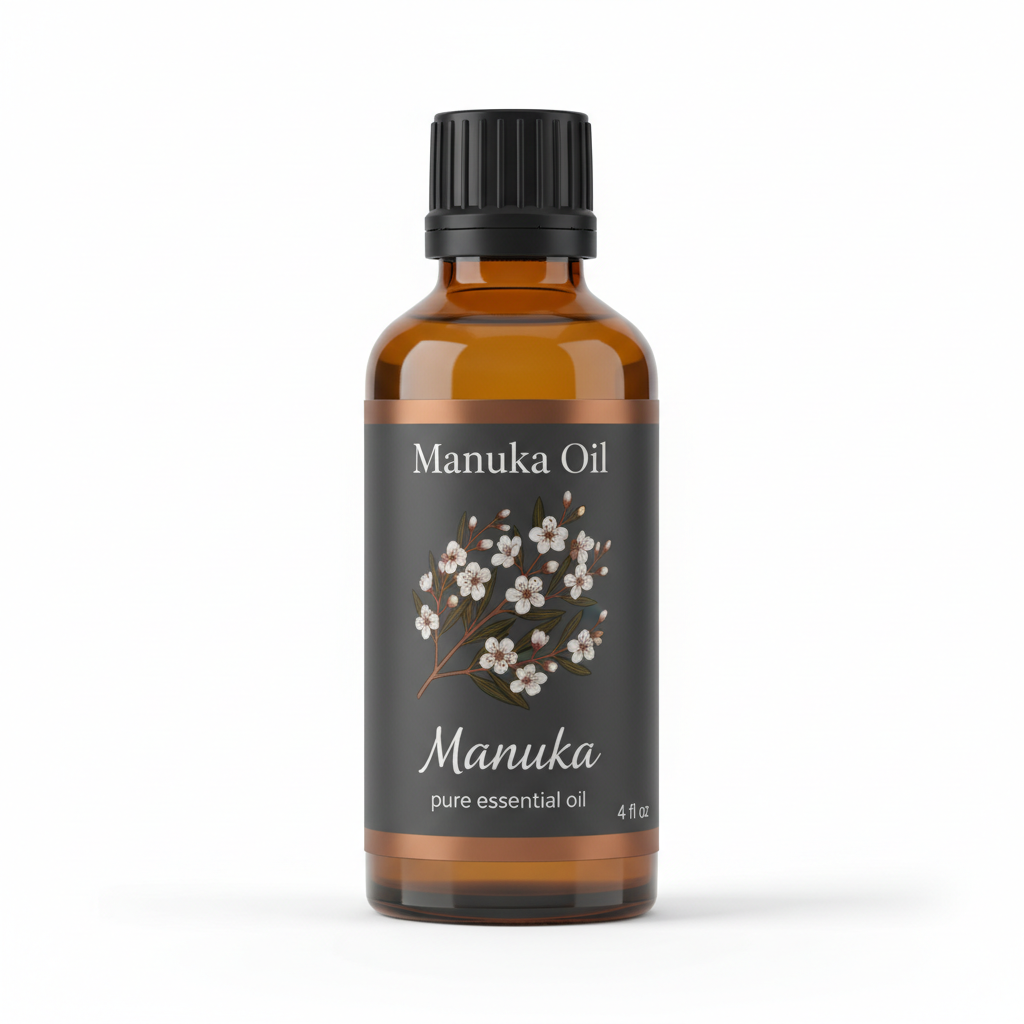
Manuka Essential Oil
Our own Manuka Essential Oil, in sizes from 0.5 oz to bulk.
From $18.99
Shop Now →Why vodka and witch hazel do not do the job
Many recipes tell you to add vodka or witch hazel to "dissolve" the oil. The Tisserand Institute, in its guidance on essential oils in water, lists exactly those along with cornstarch, baking soda, salt, milk, glycerin and aloe vera as things that do not disperse essential oil. What does work is a dispersant such as Polysorbate 20, and the page suggests starting at one part oil to one part Polysorbate 20, mixed together before any water goes in. It also notes that water-based products such as room sprays can use more dispersant if needed.
That page is written about baths, so applying it to a mist is our reasoning, but the chemistry problem is the same: oil and water need a go-between. Our recommendation is to treat the dispersant as a core ingredient rather than an optional extra.
A 100 g bottle, worked by weight
We sell manuka oil neat, and the Certificate of Analysis we publish for one batch gives a relative density of 0.896, so a millilitre of that batch weighs about 0.9 g. At the common rough convention of 20 drops to the millilitre, half a gram of oil is about 11 drops. A kitchen scale that reads to 0.1 g is more reliable than counting drops.
| Ingredient | For 100 g | Note |
|---|---|---|
| Manuka oil | 0.5 g (about 11 drops) | 0.5% of the weight |
| Polysorbate 20 | 0.5 g | Equal weight to the oil, mixed with it first |
| Distilled water | about 99 g | Added slowly to bring the total to 100 g |
| Preservative | per the supplier's data sheet | Any water-based product needs one |
The 0.5% is our suggested starting point, not a published figure for manuka sprays. It mirrors the low end of our 0.5% to 2% skin dilution guidance, and a faint scent is easy to strengthen later. On this size, 0.25% is about 6 drops and 1% is about 22. Our aroma notes call manuka earthy, honeyed and warm with a slightly spicy edge, and a drop or two goes a long way, so begin low and let the cloth tell you.
Polysorbate 20 and preservatives come from cosmetic and soap-supply shops, not from us. The preservative's data sheet gives its usable rate, so follow that rather than guessing.
Why the preservative earns its place
A bottle that is 99% water is a friendly home for microbes. The FDA's fact sheet for small cosmetic makers puts it plainly: cosmetics are not required to be sterile, but microbial contamination can pose a health hazard. The sheet does not name a preservative for any product, which is why we point you to the supplier's rate. If you would rather skip one, make a very small batch, keep it cold and use it within days. That is our own cautious inference from the FDA's warning, not a tested shelf life.
Making it
- Wash the bottle and a small jar in hot soapy water, rinse and let them dry fully.
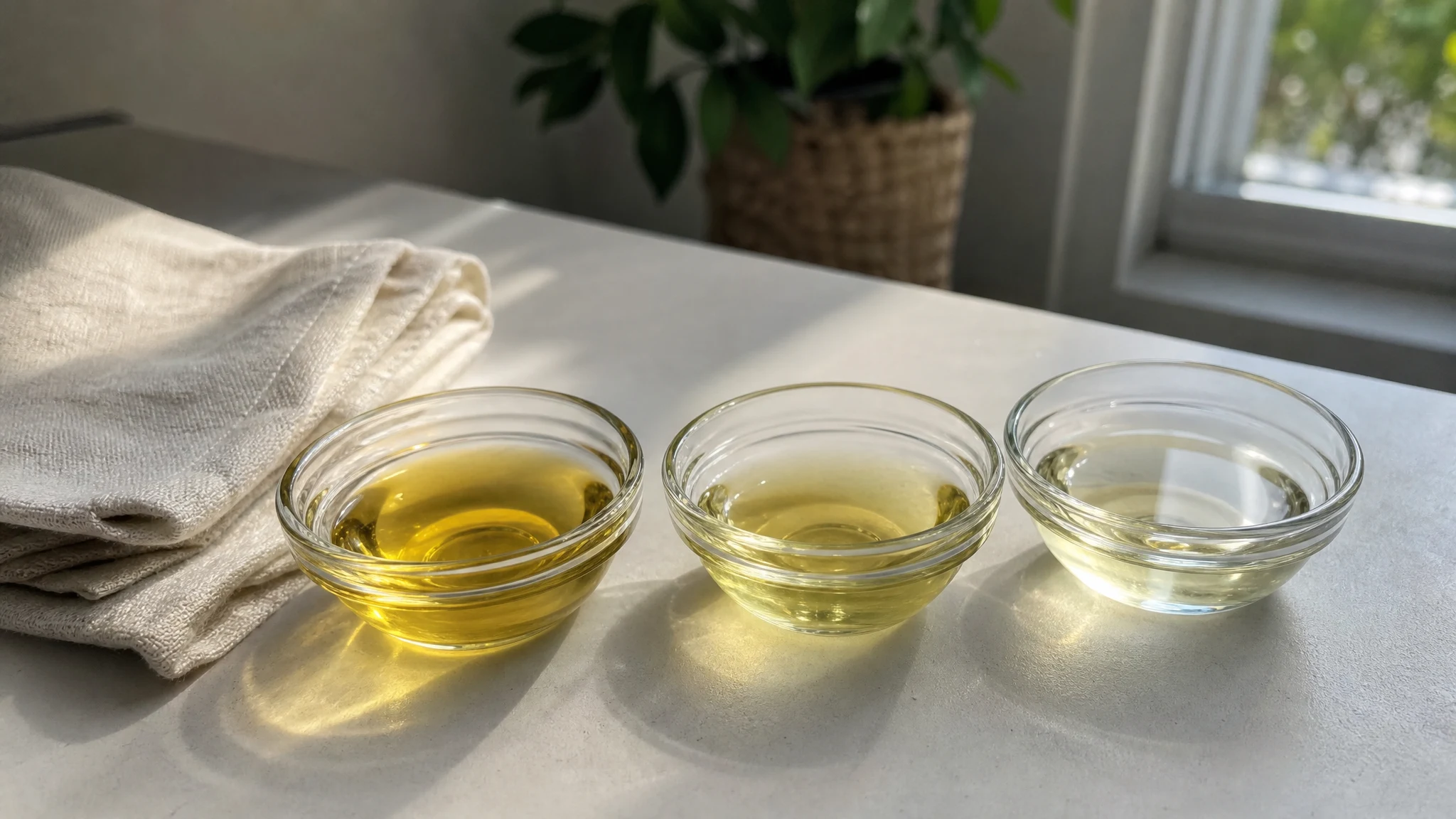
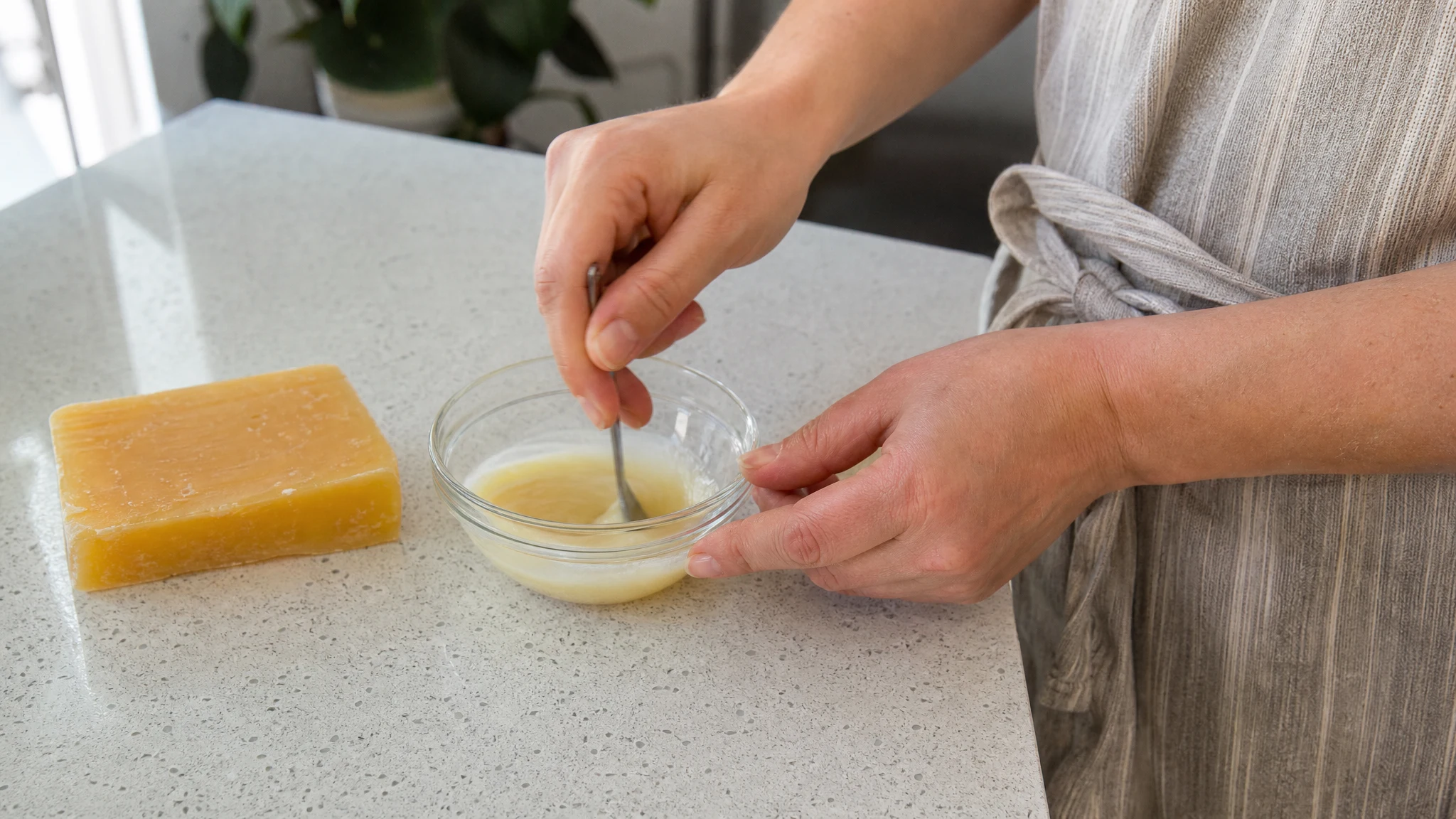
- Weigh the Polysorbate 20 into the jar, then the manuka oil on top of it.
- Stir until the two look like one clear, slightly viscous liquid.
- Add the distilled water a little at a time, stirring, until the scale reads 100 g.
- Stir in the preservative at the supplier's rate and pour through a clean funnel.
- Label it with the date, then try one spray on a hidden corner of the fabric.
Keep the neat oil itself tightly capped in a cool, dark place, as we recommend. The reason is oxidation: a 1999 study that left tea tree oil (a different oil) on a window sill found its peroxide levels rose sharply within four days. Manuka oil has its own chemistry, so we simply take it as a good reason for dark bottles and small batches.
A few finishing tips make a spray nicer to use. Spray from about a foot away, so you get a fine mist and not drops, and let the fabric dry before you fold it. A light cotton cloth takes scent more gently than a heavy blanket, and a hidden corner will tell you about staining. Scent a drawer liner or a small cloth rather than the sheets you sleep in until you know how strong you like it.
Who should sit this one out
A room spray puts oil into the air, so a few people should check first. Tisserand reports anecdotal accounts that people with asthma may find certain essential oils trigger an attack, and it advises talking to a doctor before using them. The same page says to keep essential oils where young children cannot reach them and to let in some fresh air.
Pets deserve a separate word. Our safety guidance is to keep the oil away from eyes, children and pets. The Pet Poison Helpline says of tea tree oil, which comes from a related plant family, that higher concentrations are toxic to pets. We know of no manuka-specific figure for animals, so our plain advice is to leave pet bedding and pet spaces unsprayed and to ask a veterinarian before using any oil around an animal.
If you love the idea of manuka's scent on linens, our scent profile and pairing guide help you plan a blend, and the storage article keeps the bottle in good shape between batches. If a spray ever gives you redness or itching, the side effects article covers what to do next.
Start with one small bottle, weigh everything, and judge the scent on a spare cloth after a day before it goes near the good sheets.
Manuka Essential Oil
Manuka Essential Oil from our own shop, in sizes from 0.5 oz to bulk.
From $18.99
Shop Now →Sources & Further Reading
- Tisserand Institute. Bath Safety: how to use essential oils safely in the bath. tisserandinstitute.org/safety/bath-safety
- Tisserand Institute. How to Use Essential Oils Safely. tisserandinstitute.org/safety/safety-guidelines
- FDA. Small Businesses & Homemade Cosmetics: Fact Sheet. fda.gov
- Hausen BM, Reichling J, Harkenthal M, 1999. Degradation products of monoterpenes are the sensitizing agents in tea tree oil. pubmed.ncbi.nlm.nih.gov/10357714
- Pet Poison Helpline. Tea Tree Oil Is Toxic To Dogs. petpoisonhelpline.com