Manuka Oil Bottle Sizes: How to Choose by Drops
The bottle that looks like the best value is often the one that outlasts the oil. Even our smallest manuka size holds nearly 300 drops, which is a lot more projects than most people expect. Working out your drops first makes the choice easy.
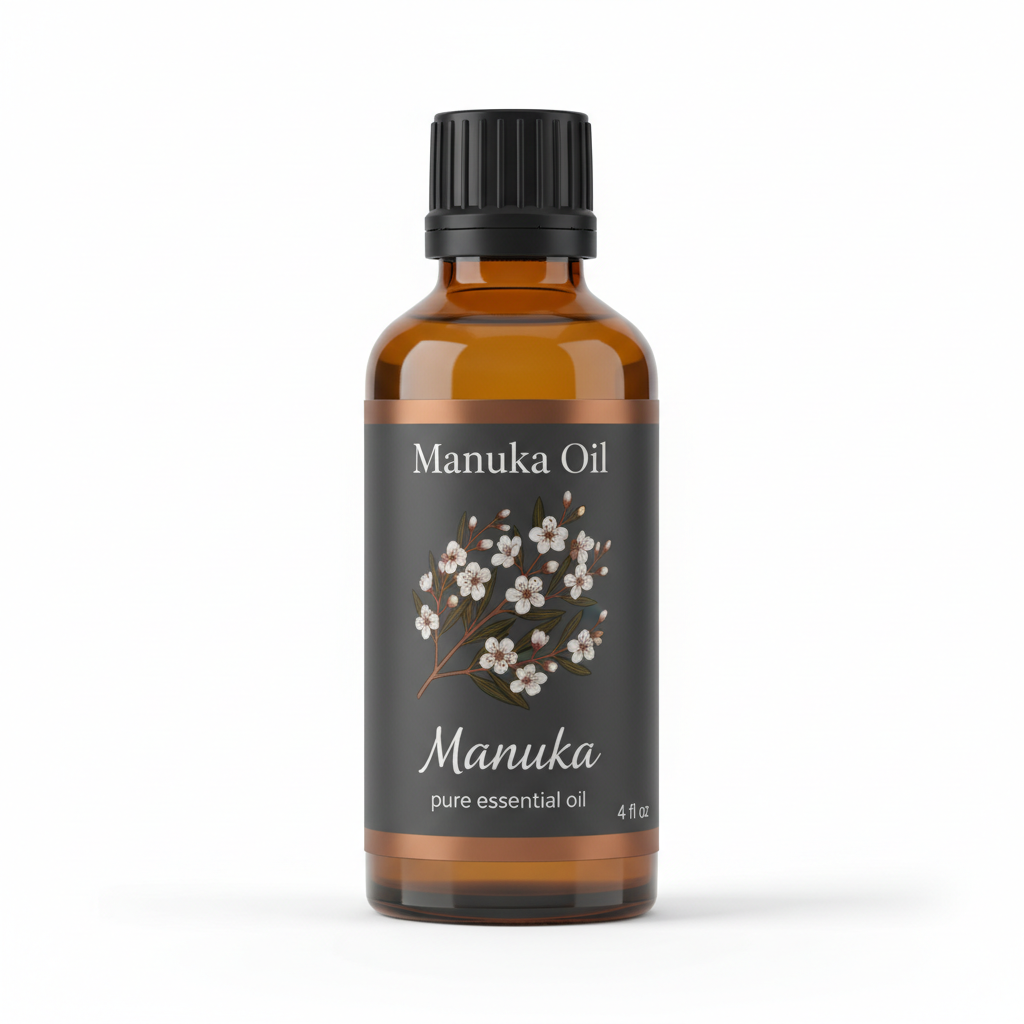
Manuka Essential Oil
Our own Manuka Essential Oil, in sizes from 0.5 oz to bulk.
From $18.99
Shop Now →How many drops will you really use?
We sell manuka oil neat, so dilution is yours to work out. Our guidance is 0.5% to 2% in a carrier oil with a patch test first, which is roughly 3 to 12 drops per ounce of carrier. The conversion is simple. The Certificate of Analysis we publish for one batch gives a relative density of 0.896, so a millilitre of that batch weighs about 0.9 g, and a dropper delivers about 20 drops per millilitre (droppers vary, so weigh if you need accuracy). Our undiluted use article covers why dilution matters.
| Retail size | Grams of oil | Approx. drops | One-ounce 2% batches |
|---|---|---|---|
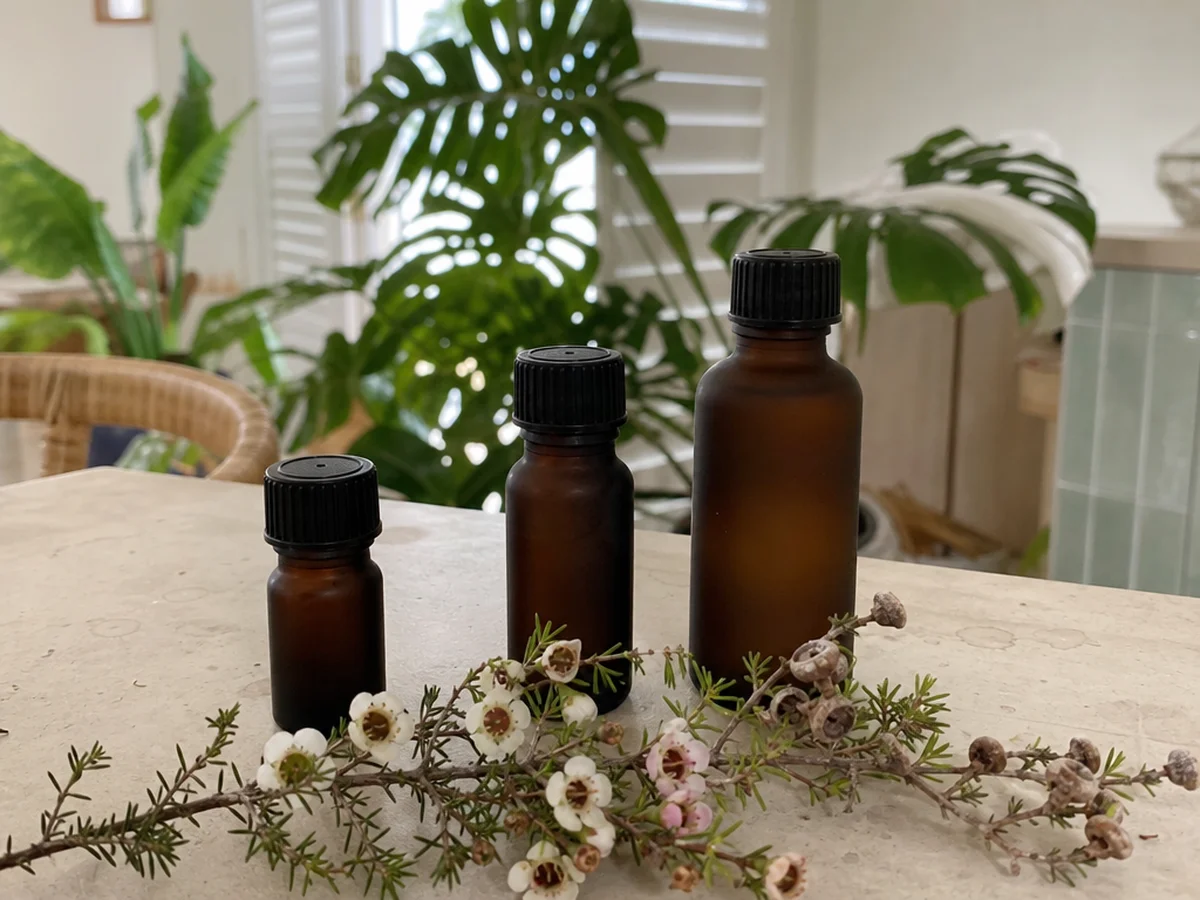
| 0.5 oz | 13.2 | 296 | about 25 |
| 1 oz | 26.5 | 591 | about 50 |
| 2 oz | 53.0 | 1,183 | about 100 |
| 4 oz | 106.0 | 2,366 | about 200 |
| 8 oz | 212.0 | 4,731 | about 400 |
| 16 oz | 423.9 | 9,462 | about 800 |
These are our calculations from one batch's density and a rule-of-thumb drop size, treating ounces as fluid ounces. They are arithmetic, not measured fills.
Why a smaller bottle is often the happier choice
Imagine making one ounce of a 2% body oil each month. The 0.5 oz bottle covers about 25 of those, so around two years, and the 1 oz bottle about four. We say our oil typically keeps 2 to 3 years when kept tightly capped in a cool, dark place, so a 1 oz bottle at that pace could sit longer than is ideal. At 0.5% the oil lasts longer still.
The best evidence on essential oil ageing we found is about a different oil. In 1999, researchers left tea tree oil on a window sill and found its peroxides rose from under 50 to over 500 ppm within four days, and that the oxidised oil was about three times stronger as a skin sensitiser than fresh oil in guinea pigs. Manuka has a different composition, so that is no measurement of how it ages. Our reasoning from it is modest: a bottle opened over and over and left half empty for years is the case to avoid, and a size you finish sooner shortens that exposure. Our storage article covers keeping the cap tight and the bottle in the dark.
Making a bottle last
However big your bottle, a few habits keep it pleasant to use. Wipe the neck and the dropper after each use, so no oil dries around the cap. Keep the cap tight the moment you finish measuring, and stand the bottle upright in a drawer or cupboard, not on a sunny shelf. If you open it often, write the date of the first opening on the label. Then you will know at a glance how long it has been in use, and you will not have to guess.
Three buyers, three answers
Trying it in a blend or diffuser. Go with 0.5 oz. A drop or two goes a long way, and 296 drops is plenty to learn whether you love the earthy, honeyed aroma. If you are unsure, that is a small commitment.
Making balms, soaps or candles regularly. Choose the size that covers the batches you have actually planned, not the ones you hope to make. Work backwards: oil weight per batch from your recipe, times the batches in the next year or two, compared with the grams column. Our balm article shows that weight-based thinking on a 30 g tin.
Buying for a business. Our bulk page lists 5, 25 and 400 lb sizes of the same steam-distilled Leptospermum scoparium oil as our retail bottles. At the density of the published batch, that is roughly 2.5, 12.7 and 202 litres. Our wholesale page offers sample bottles to order before committing to volume, which is the sensible first step, and you will find current prices on the shop and bulk pages. If composition matters to your product, read our certificate walkthrough and put your requirement in writing before ordering.
If you are still on the fence, write your plan on a scrap of paper: the product you want to make, the amount of oil in each batch, and how many batches you really expect in a year. Seeing the numbers side by side usually makes the decision for you. Most first-time buyers end up happier with the smaller bottle and a plan to come back for a second one once they know what they love.
What size does not change
Every size comes from the same standard, and our wholesale orders are bottled from the same lots. Size changes how much you handle and how long it sits, not what is in the oil. Our published certificate covers a single batch, so if you need composition data for the lot you will receive, ask us through the contact page before ordering.
A couple of safety notes round it out. People who react to tea tree or other essential oils should check with a dermatologist first, since DermNet notes that those allergic to one oil often react to others. Keep the bottle away from children and pets and do not swallow it; our ingestion article explains what to do after a swallow.
In short: count your drops, multiply by the batches you will realistically make in two or three years, and pick the smallest bottle that covers it.
Manuka Essential Oil
Manuka Essential Oil from our own shop, in sizes from 0.5 oz to bulk.
From $18.99
Shop Now →Sources & Further Reading
- Hausen BM, Reichling J, Harkenthal M, 1999. Degradation products of monoterpenes are the sensitizing agents in tea tree oil. pubmed.ncbi.nlm.nih.gov/10357714
- Ismail FF, Nixon RL. Allergic contact dermatitis to essential oils. DermNet. dermnetnz.org