What to Blend With Manuka Oil: Pairings and Ratios
Open a bottle of manuka oil and the first thing you notice is how much it brings to a blend. We describe it as feeling deeper and sweeter than tea tree, settling into a blend the way a wood oil does, and a drop or two goes a long way. So the real art of blending with it is knowing how little to use, and which partners let it shine.
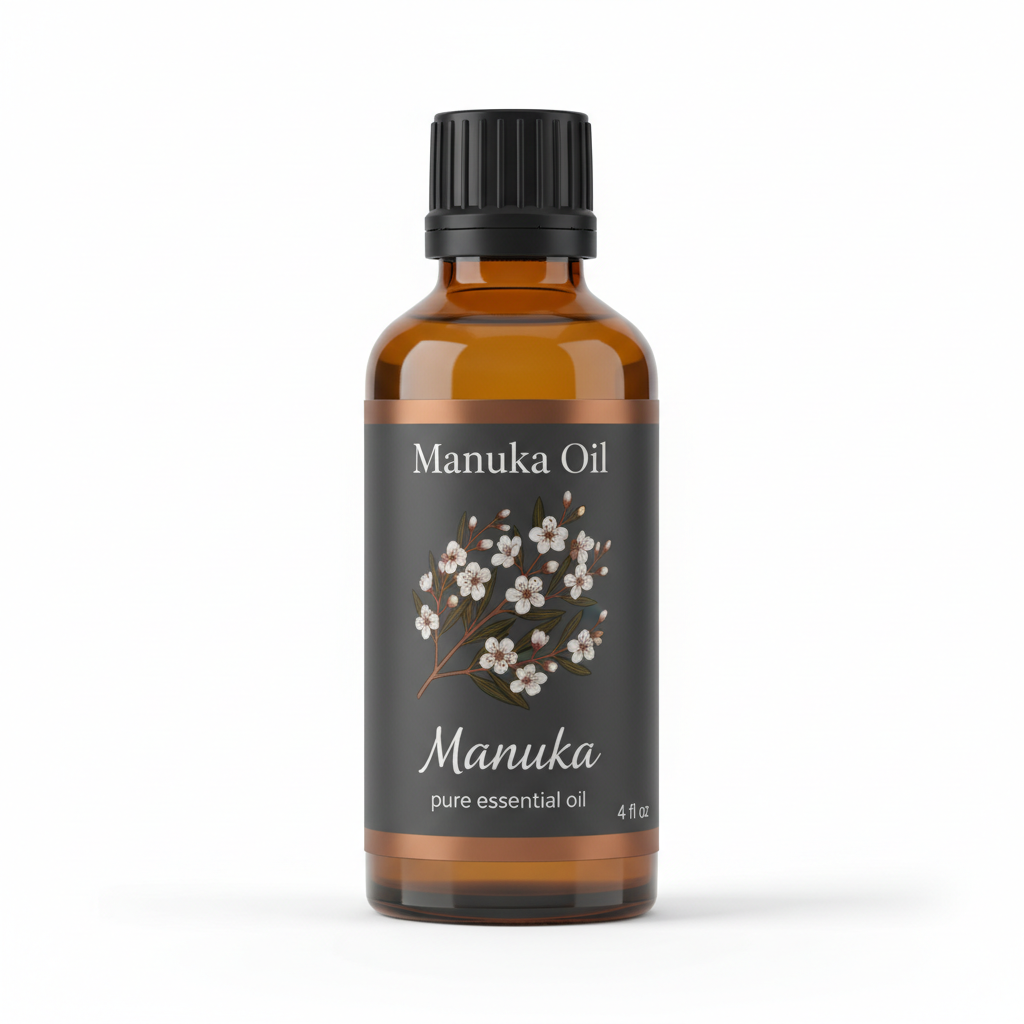
Manuka Essential Oil
Our own Manuka Essential Oil, in sizes from 0.5 oz to bulk.
From $18.99
Shop Now →Why manuka sits low in a blend
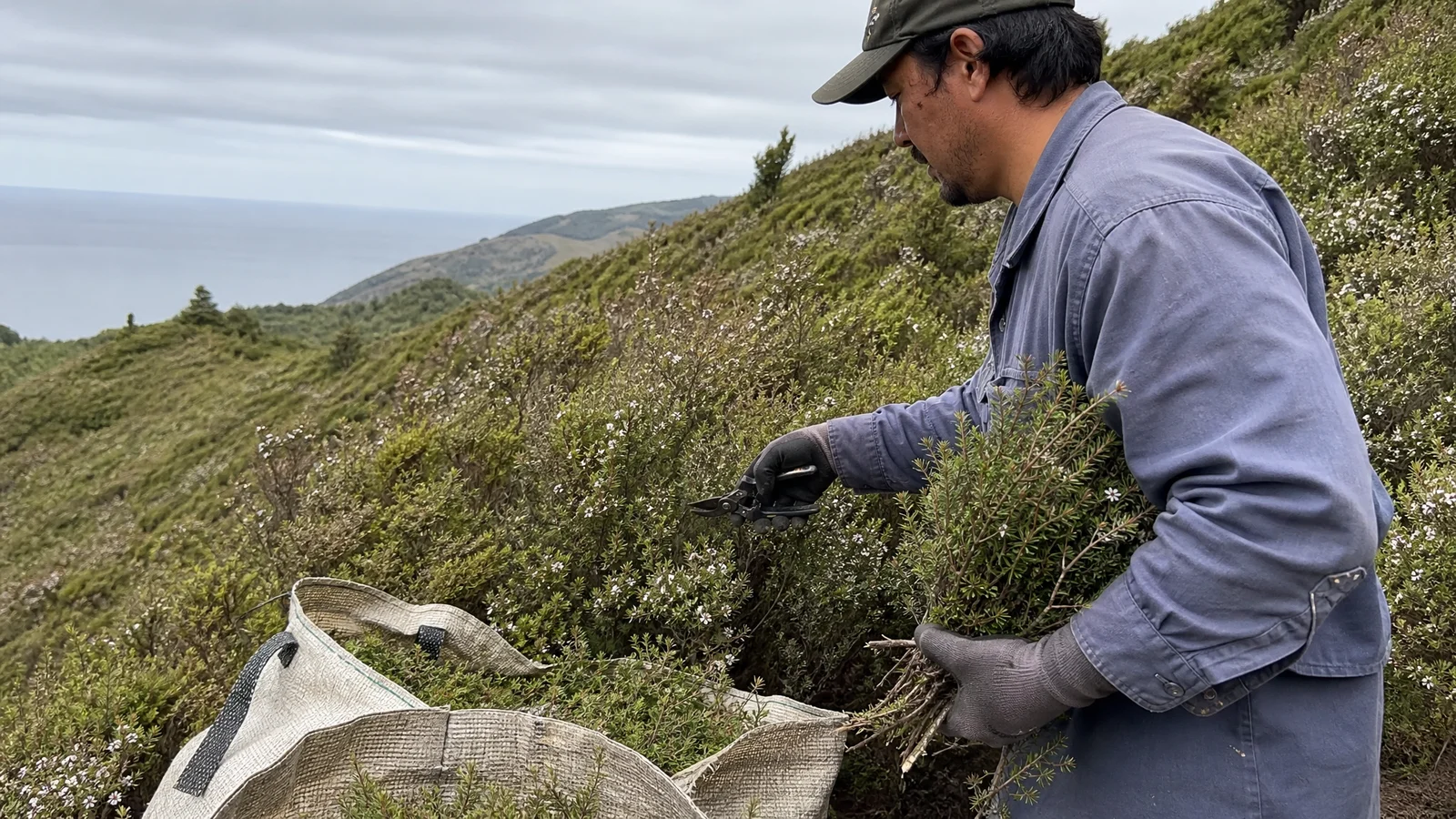
Analyses of commercial New Zealand manuka oils find them to be mostly sesquiterpene hydrocarbons, 60 to 70% in one survey of 16 oils, rather than the lighter monoterpenes that dominate many citrus and floral oils. Larger molecules generally evaporate more slowly, so this fits what we say about it being a heavier, lower note: it tends to linger after brighter oils fade. The same survey, and a later study of 261 individual plants that described ten further chemotypes, also show that manuka oil is not one fixed thing. A ratio that suits one lot is therefore a good starting point for the next, not a formula. Smell each new lot, and write the lot reference on the blend label.
A way to choose partners
We suggest lavender, bergamot, sweet orange, geranium, cedarwood or patchouli as companions. Our judgement on using that list is simple: pick one bright partner to lift the earthiness and one that sits with it.
- Bright contrast: sweet orange or bergamot.
- Floral or woody echo: lavender, geranium, cedarwood or patchouli.
Keep manuka the smallest share to begin with, perhaps one part to three or more of the others, and go up one drop at a time. Smell the blend when you make it and again a day later, since heavier oils show themselves late. We sell only manuka oil, in our shop, so the companions are for a pharmacy, craft or aromatherapy supply shop. If you blend regularly, our bulk sizes are listed separately.
Start on a blotter, not in the bottle
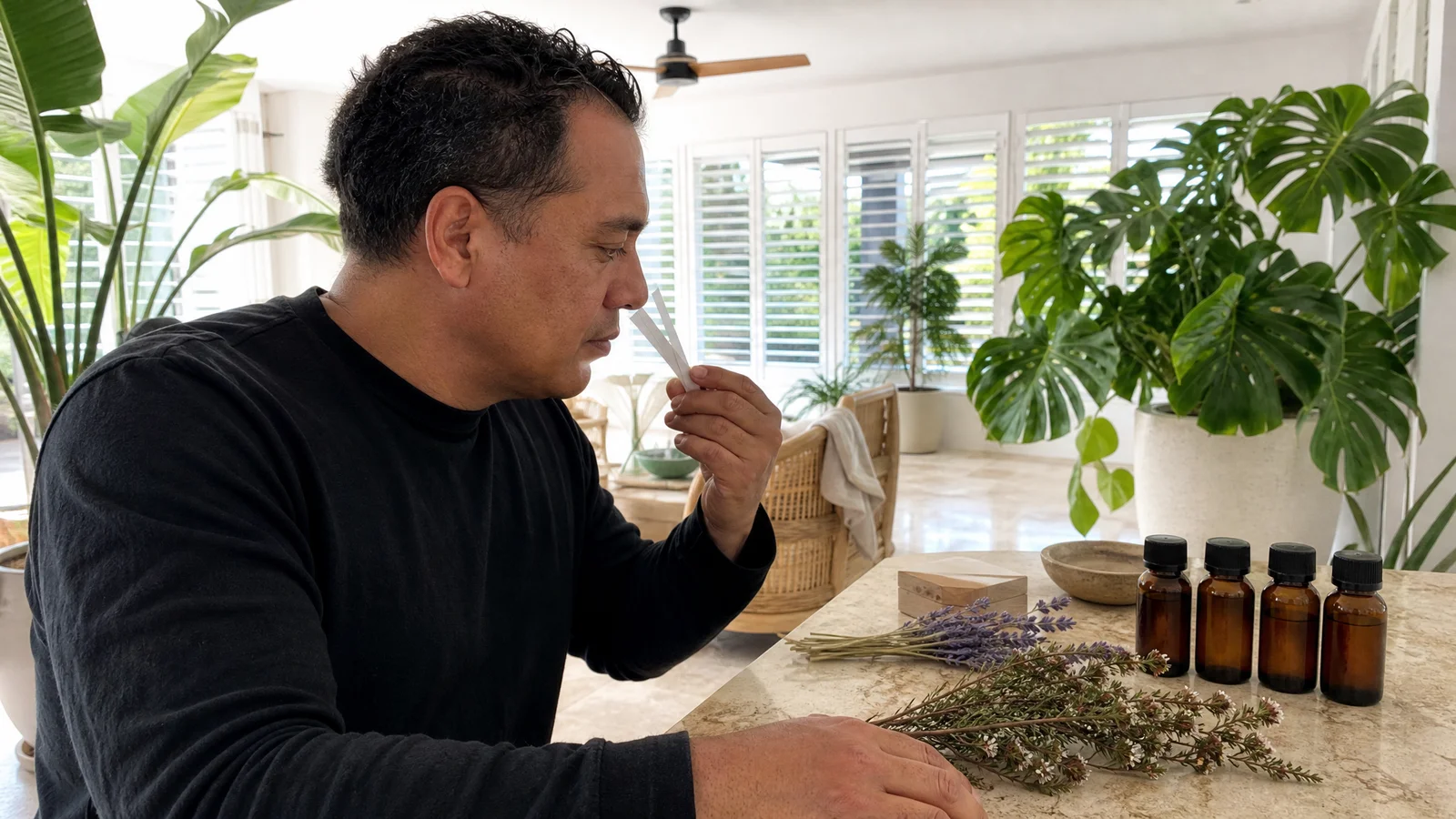
Before you commit any oil to a blend, try it on a paper strip. Dip one strip in manuka and another in the partner, hold them together under your nose, wave them gently, and notice how the two smell side by side. Then smell the strips again after a few minutes and after an hour. You will often notice that the brighter oil fades first and the manuka stays, which tells you a lot about how much of each to use. A strip costs almost nothing, and a ruined blend costs oil.
The maths of skin blends
Our dilution guidance for manuka on skin is 0.5% to 2% in a carrier. Once other oils join in, we treat 2% as the ceiling for all the essential oils combined, not 2% each. That is our own arithmetic position rather than a standard, and each partner oil has its own safety information to check. This table shows total drops of all essential oils together, at 20 drops per millilitre.
| Carrier | 0.5% total | 1% total | 2% total |
|---|---|---|---|
| 10 ml | 1 drop | 2 drops | 4 drops |
| 30 ml (1 oz) | 3 drops | 6 drops | 12 drops |
| 100 ml | 10 drops | 20 drops | 40 drops |
At 30 ml and 1% there are 6 drops in total: two manuka, two citrus and two floral, say. That is why we favour two or three oils in a skin blend rather than five. The maths does not leave room for a crowd.
Bergamot deserves a note
Citrus is a lovely contrast for manuka, and bergamot is the partner with the clearest published guideline. The Tisserand Institute reports that bergamot oil normally contains 0.11 to 0.33% bergapten, and that IFRA limits it to a maximum of 0.4% in the final product on skin exposed to sunshine, with wash-off products excluded. Most phototoxic essential oils are expressed citrus oils, and distilled citrus oils contain very little of the compounds involved. In a 30 ml body oil, 0.4% bergamot is 0.12 ml, about two drops. Ask your supplier whether a citrus oil is expressed or distilled before you decide how much to add. For lavender, geranium, cedarwood, patchouli and sweet orange, look up each oil's limits with the Tisserand Institute or the IFRA standards.
DermNet NZ lists tea tree, ylang-ylang, lemongrass, sandalwood, clove and jasmine absolute among the oils that commonly cause allergic contact dermatitis, and adds that people often react to several oils because of shared constituents. More oils in a blend means more to react to, so patch test the finished blend and wait 24 to 72 hours.
Keep notes as you go. A page with the date, the drops of each oil and a few words about how it smells will teach you more than any ratio we can print here. When a blend works, copy it out in full so that you can make it again; when it does not, write down what to change.
Diffusing is its own thing
A diffuser is not a skin application, and the Tisserand Institute suggests running one 30 to 60 minutes on and then 30 to 60 minutes off. We recommend keeping the oil away from children and pets, so ask a pediatrician or veterinarian before diffusing around either.
If you would like a sense of what you are blending, our guide to what manuka oil smells like is a good place to start, and our comparison of manuka and tea tree shows how they differ in character. For carriers, see our carrier oil guide, and for the story behind the lot-to-lot differences, East Cape and other origins.
Manuka Essential Oil
Manuka Essential Oil from our own shop, in sizes from 0.5 oz to bulk.
From $18.99
Shop Now →Sources & Further Reading
- Christoph et al., The composition of commercial manuka oils from New Zealand (J Essent Oil Res, 1999)
- Douglas et al., Essential oils from New Zealand manuka: triketone and other chemotypes of Leptospermum scoparium (Phytochemistry, 2004)
- Tisserand Institute, Phototoxicity: essential oils, sun and safety
- Tisserand Institute, How to Use Essential Oils Safely
- DermNet NZ, Allergic contact dermatitis to essential oils