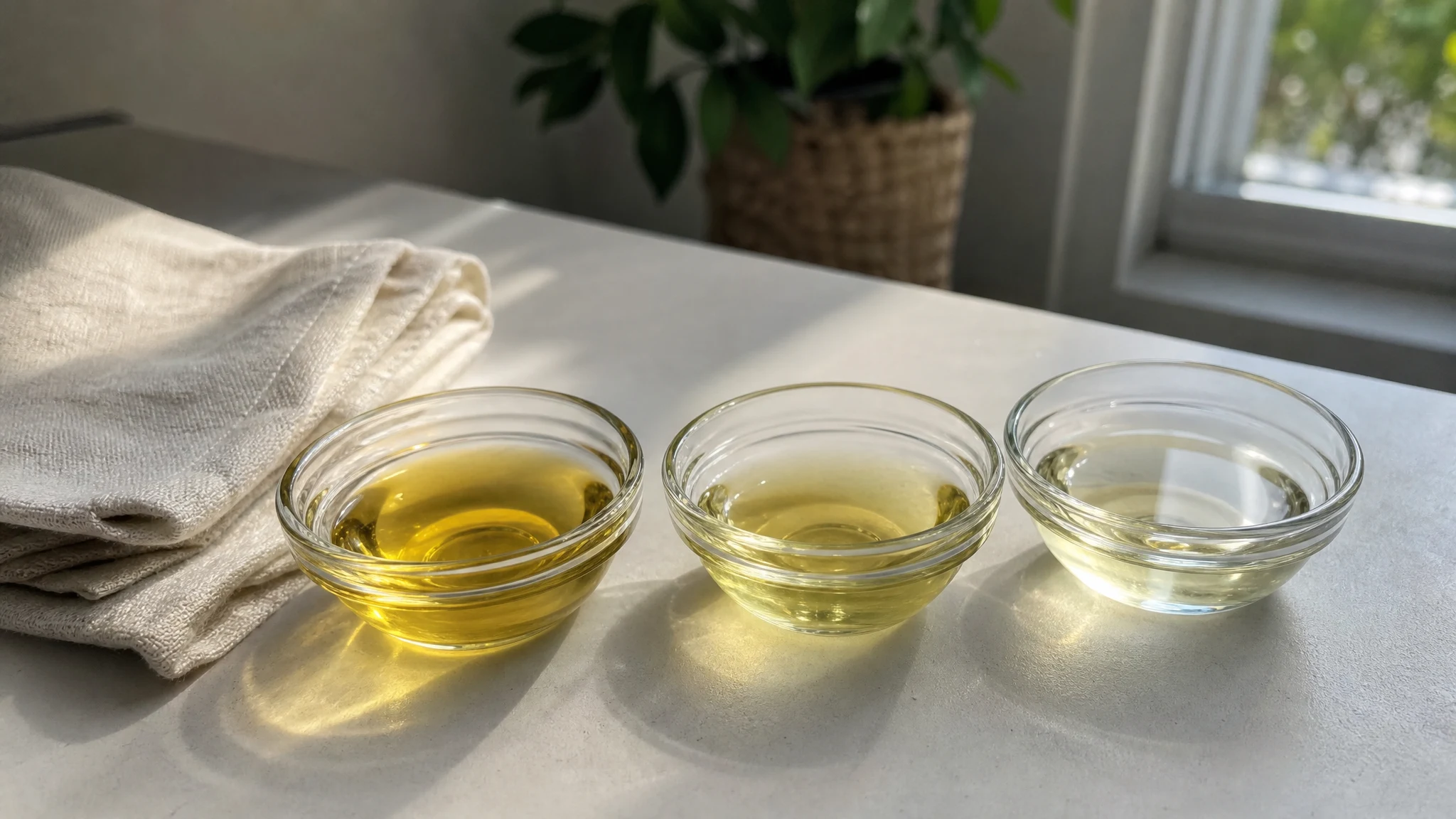
Carrier Oils for Manuka Oil: How to Choose
Manuka oil is the small part of any blend. At 0.5% to 2%, the carrier is the other 98% or more, so it sets how the mix feels, how long it stays pleasant and who can safely touch it. Choosing well is mostly a matter of answering three simple questions.
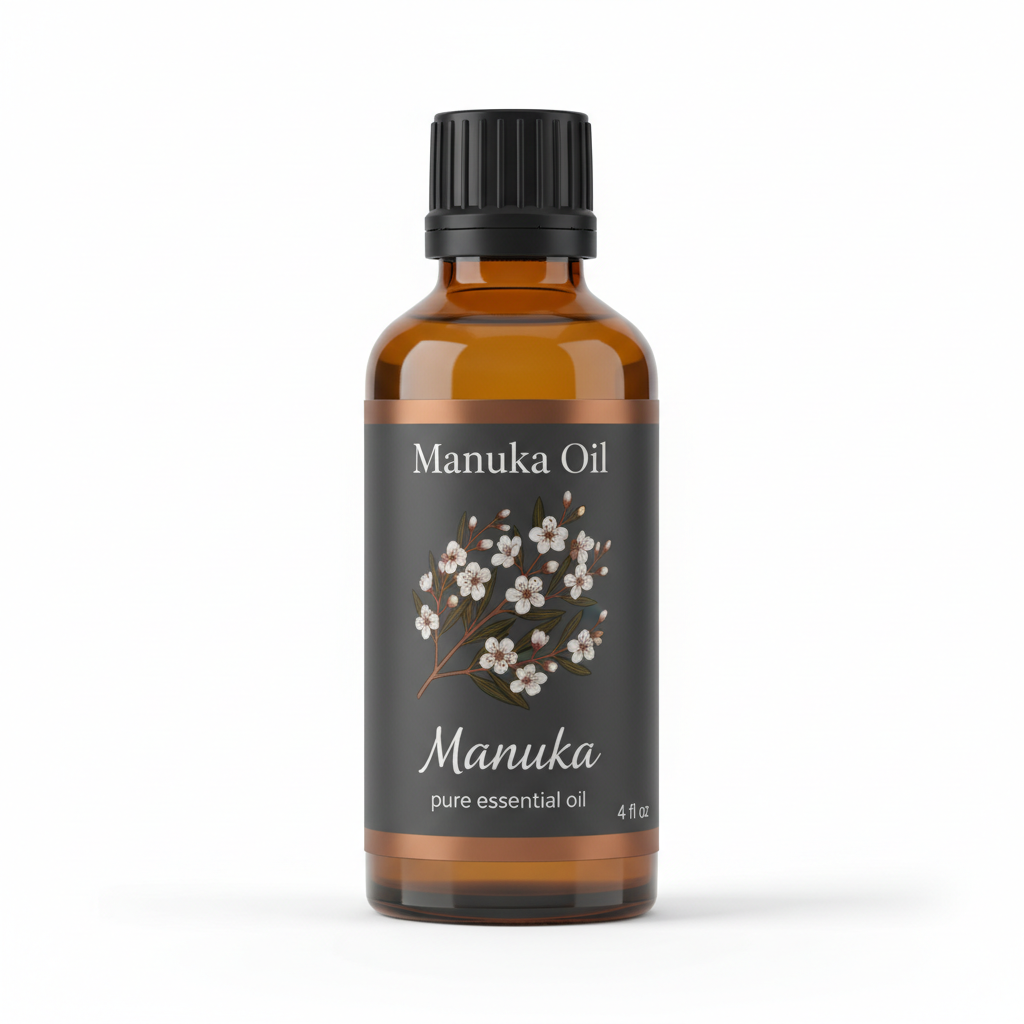
Manuka Essential Oil
Our own Manuka Essential Oil, in sizes from 0.5 oz to bulk.
From $18.99
Shop Now →Who will touch the blend?
Start with allergies. Our own guidance names jojoba and sweet almond as carriers for manuka oil. Almond is a tree nut, so if anyone in your household has a tree nut allergy, ask their allergist before you buy it, and ask the supplier whether the oil is refined or unrefined. Jojoba is the natural alternative to raise with the same person. We do not sell carriers; a craft shop, pharmacy or grocery will have both, and darker glass bottles are worth looking for.
It also helps to think about what you are making. A little roll-on bottle for your bag, a bedside blend, and a jar you share with family are three different jobs, and each one points to a different amount of carrier and a different bottle. Decide the job first, and the carrier choice usually gets easier.
How quickly will you use it?
This matters more than any other choice. Both essential oils and carrier oils age with air, heat and light, and the NCCIH notes that tea tree products are more likely to irritate skin when they are old or have been exposed to heat, light or air. Different oil, same principle. A mix made in a small batch and used within a few weeks is happier than a big one that sits half empty for a year.
That is our editorial advice: mix less, more often. Our typical guidance for manuka oil itself is 2 to 3 years when kept tightly capped, cool and dark, and our storage guide explains why. A blend is only as fresh as its shortest-lived ingredient, so keep the mix capped, put the date on the label, and finish it before you start another.
How does it feel on your skin?
Feel is personal, and we would rather not claim that one carrier suits oily, dry or sensitive skin when the evidence does not settle it. Try a carrier you already like, and if you have a skin condition, a dermatologist is the right person to ask. Whichever you choose, patch test the finished blend, not just the manuka oil. DermNet NZ notes that reactions to essential oils usually appear one to three days after exposure, and that patch testing a person's own products is worthwhile because the allergen can be an oxidised component.
Smell the carrier first
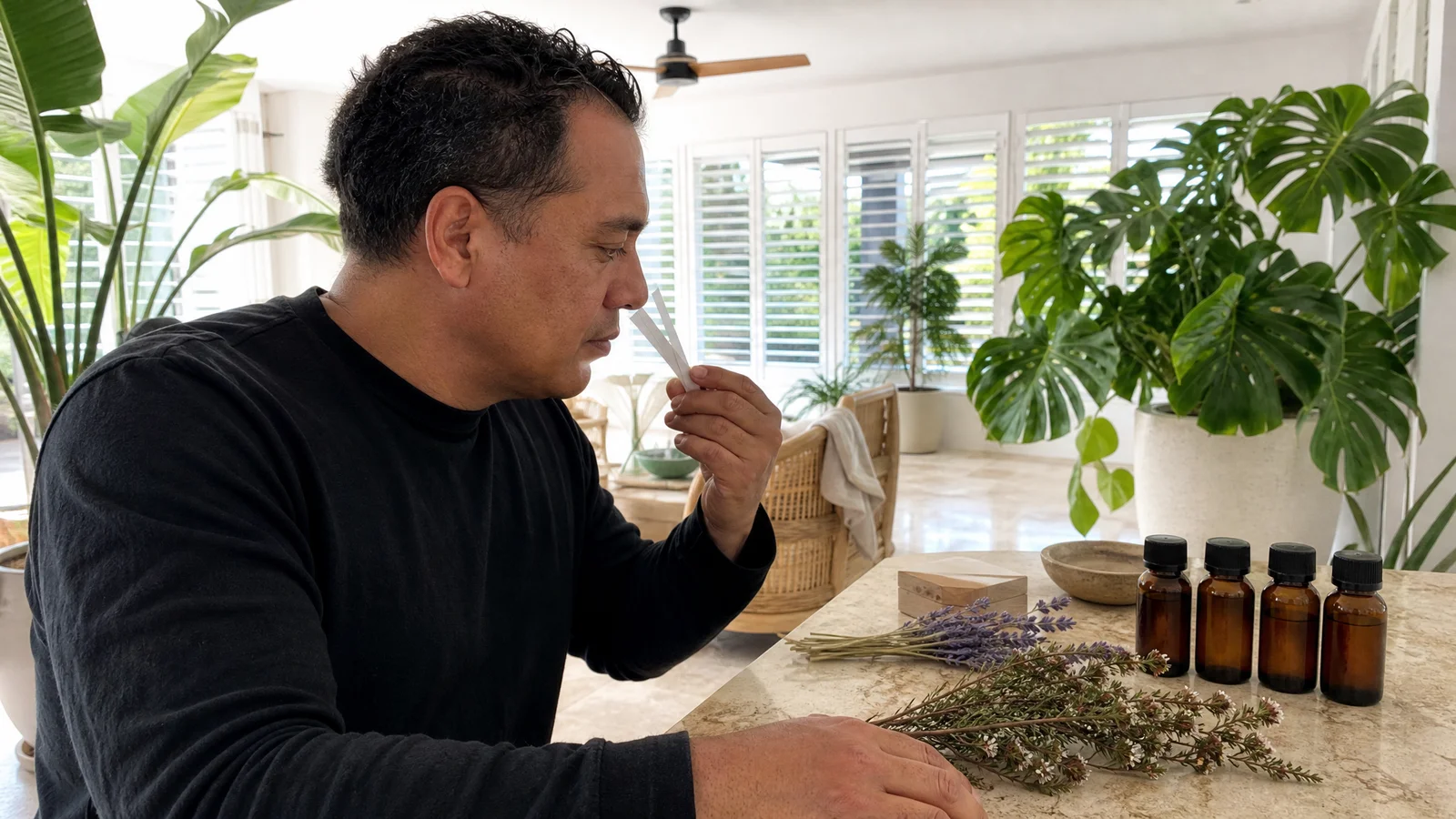
Before you add a single drop of manuka oil, open the carrier and smell it. A fresh one is quiet: faint, a little nutty or almost neutral, nothing that stays in your nose. If it smells sharp, stale or a bit like old paint or crayons, put it back or leave it in the shop. Manuka oil is warm, honeyed and slightly spicy, and you want it to be the only thing you notice in the finished blend.
Choose the bottle as well as the oil
We like dark glass for anything that will sit for a few weeks, with a dropper or a small pump so you are not tipping the bottle and spilling. Wipe the neck after each use, because a sticky ring of old oil around the cap is the first thing to go off. If you are making a travel size, fill it to the shoulder and keep the larger batch at home, closed.
A simple way to mix
Measure the carrier first, then add the manuka oil one drop at a time, and shake or stir gently. Label the bottle with the percentage and the date. If you would rather not count drops, weigh instead: an ounce of carrier is about 26 to 27 g, and half a percent of that is a little over a tenth of a gram. Small mixes made fresh are easy to get right, and easy to repeat.
The drop arithmetic
These figures assume about 20 drops to the millilitre, which is a convention, and treat the percentage as the oil's share of the finished volume. They are suggestions worked out from our 0.5% to 2% guidance:
| Batch | 0.5% | 1% | 2% |
|---|---|---|---|
| 1 oz (30 ml) | about 3 drops | about 6 drops | about 12 drops |
| 2 oz (60 ml) | about 6 drops | about 12 drops | about 24 drops |
| 4 oz (120 ml) | about 12 drops | about 24 drops | about 48 drops |
Droppers differ. If yours delivers 25 drops to the millilitre instead of 20, twelve drops in an ounce is closer to 1.6% than 2%; if it delivers 15, the same twelve drops is closer to 2.7%, above the top of our range. A small kitchen or jewelry scale that reads to 0.01 g takes the guesswork out: at the density on our batch certificate, 2% of an ounce is about half a gram. For the face, we suggest sticking to 0.5% until you know how your skin responds.
Where to go from here
Once you have your carrier, try one of our blends-by-numbers articles, such as the facial oil or the everyday routine guide, and check the side effects article for the patch test steps.
One recommendation from us as a small seller of a single oil: keep your carrier simple. One carrier you know your skin tolerates, in a bottle you can finish, beats a cabinet full of exotic oils that nobody gets round to using.
A good carrier makes manuka oil easy to enjoy, and a small, fresh batch is the simplest way to get there.
Manuka Essential Oil
Manuka Essential Oil from our own shop, in sizes from 0.5 oz to bulk.
From $18.99
Shop Now →Sources & Further Reading
- Tea Tree Oil: Usefulness and Safety, NCCIH
- Allergic contact dermatitis to essential oils, DermNet NZ
- How to Use Essential Oils Safely, Tisserand Institute