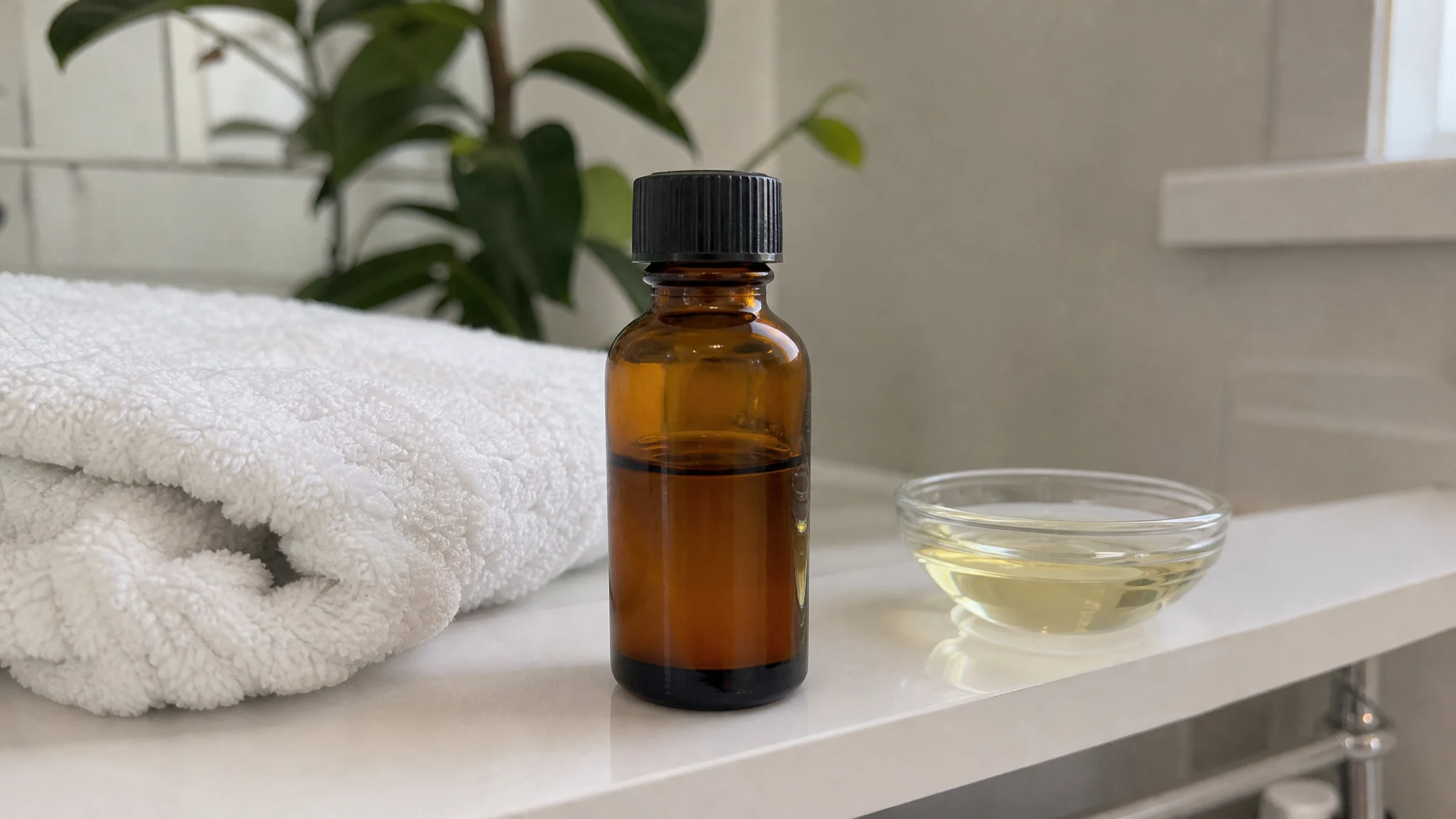
Can You Use Manuka Oil Undiluted? Why We Dilute It
Pick up a bottle of manuka oil and the temptation is obvious: one drop, right on the spot, no mixing. We understand it. But the oil in the bottle is 100% oil, and the amount that suits skin is far smaller. A little arithmetic shows how big the gap is.
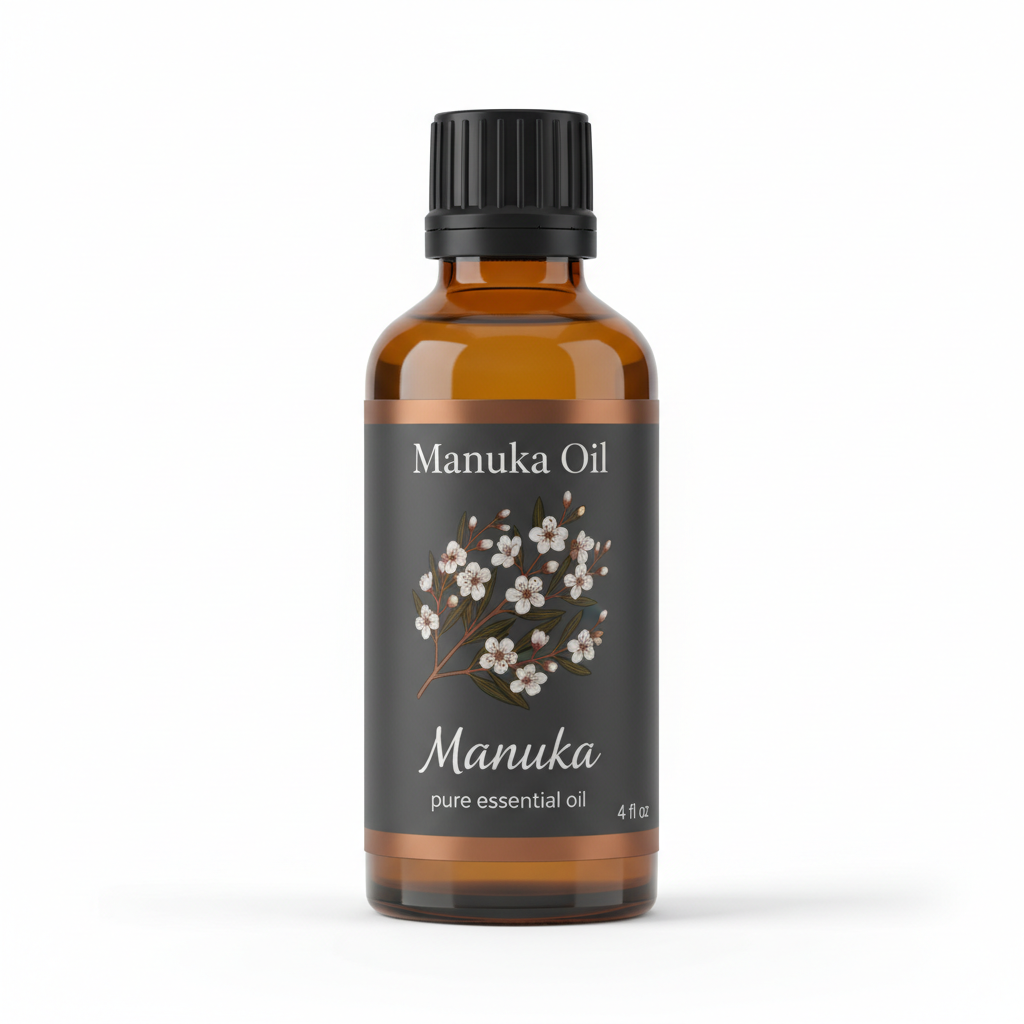
Manuka Essential Oil
Our own Manuka Essential Oil, in sizes from 0.5 oz to bulk.
From $18.99
Shop Now →The numbers behind "just one drop"
Our oil is sold neat, so the dilution is yours to make. Our guidance for skin is 0.5% to 2% in a carrier oil. Counting about 20 drops to the millilitre (droppers vary, so weigh when it matters), 1 oz of carrier is roughly 591 drops of liquid. That gives us the following picture, which is arithmetic and not a recipe:
| Mix | Drops of manuka in 1 oz carrier | Oil share |
|---|---|---|
| Low end of our range | about 3 | 0.5% |
| Top of our range | about 12 | 2% |
| One drop, one ounce | 1 | about 0.17% |
| Straight from the bottle | no carrier | 100% |
Even a single drop in a whole ounce is weaker than the bottom of our range. A drop on a fingertip is not a stronger version of the same thing; it is a different exposure altogether, 200 times the low end of the range.
There is a sensory side to this as well. Because a drop or two goes a long way in aroma, a diluted blend still smells warm and honeyed, so you give up nothing by mixing it down. If anything, a gentler blend is easier to live with than the bottle held under your nose.
Why delayed reactions change the picture
With essential oils, the bigger concern is not an immediate sting but a slow immune reaction. DermNet NZ describes allergic contact dermatitis to essential oils as a delayed reaction that generally appears one to three days after exposure, and it advises people not to apply neat, undiluted oils directly to the skin because that can lead to sensitisation. The Tisserand Institute puts it in one line: do not apply undiluted essential oils to your skin.
That timing is why we like a patch test with patience. Put a small diluted dab on the inside of your forearm, and wait a few days before using it anywhere bigger. Once someone becomes sensitised to an oil, even small amounts can trigger a reaction later, and DermNet notes that oils share constituents, so a reaction to one can mean trouble with others.
What we know, and do not know, about manuka
Manuka oil has been studied far less than tea tree. A 2020 review found no clinical trials of the oil and says that this limits dosing and toxicology information. It does mention a patch test of 50 people on one commercial product at concentrations from 0.5% to 100% with no significant irritation reported, but that is one product, tested for irritation over a short period, not for sensitisation after weeks of use. We read it as interesting rather than as permission.
The closest well-studied cousin is tea tree oil, and one study there is a helpful reminder that freshness counts. Researchers found that tea tree oil exposed to air developed sensitising degradation products and, in guinea pigs, the oxidised oil was about three times stronger as a sensitiser than fresh oil (Hausen et al.). That is a different oil, so it is a reminder and not a measurement of ours, but it is one more reason we suggest keeping bottles tightly capped, as in our storage guide.
What mixing looks like at the bench
Making a small mix is less fuss than it sounds. Start with a clean, dry bottle, add the carrier first, then count the drops of manuka into it, swirling gently as you go. Label it with the date and the percentage straight away, because a week later you will not remember whether it was the 0.5% or the 1%. For a first batch, make a small one, an ounce at most, so a patch test does not leave you with a big bottle you are unsure about.
If you drip in too many drops, do not try to scoop them out. Add more carrier to bring the share back down, or start the bottle again. That is the beauty of working with a concentrate you can count.
A habit worth building
Treat every new product the same way: dilute, test a small area, wait, then decide. It takes a few days and saves a lot of second-guessing, and it works for every essential oil in your collection, not just this one.
What we suggest instead
Start at 0.5% in a carrier such as jojoba or sweet almond, patch test, and move up only if your skin stays calm. Our carrier oil guide helps you pick one, and the side effects article explains what to watch for. If you have a particular skin concern, a pharmacist or dermatologist is the right person to ask, since we sell an external cosmetic oil and make no treatment claims.
A bottle of manuka oil goes a long way once it is diluted, so there is no hurry to use it neat.
Manuka Essential Oil
Manuka Essential Oil from our own shop, in sizes from 0.5 oz to bulk.
From $18.99
Shop Now →Sources & Further Reading
- Allergic contact dermatitis to essential oils, DermNet NZ
- How to Use Essential Oils Safely, Tisserand Institute
- Mānuka Oil-A Review of Antimicrobial and Other Medicinal Properties, Pharmaceuticals (Basel), 2020
- Degradation products of monoterpenes are the sensitizing agents in tea tree oil, Am J Contact Dermat, 1999