Checking Manuka Oil Quality Before You Order
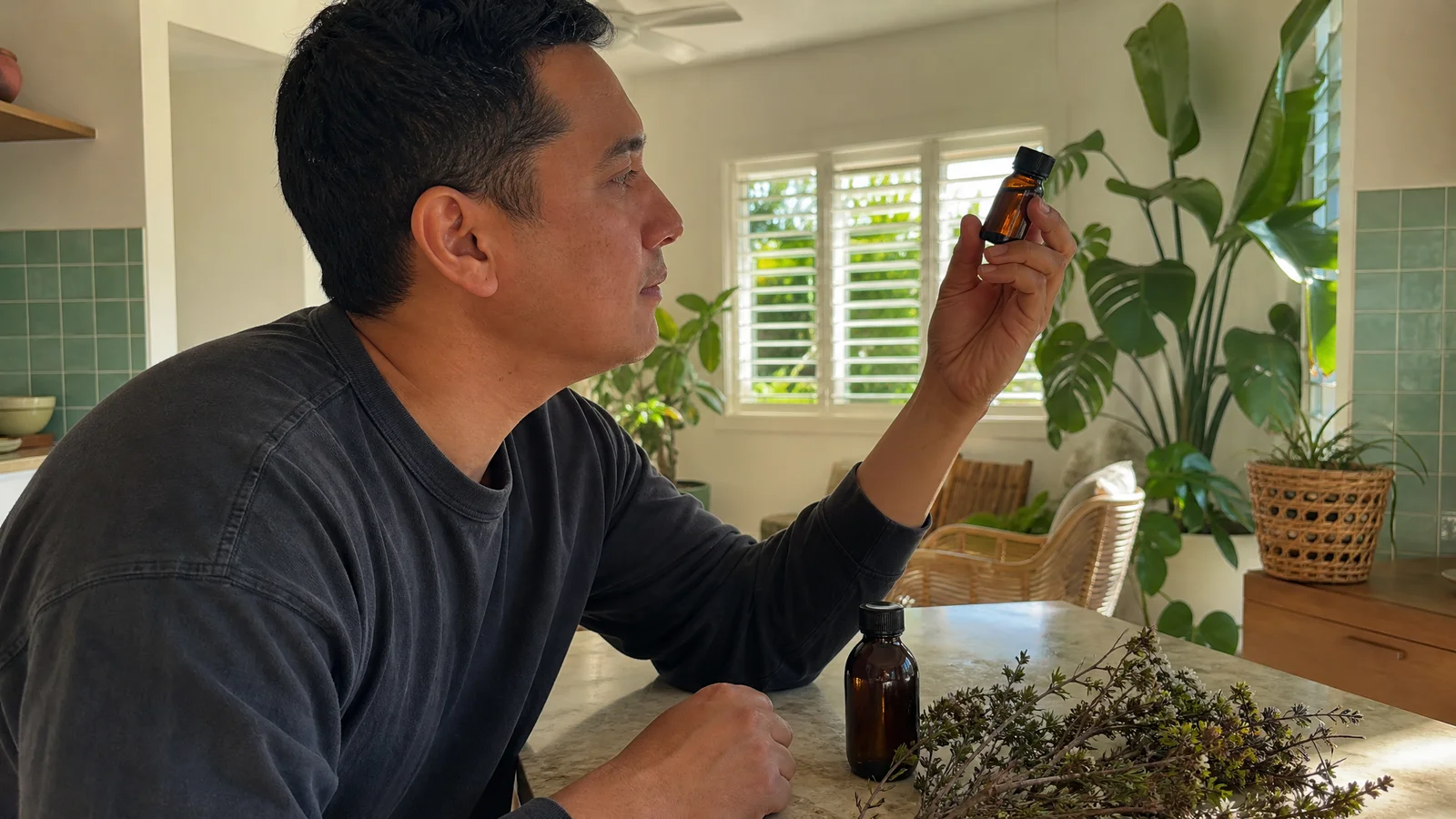
Open a bottle, sniff, hold it up to the light. It feels like you are checking something, but a nose and a pair of eyes cannot tell you whether a manuka oil is what it claims. Documents can narrow the question, provided you know what each one actually measures, so here is how we would go about it.
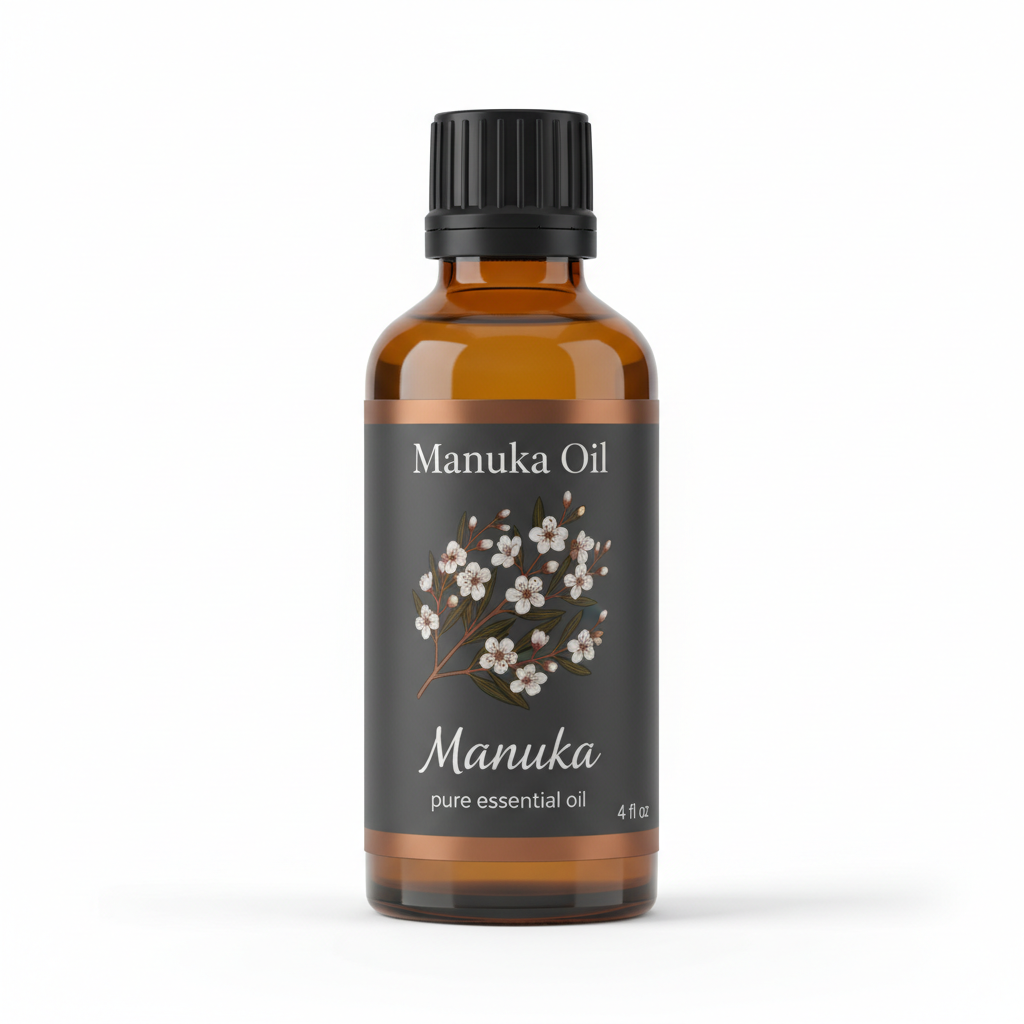
Manuka Essential Oil
Our own Manuka Essential Oil, in sizes from 0.5 oz to bulk.
From $18.99
Shop Now →Why a quick look fails
The hardest problem to catch is dilution with an inexpensive vegetable oil. A 2021 study of lavender, lemon and tea tree oils notes that vegetable oils are chosen as diluents partly because their density and texture resemble essential oil, and that dilution changes neither the qualitative composition nor the normalised percentages of the marker compounds. The authors conclude that only an absolute quantitative analysis against a reference profile exposes it. That study did not test manuka, so it explains the mechanism rather than measuring any manuka product.
Two practical points follow, and they are our reasoning rather than findings. A density or refractive index figure on its own cannot rule out a carrier oil, because the diluent can sit near the same number. And a GC-MS report listing only percentages of the oil's own compounds can look normal for a diluted oil. Real assurance comes from a quantitative report with the method stated.
Is it the right plant?
Start with the botanical name, which should read Leptospermum scoparium. A 2020 review reports that Australian-grown L. scoparium gave oil with more monoterpenes and almost no triketones compared with New Zealand material, and that kanuka, a different tree, gives an oil of about 75% alpha-pinene. The same review notes that manuka oil sits under one CAS number in the New Zealand inventory and another at ECHA, so a CAS number tells you which register the seller looked up, not that the bottle matches it. Our manuka versus kanuka article keeps the two apart.
Which chemotype?
Manuka oil is not one composition. A survey of 261 plants at 87 New Zealand sites found oils above 20% total triketones in all 36 East Cape plants sampled, and ten further chemotypes elsewhere, including an alpha-pinene type and a geranyl acetate-rich type. Commercial oils in the 2020 review ranged from 0.8% to 19.4% leptospermone. If a seller says nothing about chemotype, a wide range stays open. If a seller quotes a triketone percentage without a lot number, a method or a laboratory, you have been given a claim, not a measurement. Our triketones article explains these compounds.
The order we would ask in
- Name: is the botanical name stated?
- Lot: does the document carry the batch number of the bottle you will receive? A certificate for another batch is background.
- What was measured: density, refractive index and rotation describe the whole liquid, while composition needs GC-MS.
- Quantitative or not: ask whether the report is absolute and names its method.
- Standard: what limits was the result judged against?
- Who: which laboratory ran it?
A sample bottle helps with aroma and handling, and it lets a laboratory of your choosing analyse the lot you hold, which is the one truly independent check. It cannot tell you by smell whether a vegetable oil has been added, and one sample says nothing about the next lot.
What you can check at home
Home checks will not prove anything about chemistry, but they are still worth doing. When the bottle arrives, look at the label: is the botanical name there, and does the lot number match your paperwork? Put one drop on a clean piece of paper and let it sit. You are only looking for anything odd, such as a heavy greasy ring that spreads and stays, which is a reason to ask the seller a question. Then smell it, not in a hurry, and notice whether the aroma stays the same from the first sniff to the last.
Write down what you notice. A short note with the date, the lot number and a few words about the smell is useful later, especially if you buy again and want to compare. Keep the paperwork in the same folder.
What our certificate covers
The Certificate of Analysis we publish is for one batch (MNKLUUUNUNC010A, best by 11/30/2027). It lists a clear liquid, a smell of "Sweet, Honey, Herbal", a relative density of 0.896, a refractive index of 1.489 and an optical rotation of -3.84 degrees, all at 20 C, with a conclusion that the tested parameters comply with pharmacopoeia standards for manuka oil. Our certificate walkthrough reads it line by line. If your product depends on a triketone fraction, an origin or an allergen profile, ask us in writing through our contact page before you order and get the answer in writing. Our wholesale page offers sample bottles for anyone checking before committing to volume.
We would rather you ask us too many questions than too few. If something on a page or a document does not make sense to you, write to us before you order, and keep the answer so you can refer back to it.
What marketing words are worth
The FDA does not pre-approve cosmetic labeling, and responsibility for it rests with the manufacturer or distributor. So words like "premium" or "authentic" on any bottle are the seller's own, and only a document with a method behind it turns them into something measurable. The FDA also treats claims on labels and websites as evidence of intended use, giving the example that a scent marketed as helping you sleep meets the drug definition. A page that promises manuka oil will clear a condition is therefore telling you something about the seller, and it outruns what the laboratory literature supports.
If you simply want a little to smell, none of this matters much: choose a small bottle and enjoy it. If you plan to put it on skin, a patch test and a word with a dermatologist about any history of reactions are the sensible steps, and our sensitive skin article covers sorting out a reaction. Do not swallow essential oil.
Checks reduce risk rather than remove it, and the best ones are the questions you ask before the money changes hands.
Manuka Essential Oil
Manuka Essential Oil from our own shop, in sizes from 0.5 oz to bulk.
From $18.99
Shop Now →Sources & Further Reading
- Capetti F et al., 2021. Adulteration of Essential Oils: A Multitask Issue for Quality Control. Three Case Studies: Lavandula angustifolia Mill., Citrus limon (L.) Osbeck and Melaleuca alternifolia (Maiden & Betche) Cheel. PMC8471154
- Mathew C et al., 2020. Mānuka Oil-A Review of Antimicrobial and Other Medicinal Properties. PMC7694078
- Douglas MH et al., 2004. Essential oils from New Zealand manuka: triketone and other chemotypes of Leptospermum scoparium. pubmed.ncbi.nlm.nih.gov/15184010
- FDA. Is It a Cosmetic, a Drug, or Both? (Or Is It Soap?). fda.gov
- FDA. Cosmetics Labeling Regulations. fda.gov