Manuka Products vs Manuka Oil: Which One Do You Need?
A lotion, a lip balm and a hair mask can all say "manuka" in big letters, and a small bottle of manuka essential oil says it too. They are not versions of one thing. In the finished product someone else has already decided how much goes in; in the bottle, the amount is entirely up to you. Knowing which one you want is most of the decision.
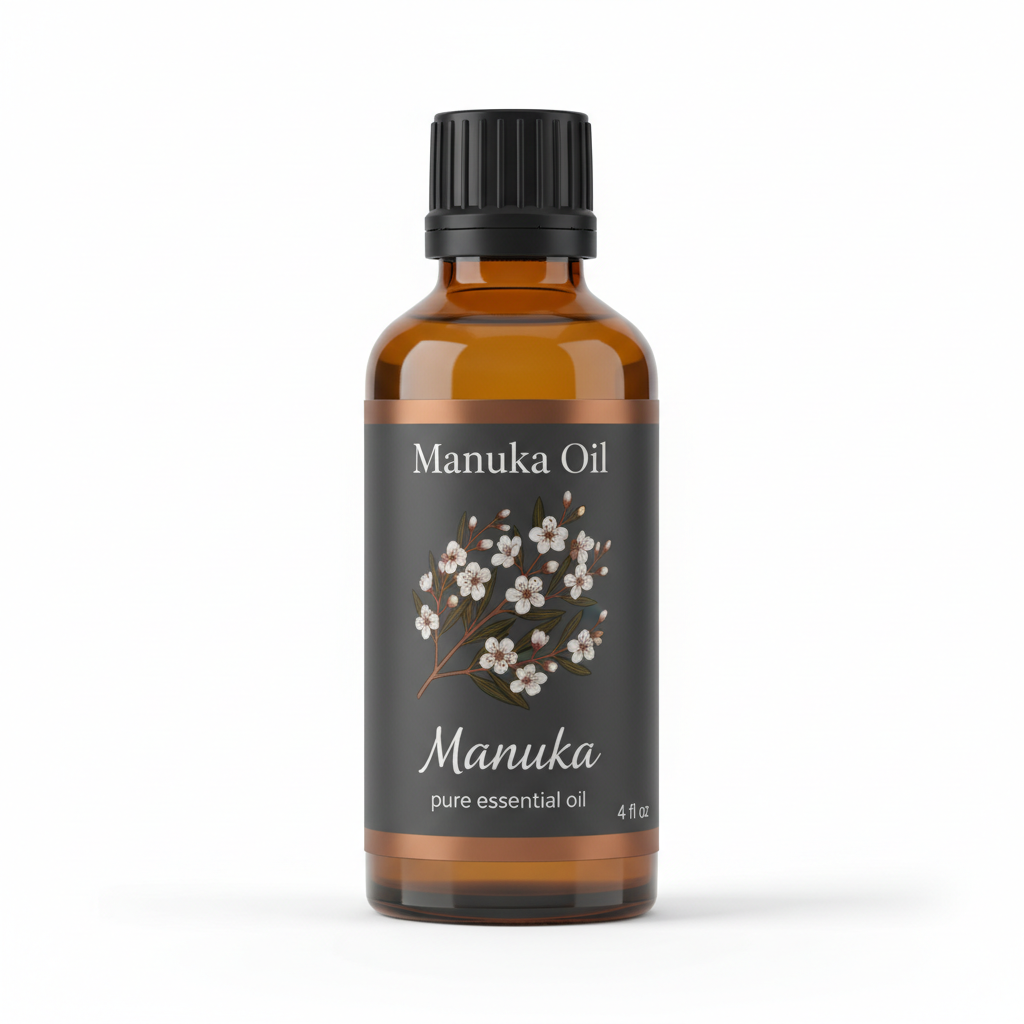
Manuka Essential Oil
Our own Manuka Essential Oil, in sizes from 0.5 oz to bulk.
From $18.99
Shop Now →Turn it over first
The front of a pack is branding. The back is where the law applies. Cosmetics sold to consumers have to list their ingredients on an information panel in descending order of predominance, and FDA does not pre-approve cosmetic labeling, so the maker is responsible for getting it right (FDA, Cosmetics Labeling Regulations). Ingredients go by their common or usual names without extra description, which is why a word like "natural" does not belong in the list itself, and FDA has not defined it for cosmetics (FDA, Small Businesses & Homemade Cosmetics: Fact Sheet).
So the useful habit is to look for the botanical name, Leptospermum scoparium, and see where it sits. A name near the top of a long list points to a product with a real share of that ingredient; near the end, it is a small part of the formula. And "manuka" can mean several different things on a front label: the oil, a leaf extract, honey, or a scent.
What "fragrance" hides
Under US rules, fragrance and flavor ingredients can be listed simply as "Fragrance" or "Flavor," because fragrance formulas are treated as trade secrets, and FDA does not have the same legal authority to require allergen labeling for cosmetics that it has for food (FDA, Fragrances in Cosmetics). A "manuka scented" body wash that lists only "fragrance" therefore tells you little about whether any manuka oil is in it. That is not a flaw so much as a limit of the label, and it is the main reason some people prefer to buy a single oil and know exactly what they are working with.
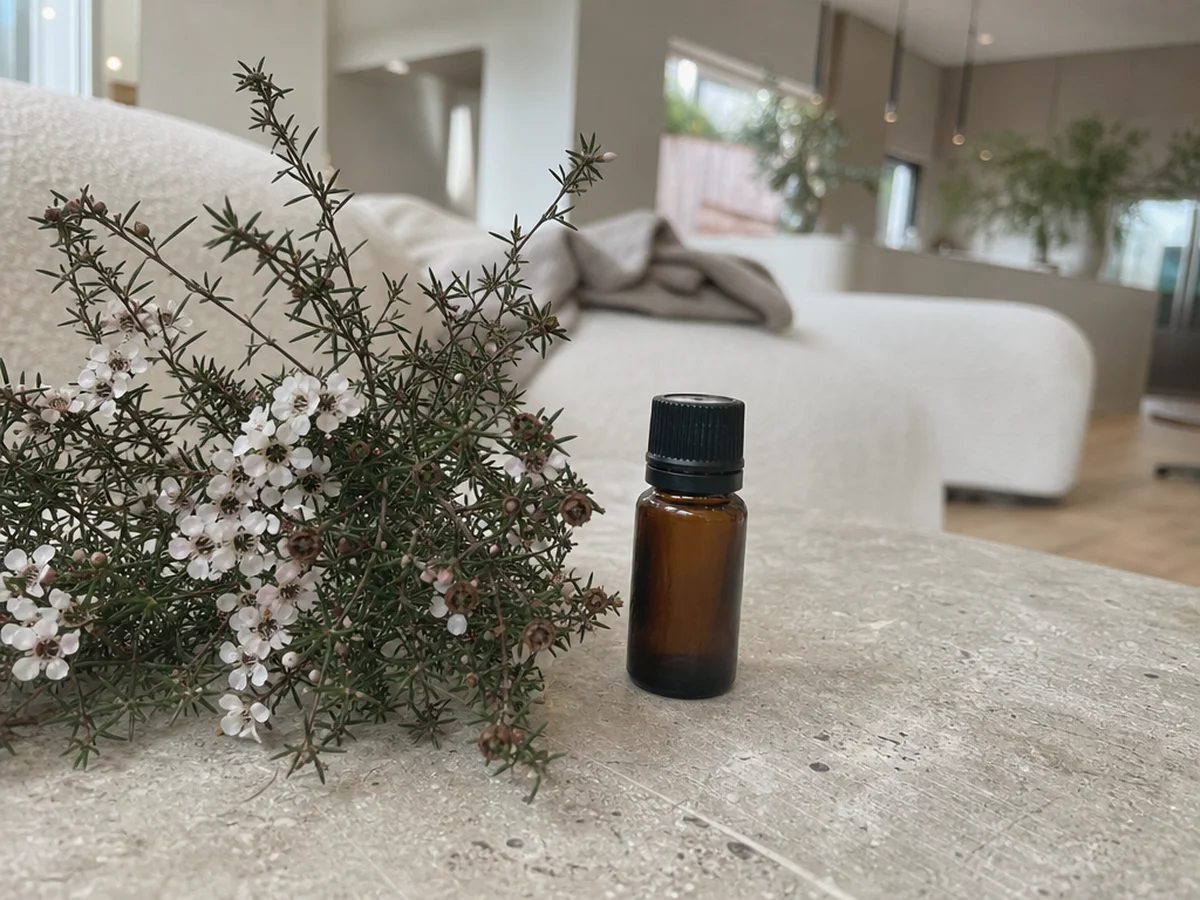
A concentrate puts the dose in your hands
This is the real difference. A finished product has been formulated, so the manuka in it is already diluted. Our manuka oil is sold neat, with no additives or fillers, which means the arithmetic is yours. Our dilution guidance for skin is 0.5% to 2% in a carrier oil such as jojoba or sweet almond, with a patch test first. In practice that is roughly 3 to 12 drops per ounce of carrier, and we suggest starting at the low end, particularly for anything that goes near the face. Because essential oils can trigger a delayed allergic reaction, usually showing up 24 to 72 hours after contact (DermNet, Allergic contact dermatitis to essential oils), give that patch test a couple of days before you rely on a blend. Check the current safety standards for your own formulation too, since the right level depends on what you are making.
Our skin and hair article works through the maths, and the side effects article covers what to watch for.
A quick shelf test
Next time you are holding a product with "manuka" on the front, try three questions. Is the botanical name anywhere on the back? How far down the list is it? And does the front promise a scent, an ingredient or an outcome? Those three answers sort most products in about thirty seconds, without needing to know anything about chemistry.
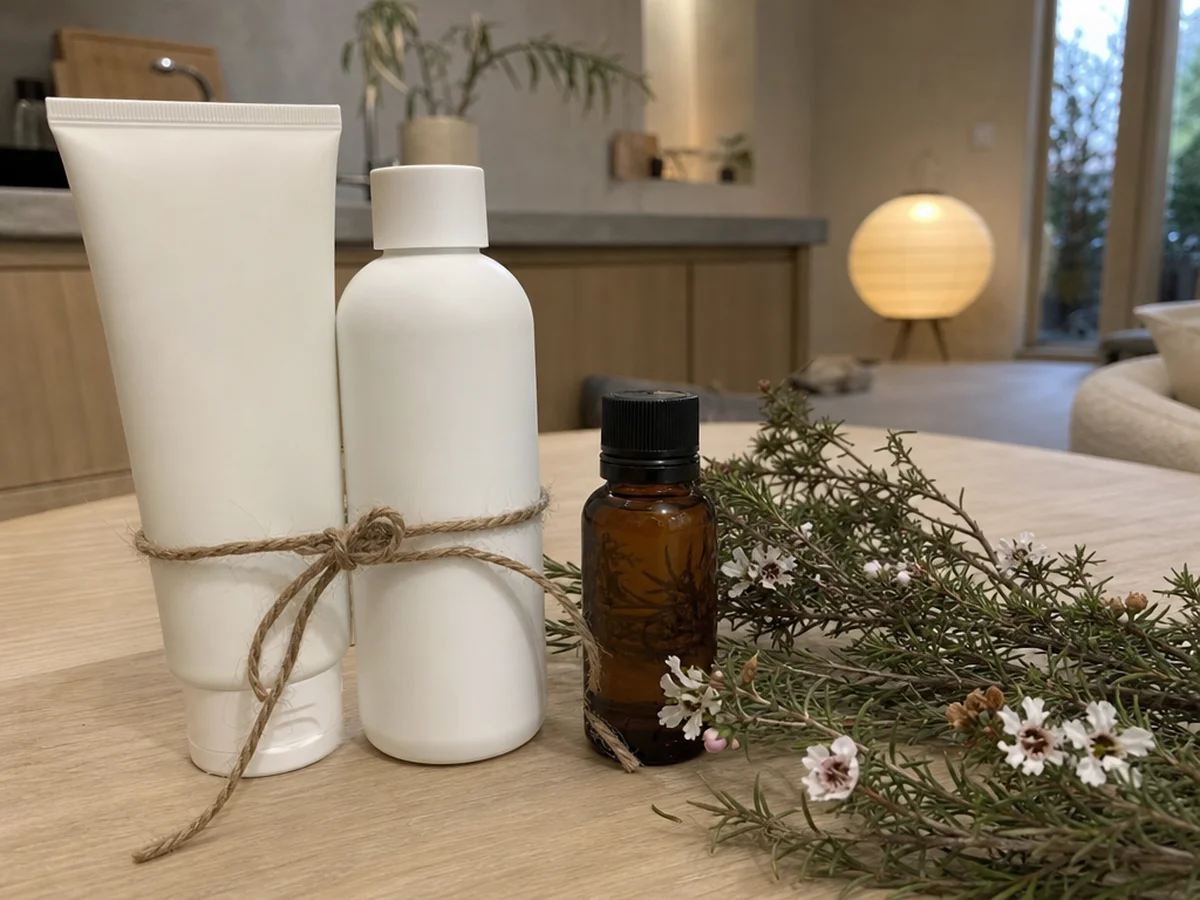
You will notice that a short, readable ingredient list is the easiest to judge, and a front panel leaning on lots of adjectives is the hardest. A plain label is a kindness to the person reading it.
When each makes sense
A finished product is the easier choice if you want something ready to use, with texture, preservation and a recipe already sorted. That is a pharmacy or store shelf, because we sell the one oil and nothing else, not carrier oils, lotions or blends.
The oil is the better choice if the scent is the point. Our shop describes it as earthy, honeyed and warm with a slightly spicy edge, a heavier, lower note that settles into a blend. It also suits people who make their own soap, candles, sprays or skin oils and want to decide the strength themselves, since a little goes a long way. Our bottle sizes article shows how far one ounce stretches, and the storage article covers keeping it cool, dark and tightly capped.
If you do take the oil route, start small. A little bottle lets you learn the scent, practise your counting and decide whether you want to make a habit of it before you commit to anything bigger.
One last note on claims. FDA says regulation depends mainly on a product's intended use, and a plant origin does not exempt a product from drug rules (FDA, Aromatherapy). A product that promises a medical result is making a different kind of promise from one that describes a scent or a feel, and we describe ours in terms of aroma and use. For a skin concern, a dermatologist is the right person to ask.
Whichever you choose, the ingredient list is the honest part of the package, so read it before the front.
Manuka Essential Oil
Manuka Essential Oil from our own shop, in sizes from 0.5 oz to bulk.
From $18.99
Shop Now →