How to Read a Manuka Oil Label: Claims vs Proof
Pick up a few bottles of manuka oil and you will meet a small vocabulary: "East Cape," "25% triketone," "wild," "organic," "lab-tested." They sound like grades, the way olive oil has extra virgin. They are not. Some of those words are the seller's description, a few can be backed by a measurement, and knowing which is which makes shopping a lot easier.
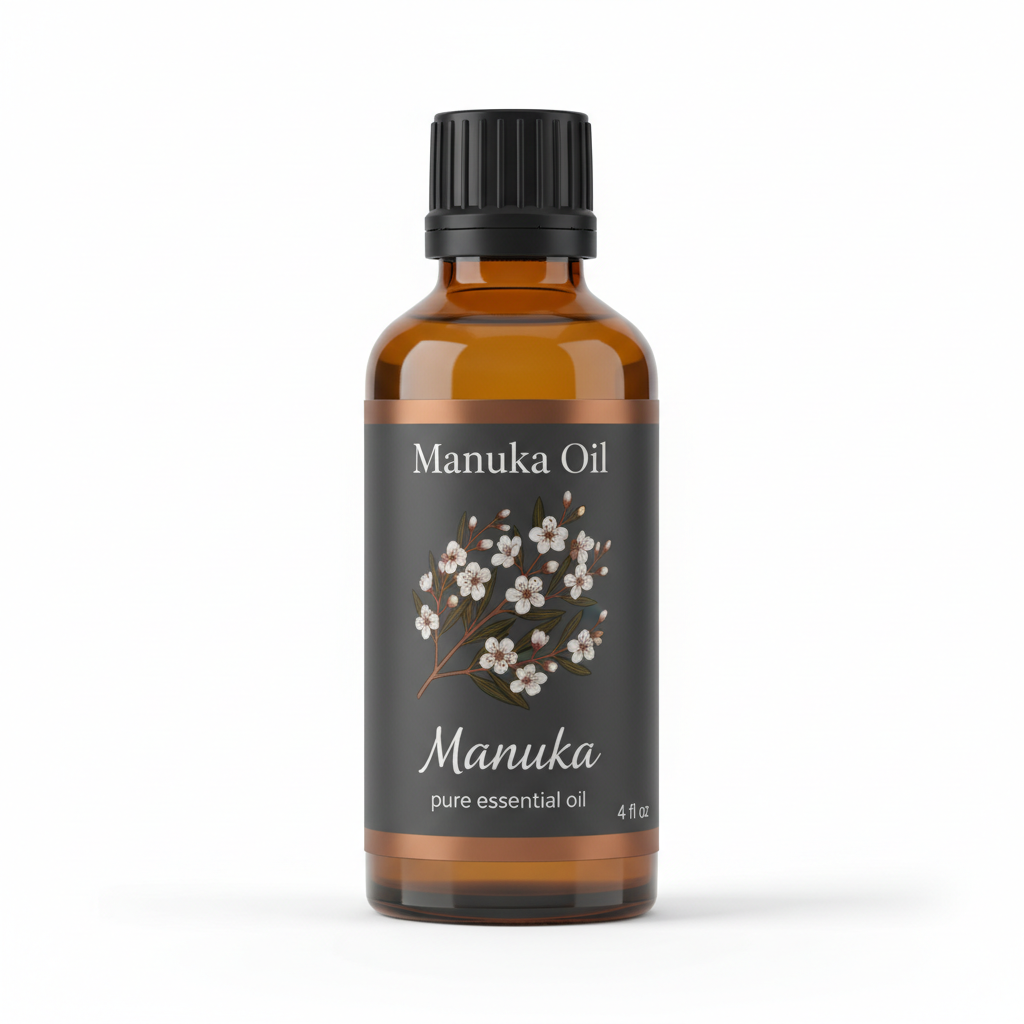
Manuka Essential Oil
Our own Manuka Essential Oil, in sizes from 0.5 oz to bulk.
From $18.99
Shop Now →Descriptions and measurements
A label can say almost anything the seller likes. In the US, FDA does not pre-approve cosmetic labeling; the manufacturer or distributor is responsible for getting it right, and the information that has to appear is mostly practical: what the product is, how much is in the bottle, who is behind it, and any needed warnings (FDA, Cosmetics Labeling Regulations). A chemotype, a harvest region or a test result is not on that list. Everything beyond it is voluntary, which is fine, but it means each extra word is only as good as the paper behind it.
Two words come up constantly. FDA has not defined "natural" for cosmetic labeling, and the term "organic" for agricultural products is regulated by USDA, not by the cosmetics side of FDA (FDA, Small Businesses & Homemade Cosmetics: Fact Sheet). So a certificate that names the certifier and the lot is what makes "organic" mean something. "Wild" works the same way: it is a statement about harvest, and a harvest record is what would support it.
Triketones: the number worth asking for
If there is one figure that tells manuka oils apart, it is the triketone content. Triketones, led by leptospermone, are a family of heavier compounds that some manuka plants make in quantity and others barely make at all. A survey of 261 plants at 87 New Zealand sites found that oils from 36 East Cape plants all held more than 20% total triketones, while plants in the Marlborough Sounds reached up to 20% and ten other chemotypes (types of oil with their own signature compounds) turned up elsewhere (Douglas et al., Essential oils from New Zealand manuka: triketone and other chemotypes of Leptospermum scoparium). A review of the field lists leptospermone alone at anywhere from 0.8% to 19.4% in commercial oils, and notes that Australian-grown Leptospermum scoparium had almost no triketones (Mathew et al., Mānuka Oil-A Review of Antimicrobial and Other Medicinal Properties).
That spread is why a bare "manuka oil" tells you so little, and why a percentage is genuinely informative. It is also why three questions are worth putting to any seller who quotes one. Is the number for the lot in the bottle, or for the plant in general? Does the seller say who measured it and how? And is it a share of the whole oil? One research group buying oils sold at 5%, 25% and 40% triketone did so on the producer's word; their paper does not describe how the producer measured those grades (Kaur et al., Mānuka Oil vs. Rosemary Oil: Antimicrobial Efficacies in Wagyu and Commercial Beef against Selected Pathogenic Microbes). In other words, a grade is a house scheme until a method and a laboratory sit behind it. Our triketones article goes further into what the compounds are.
Region describes the plants, not the bottle
"East Cape" is a real, measured category, but it describes where a certain type of plant grows. Because the survey above found eleven different oil types across the country, the region is a reason to ask for the number, not a replacement for it. We walk through that in our East Cape article.

What "lab-tested" should come with
Here is a quirk that surprises people: diluting an essential oil with a vegetable oil does not change the percentage mix among its remaining volatile compounds, so a chromatogram showing a pleasing profile cannot by itself reveal that a bottle has been stretched. Researchers working with lavender, lemon and tea tree oils concluded that absolute quantitation against a reference profile is what exposes it (Capetti et al., Adulteration of Essential Oils: A Multitask Issue for Quality Control. Three Case Studies: Lavandula angustifolia Mill., Citrus limon (L.) Osbeck and Melaleuca alternifolia (Maiden & Betche) Cheel). So the useful form of "tested" is a report you can hold: the lot number, the method, the laboratory. The checks article covers what each kind of document can and cannot show.
A habit worth building is to read the label before you read the price or the story. Look for the botanical name, the amount in the bottle and a way to contact the seller. Those three are plain facts, and they tell you more than a handful of adjectives.
What we can show for ours
We sell a single oil, Leptospermum scoparium, steam-distilled and sold neat. The Certificate of Analysis we publish is for one batch (MNKLUUUNUNC010A, best by 11/30/2027). It records a clear liquid with a "Sweet, Honey, Herbal" smell, a relative density of 0.896, a refractive index of 1.489 and an optical rotation of -3.84 degrees at 20 C, and it concludes that the tested parameters comply with pharmacopoeia standards. It does not give a triketone or other constituent percentage, and it does not state an origin, so we make no region, wild, organic or triketone claim for our oil. If a figure like that matters for your project, ask us in writing through the contact page before ordering and get the answer in writing. Our COA walk-through reads the certificate line by line, and the buying guide puts these questions in order.
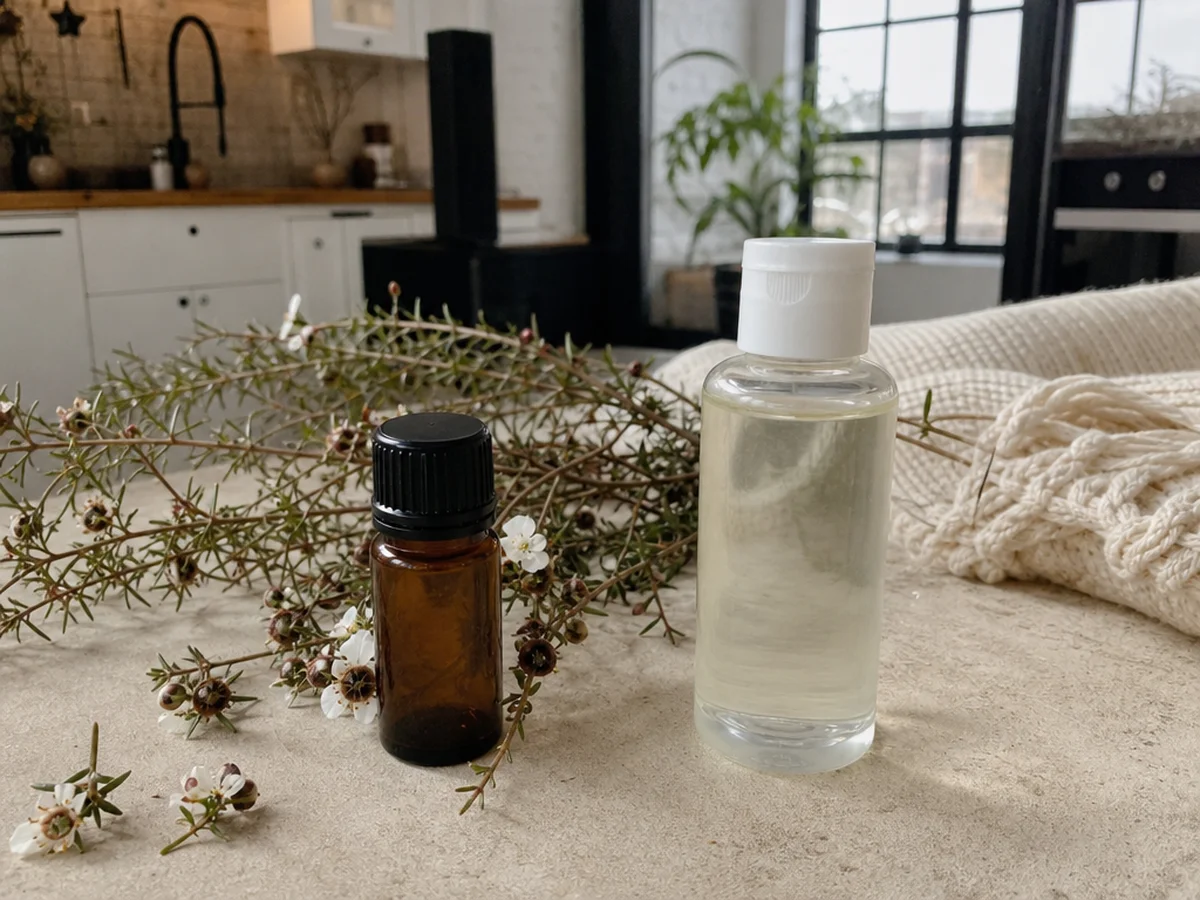
The short version of label reading is a habit: wherever a bottle makes a claim, look for the document that goes with it, and treat the rest as the seller's way of describing the plant.
Manuka Essential Oil
Manuka Essential Oil from our own shop, in sizes from 0.5 oz to bulk.
From $18.99
Shop Now →Sources & Further Reading
- FDA, Cosmetics Labeling Regulations
- FDA, Small Businesses & Homemade Cosmetics: Fact Sheet
- Douglas MH et al., 2004. Essential oils from New Zealand manuka: triketone and other chemotypes of Leptospermum scoparium. Phytochemistry
- Mathew C et al., 2020. Mānuka Oil-A Review of Antimicrobial and Other Medicinal Properties. Pharmaceuticals
- Kaur R et al., 2023. Mānuka Oil vs. Rosemary Oil: Antimicrobial Efficacies in Wagyu and Commercial Beef against Selected Pathogenic Microbes. Foods
- Capetti F et al., 2021. Adulteration of Essential Oils: A Multitask Issue for Quality Control. Molecules