Manuka vs Tea Tree Oil: Different Scent, Different Oil
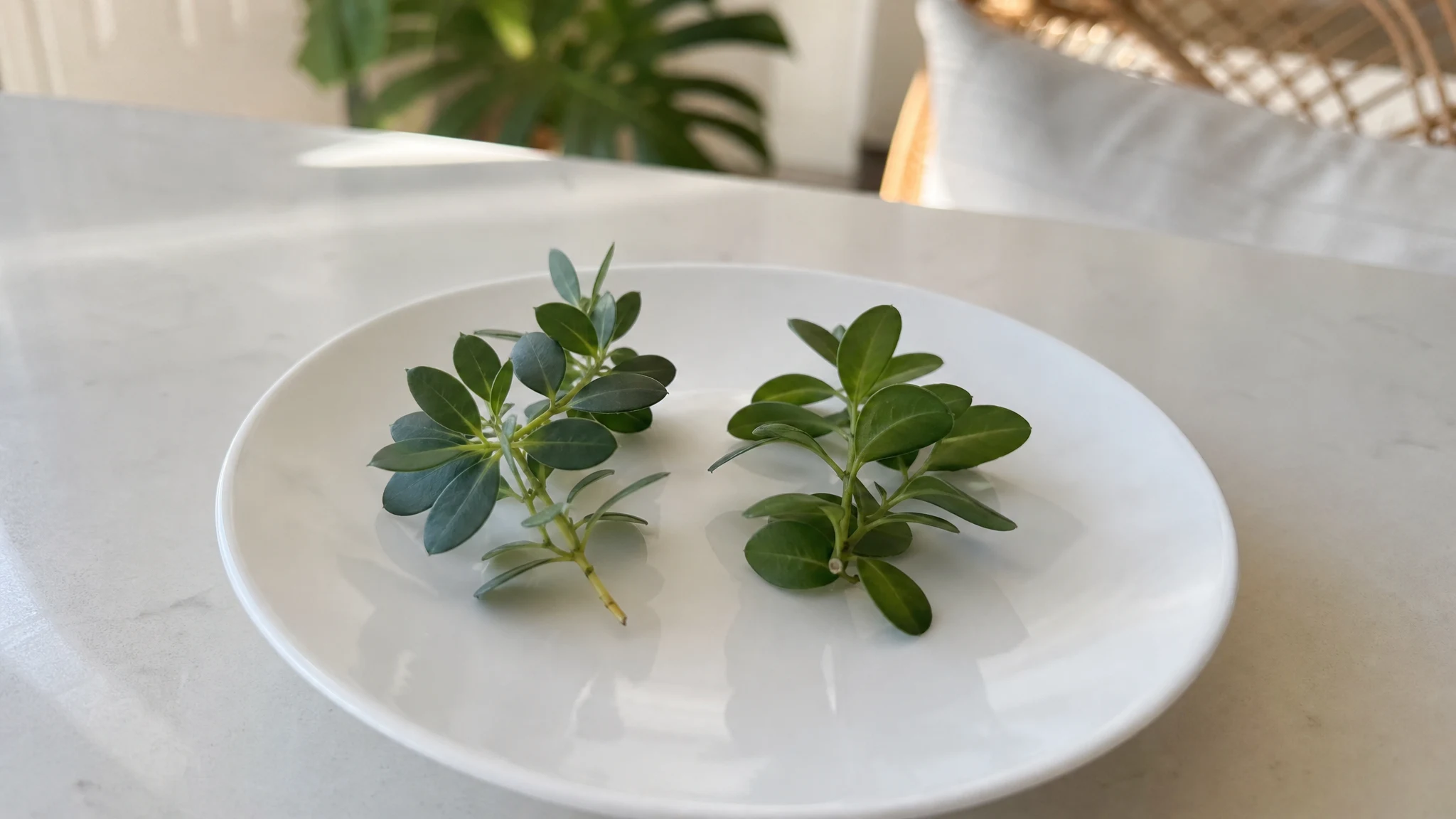
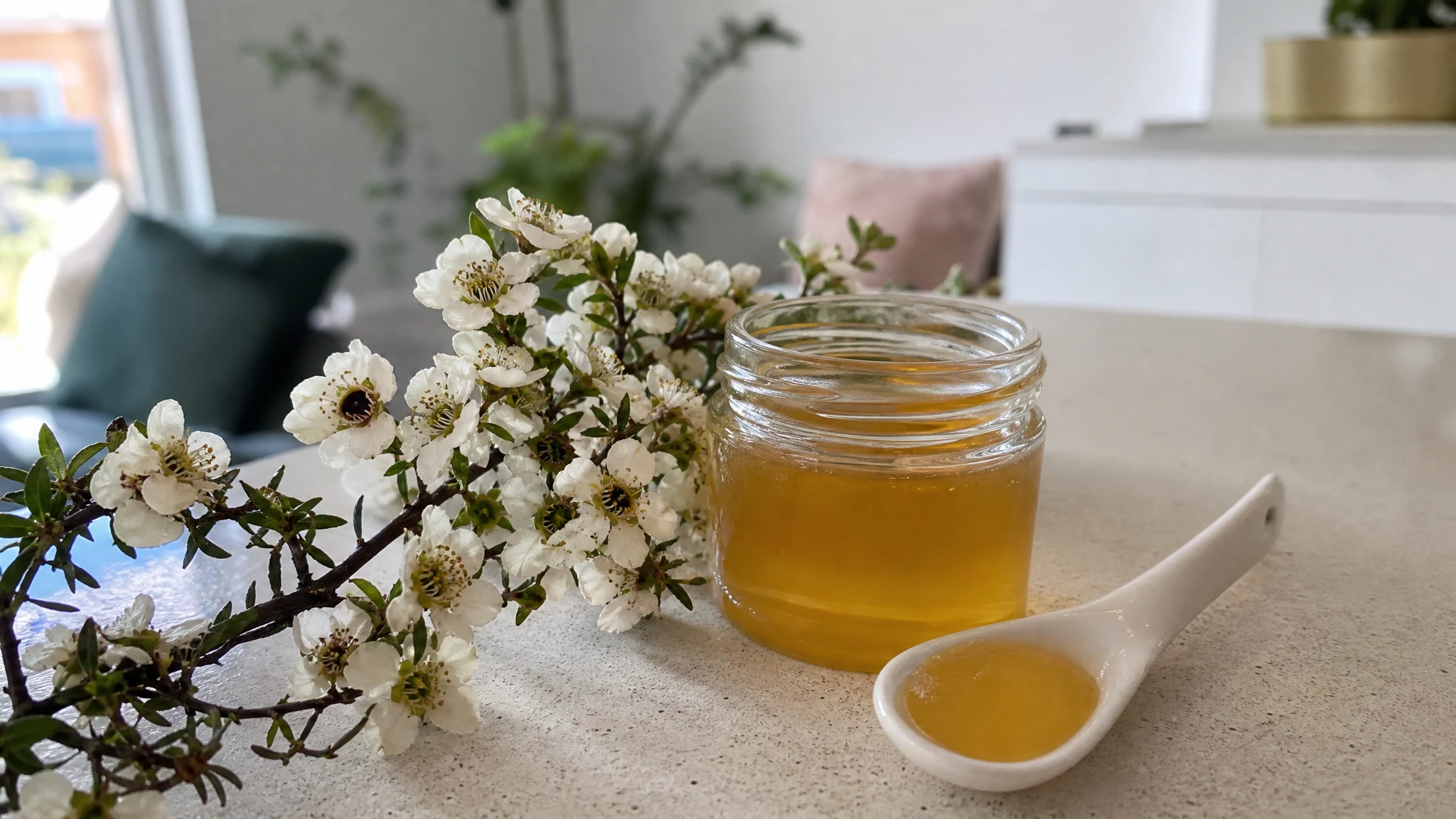
People often file manuka and tea tree together, partly because manuka itself is sometimes called "tea tree" as a common name. The two trees do belong to the same family. But open the bottles and you are smelling different chemistry, and our description of manuka as deeper and sweeter than tea tree is not just poetry.
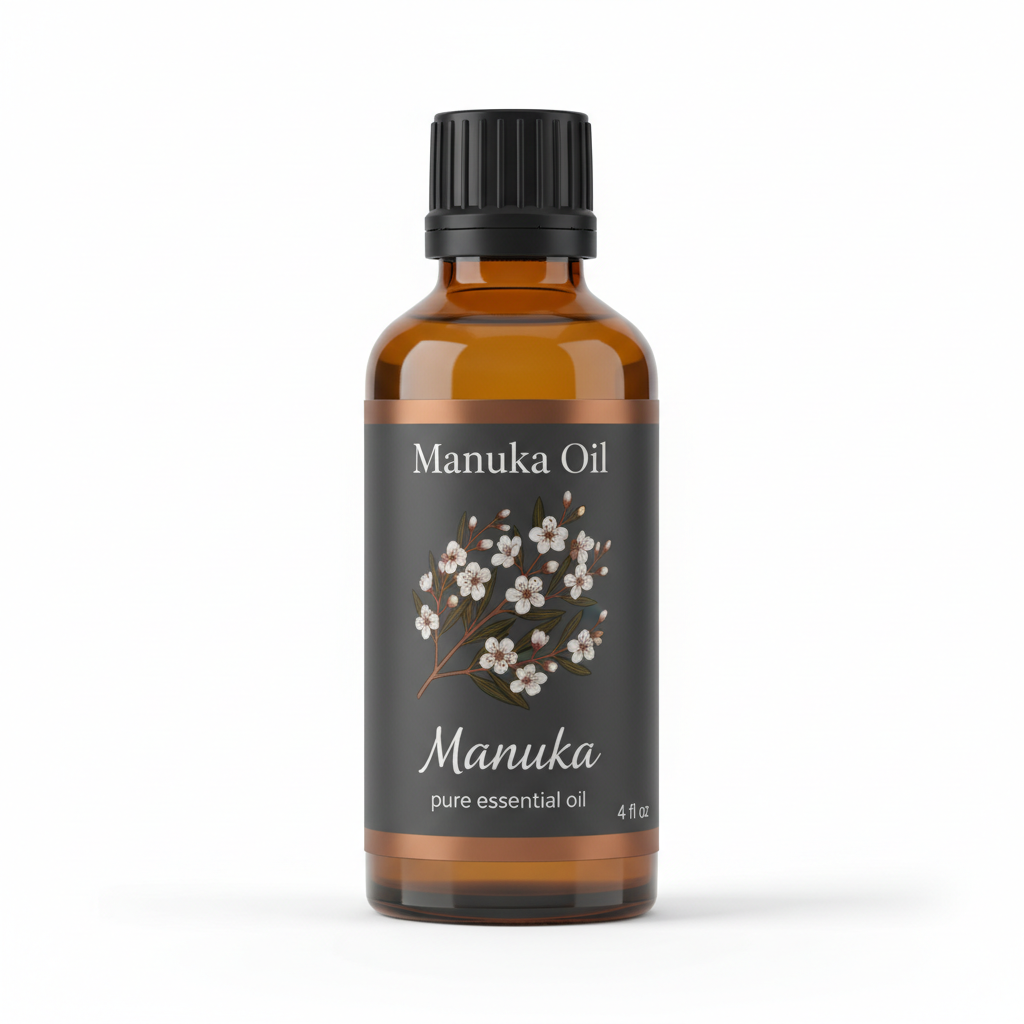
Manuka Essential Oil
Our own Manuka Essential Oil, in sizes from 0.5 oz to bulk.
From $18.99
Shop Now →Two different recipes
Tea tree oil comes from Melaleuca alternifolia and is a monoterpene oil, built around a compound called terpinen-4-ol. It has an international standard (ISO 4730) that requires at least 30% terpinen-4-ol and no more than 15% 1,8-cineole, and a typical analysis in a major review shows terpinen-4-ol at 40.1% with gamma-terpinene at 23.0% (Carson, Hammer and Riley, Melaleuca alternifolia (Tea Tree) oil: a review of antimicrobial and other medicinal properties).
Manuka oil, from Leptospermum scoparium, is a different animal. In an analysis of 16 commercial New Zealand oils, heavy sesquiterpene hydrocarbons made up 60 to 70% of each oil and triketones averaged about 22%, while monoterpenes averaged only 4.5% (Christoph et al., The composition of commercial manuka oils from New Zealand). A review of the literature puts terpinen-4-ol in manuka at only 0.8 to 1.4% (Mathew et al., Mānuka Oil-A Review of Antimicrobial and Other Medicinal Properties). In plain terms, manuka is not a stronger tea tree. The compound tea tree is built on is nearly absent, and what defines manuka is a big, slow-evaporating sesquiterpene fraction. That is why it behaves like a base note in a blend rather than a bright top note.
How they smell
We describe our manuka oil as earthy, honeyed and warm with a slightly spicy edge, a heavier, lower note that settles into a blend. The Certificate of Analysis we publish for one batch records the smell as "Sweet, Honey, Herbal." Both descriptions point the same way: sweeter and rounder than the sharp, medicinal-smelling freshness many people expect from tea tree. If you like woody, honeyed and herbal aromas, manuka is the one to open. It pairs happily with lavender, bergamot, sweet orange, geranium and cedarwood, and our scent profile and pairing guide have more.
Which would you rather open?
The easiest test is the one nobody needs a lab for. Take the cap off each bottle and hold it a little way from your nose. Tea tree arrives fast and sharp. Manuka takes a moment, and what arrives is warmer and more rounded. Think about where you want it: a bright, sharp scent suits a different room, a different blend and a different corner of the shelf from a deep, honeyed one.
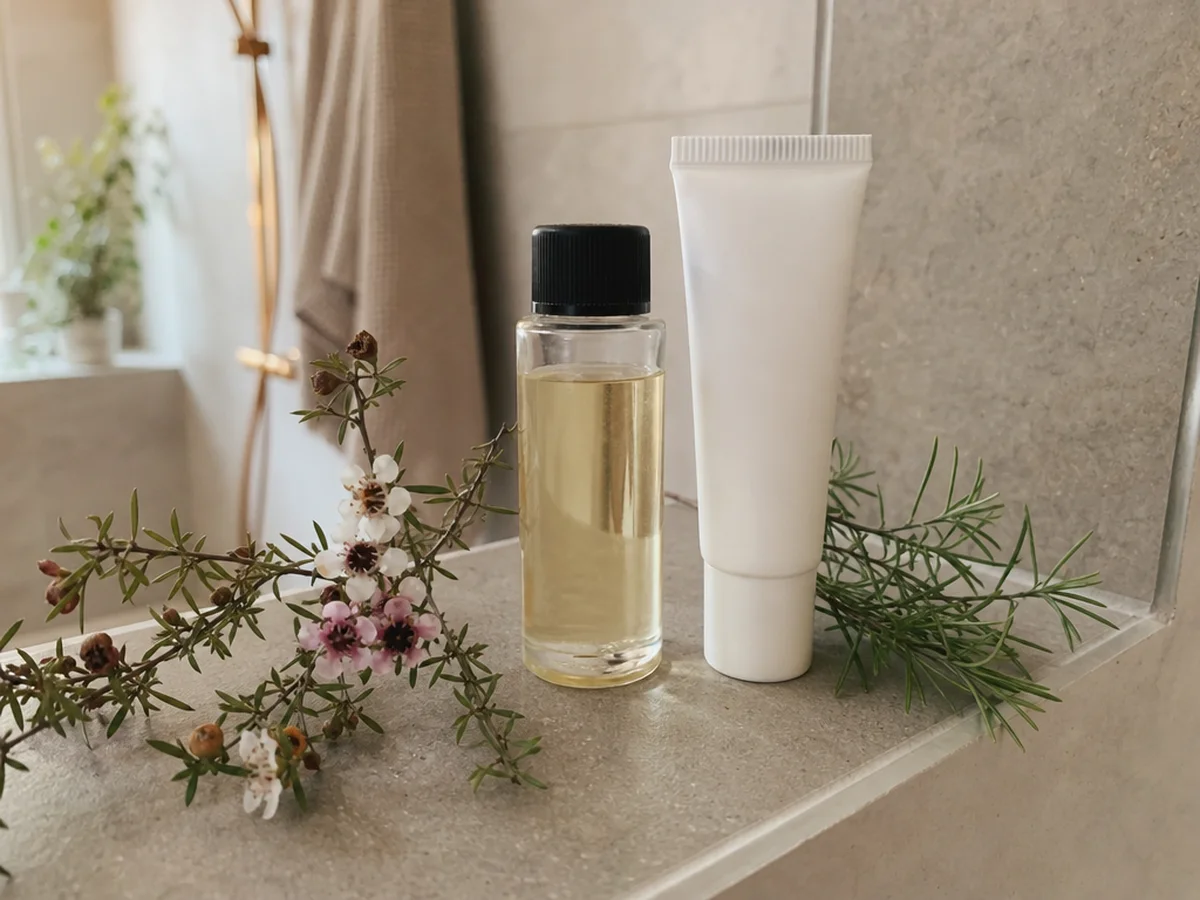
If you like to blend, manuka's lower note makes it a good foundation, and a little of it does a lot of the work. You can hear that with your nose long before you read a word of research.
What is known about each
This is where the two differ most, and it is worth being clear about. Tea tree oil is among the best-documented essential oils. Manuka is the newcomer, with far less on record. The 2020 review of manuka says plainly that evidence on efficacy and safety is limited compared with tea tree. A few lab comparisons exist, such as a broth study that tested both oils against bacteria (Harkenthal et al., Comparative study on the in vitro antibacterial activity of Australian tea tree oil, cajuput oil, niaouli oil, manuka oil, kanuka oil, and eucalyptus oil), but results from a dish do not tell you what an oil will do on skin, so we leave them there.
The tea tree record does teach one practical lesson that applies to any essential oil. A toxicity review concluded that tea tree oil is toxic if swallowed, can irritate at higher concentrations, and that allergic reactions in susceptible people may be due to oxidation products formed by light and air (Hammer et al., A review of the toxicity of Melaleuca alternifolia (tea tree) oil). A patch-test clinic in Australia found 41 positive reactions to oxidized tea tree oil among 2,320 people tested over 4.5 years, and eight of the 41 had applied it neat (Rutherford et al., Allergy to tea tree oil: retrospective review of 41 cases with positive patch tests over 4.5 years). That research is on tea tree, not manuka, so it is reasoning rather than a finding about our oil. But it is good reasoning: fewer problems reported for manuka mostly means fewer people have been counted, not that it needs less care.
Our practical advice
- Dilute. Our guidance for skin is 0.5% to 2% in a carrier oil (roughly 3 to 12 drops per ounce), starting at the low end and patch testing first. For your own formulation, check IFRA standards.
- Keep it tightly capped, cool and dark. It is the best protection against the oxidation story above, and we describe a typical shelf life of 2 to 3 years when it is kept that way. Our storage article has details.
- Not for internal use, and keep both oils away from children and pets.
- For a skin, scalp, nail or foot concern, a dermatologist or podiatrist is the person to see, whichever oil is on your shelf.
We sell manuka only, so if you are after tea tree, a pharmacy or aromatherapy supplier is the place to look. If it is the honeyed, woody depth you want, our side effects article is a good next read before you start.
They are two good oils with two different personalities, and the sensible way to choose is to smell them side by side.
Manuka Essential Oil
Manuka Essential Oil from our own shop, in sizes from 0.5 oz to bulk.
From $18.99
Shop Now →Sources & Further Reading
- Carson CF, Hammer KA, Riley TV, 2006. Melaleuca alternifolia (Tea Tree) oil: a review of antimicrobial and other medicinal properties. Clinical Microbiology Reviews
- Christoph F, Kubeczka KH, Stahl-Biskup E, 1999. The composition of commercial manuka oils from New Zealand. Journal of Essential Oil Research
- Mathew C et al., 2020. Mānuka Oil-A Review of Antimicrobial and Other Medicinal Properties. Pharmaceuticals
- Harkenthal M et al., 1999. Comparative study on the in vitro antibacterial activity of Australian tea tree oil, cajuput oil, niaouli oil, manuka oil, kanuka oil, and eucalyptus oil. Pharmazie
- Hammer KA et al., 2006. A review of the toxicity of Melaleuca alternifolia (tea tree) oil. Food and Chemical Toxicology
- Rutherford T et al., 2007. Allergy to tea tree oil: retrospective review of 41 cases with positive patch tests over 4.5 years. Australasian Journal of Dermatology