Manuka Oil in Soap: Dosing Math and a Test Bar
Deep and settled, like a wood oil: manuka sounds like a natural for a handmade bar. The question for a soapmaker is how it fares, since a bar spends a day in a high-alkali mix and then weeks curing, and its scent has to come through all of that. Here is what the research does say, the arithmetic for dosing, and an easy way to find out whether manuka suits your recipe.
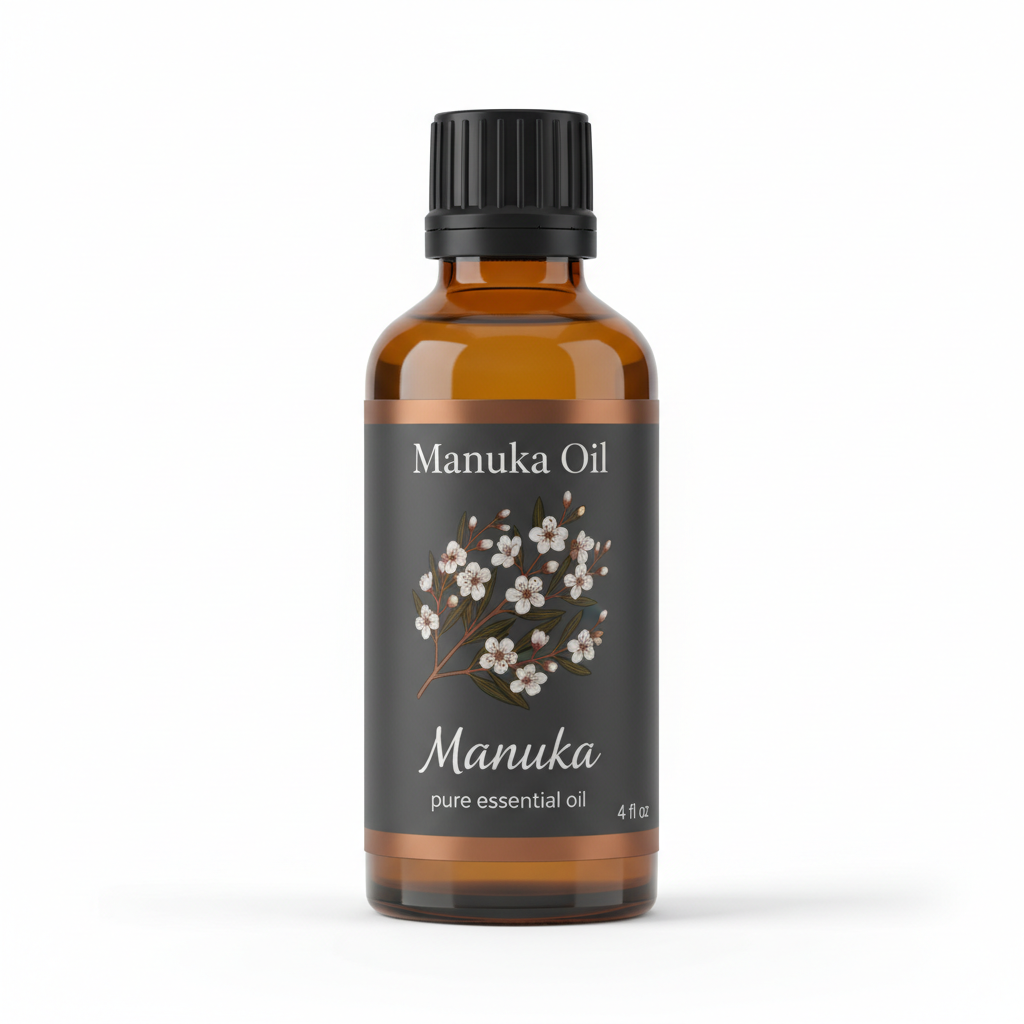
Manuka Essential Oil
Our own Manuka Essential Oil, in sizes from 0.5 oz to bulk.
From $18.99
Shop Now →What the research tells us
The closest study we found is a 2018 paper in Molecules that made seven cold-process soaps. Three were plain bars; four carried a rosemary extract or an essential oil blend at 0.05% by weight, 750 mg in a 1,500 g loaf. Manuka was not among the oils. The bars were left 24 hours to saponify and cured for four weeks, and 59 untrained panelists rated smell, though only for the soaps without additives. The authors did not measure essential oil compounds, and noted that essential oils are susceptible to oxidation during saponification, storage or curing.
So for any essential oil in cold-process soap, the practical lore is a trade preference more than a measurement, and for manuka specifically there is no published scent study that we know of. That is useful to know before you read a recipe that promises exactly how manuka oil behaves in lye or how long it lasts in a bar.
What we can reason about
Manuka oil is mostly sesquiterpenes. In a survey of 16 commercial New Zealand oils they made up 60 to 70%, with monoterpenes only 2.2 to 14.1%. Sesquiterpenes are larger and less volatile, so it is reasonable to expect less of the oil to evaporate than from a monoterpene-rich citrus oil. That is a guess about evaporation, not about how the compounds react with alkali, and it is why we suggest a trial bar.
The Certificate of Analysis we publish for one batch lists a relative density of 0.896, a refractive index of 1.489 and an optical rotation of -3.84 degrees. It does not list composition, so if you need GC-MS data or an IFRA statement for something you will sell, ask us in writing through the contact page before ordering and keep any reply in writing. Our COA walkthrough explains each line.
Our recommendation: a small test bar
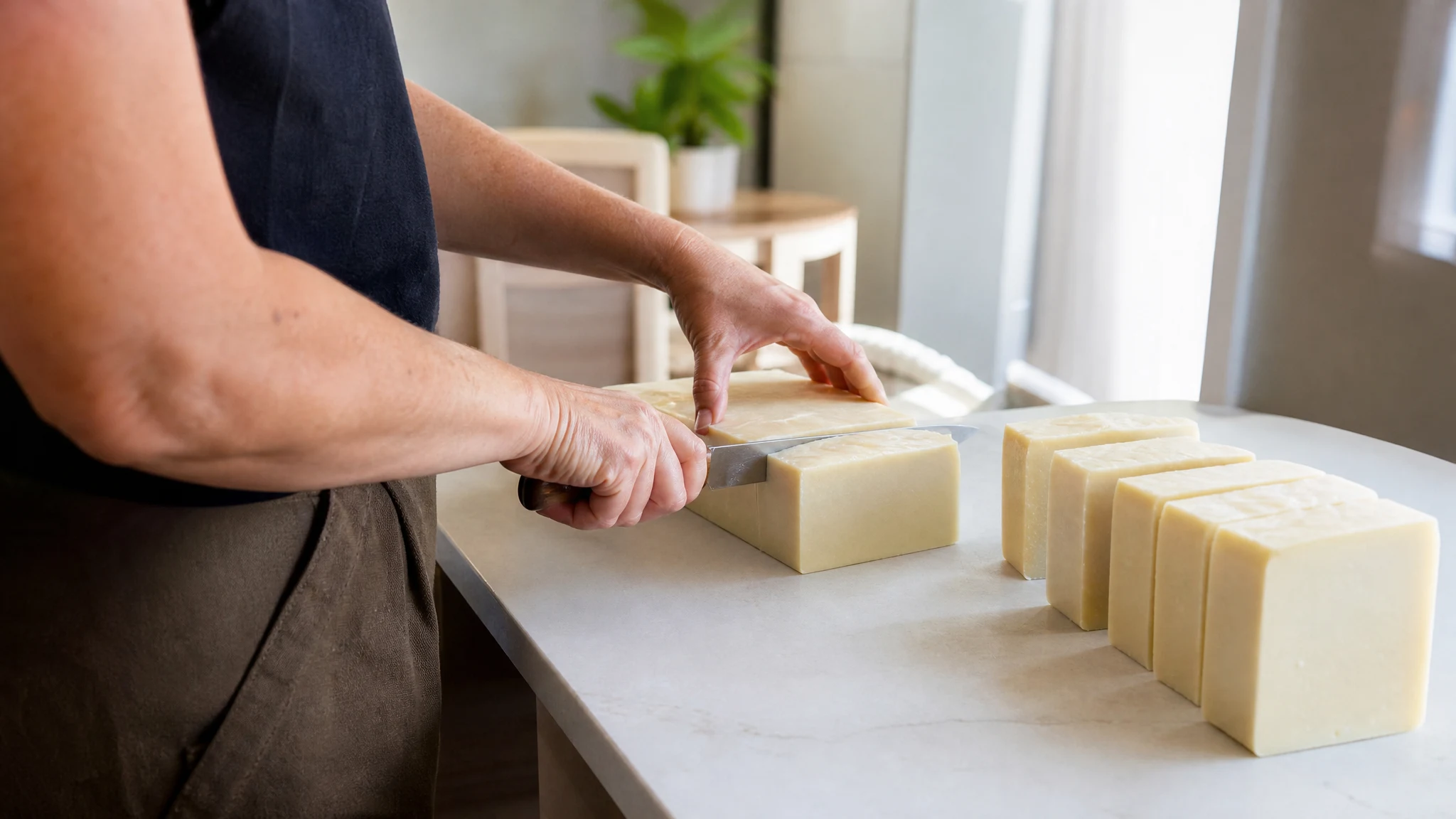
Do not buy a large bottle for soap on the strength of how it smells in the bottle. Make one small batch, divide it so one portion carries the oil and one does not, and compare the two at the end of the cure your recipe calls for. If the scent has faded, you have lost a small batch. If it holds, you know it for your recipe.
Trust your nose first
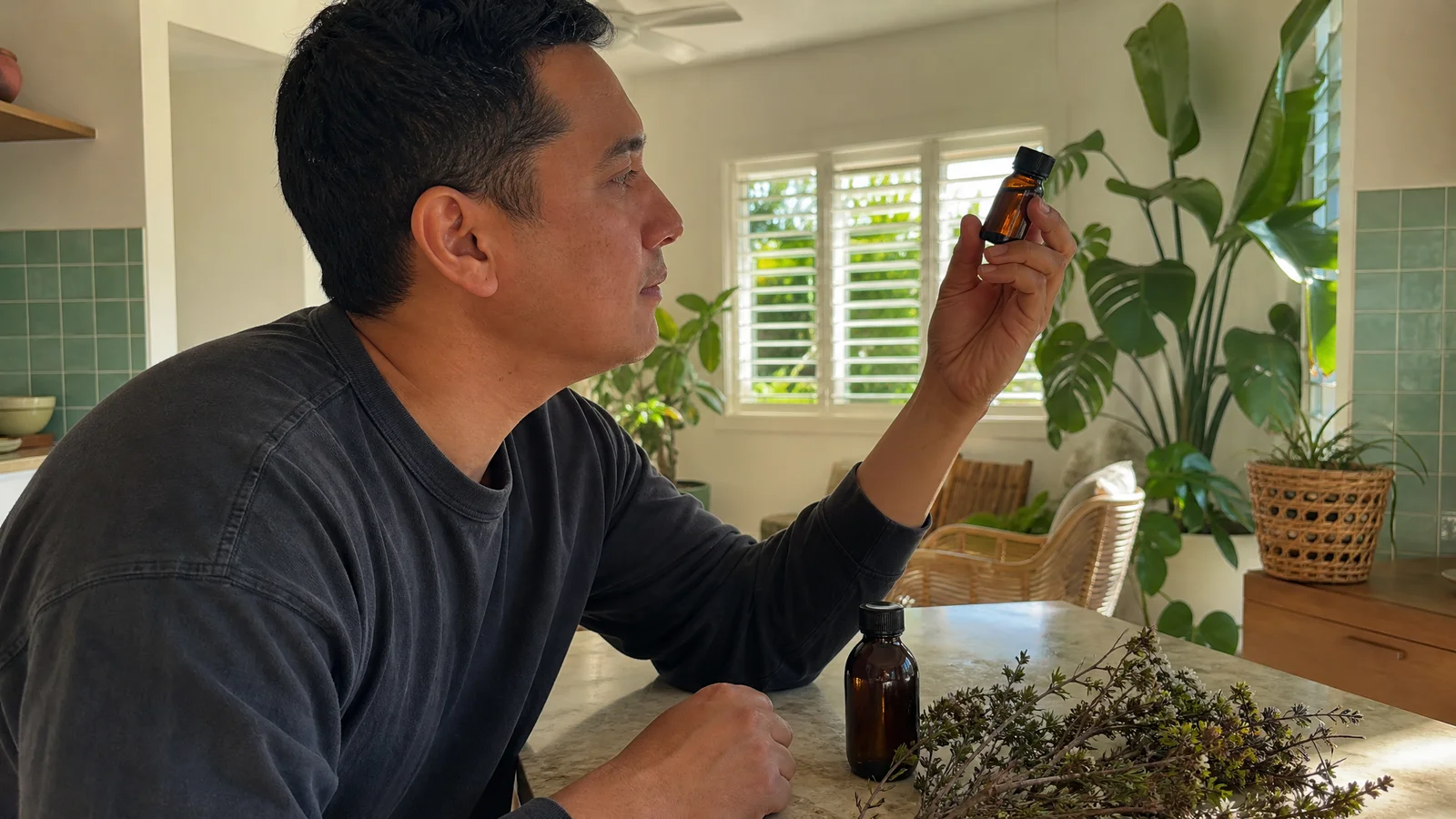
Before you reach for the scale, open the bottle and spend a minute with it. The aroma is earthy and honeyed, warm with a slightly spicy edge, and it sits low rather than bright. That matters in a bar, because a heavy, settled scent reads very differently from a sparkling citrus one. Smell it on its own first, then beside whatever else you are considering, and notice which one you still want to smell after a minute.
Remember, too, that a freshly cut bar smells different from a cured one. The scent on the day you cut the loaf is not the scent that will greet someone unwrapping the bar weeks later, so write down what you notice at each stage and let that guide the next batch.
Dosing arithmetic
Soapmakers commonly set fragrance as a percentage of the weight of oils in the recipe. Using the batch density of 0.896 and about 20 drops per millilitre, here is what a 500 g recipe of oils works out to. These rates are arithmetic, not recommendations, as we do not have a sourced usage rate for manuka in soap.
| Rate | Grams for 500 g of oils | Approx. ml | Approx. drops |
|---|---|---|---|
| 0.5% | 2.5 g | 2.8 | 56 |
| 1% | 5 g | 5.6 | 112 |
| 2% | 10 g | 11.2 | 223 |
| 3% | 15 g | 16.7 | 335 |
Our 1 oz bottle holds about 26.5 g of oil by that density, so four 500 g test batches at 1% would use about 20 g, most of a bottle. Lye, soapmaking oils and moulds come from a soap supplier, who will also provide the handling instructions for lye. Follow them carefully; lye is the hazard on the bench, not the essential oil.
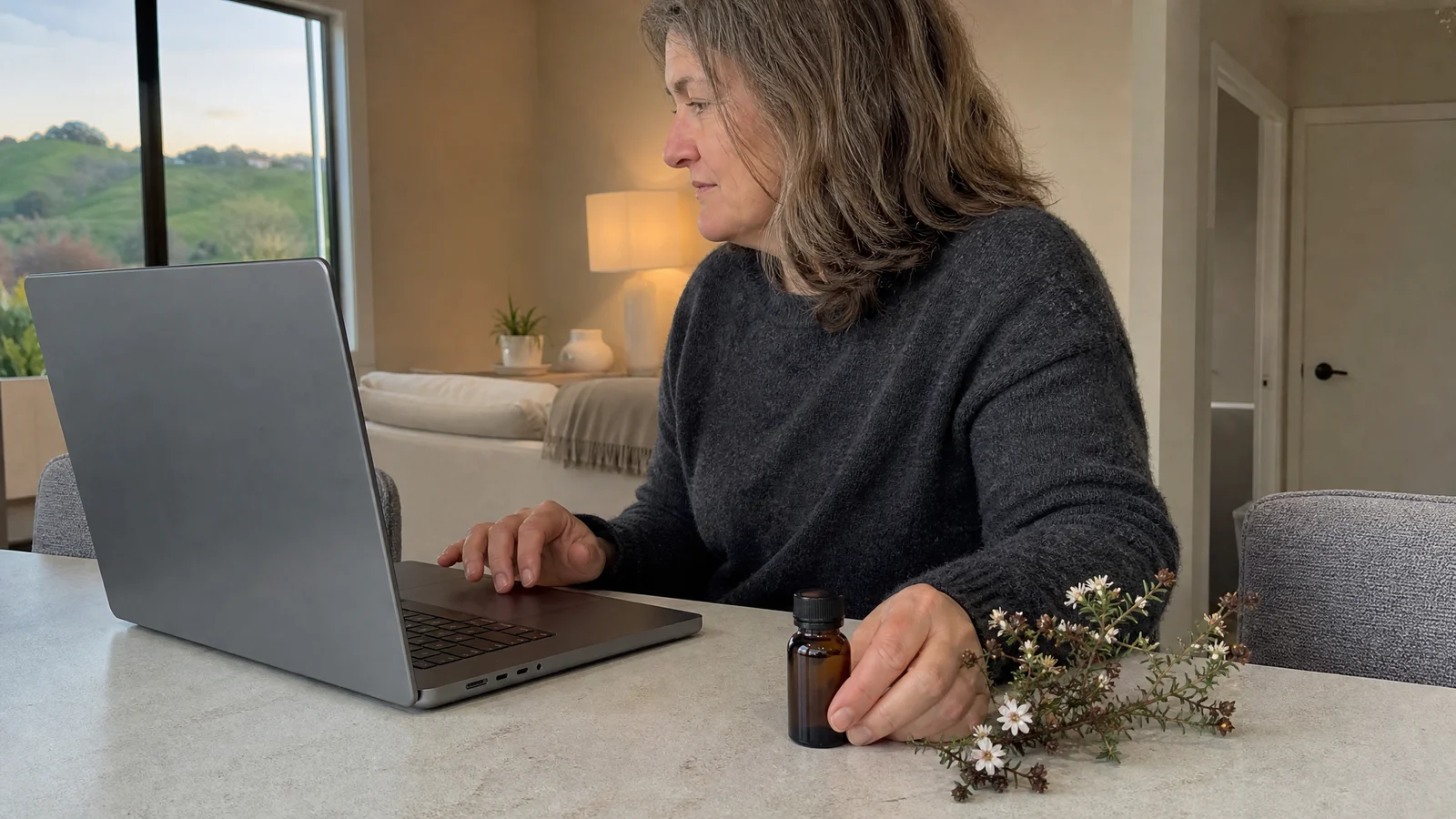
A small notebook beside the soap pot pays for itself: the date, the weights, the percentage of manuka, and a line on how it smelled at cutting, at two weeks and at the end of the cure. Two batches later you will be choosing your rate from your own notes instead of anyone's recipe.
If you will sell or gift the soap
The FDA treats a product as soap only if most of its non-volatile matter is an alkali salt of fatty acids and it is labelled, sold and represented solely as soap. A bar also marketed for fragrancing or moisturizing is regulated as a cosmetic, and one marketed with medical claims, such as antibacterial or acne cleansers in the FDA's examples, is regulated as a drug. We make no antibacterial or skin claim for our oil, and we would keep a manuka soap label to scent and cleansing.
For skin, DermNet NZ says allergic contact dermatitis to essential oils typically appears 24 to 72 hours after exposure and that the allergen may be an oxidised component. Give anyone you make bars for an ingredient list and let them know a delayed rash is a reason to stop and see a dermatologist.
If the soap idea is part of a bigger plan, our shampoo article and our blending notes work through the same kind of dosing logic.
A bar of soap is a small thing to make, and a good place to get to know manuka: small, patient, and easy to judge with your own nose.
Manuka Essential Oil
Manuka Essential Oil from our own shop, in sizes from 0.5 oz to bulk.
From $18.99
Shop Now →Sources & Further Reading
- Prieto Vidal et al., The Effects of Cold Saponification on the Unsaponified Fatty Acid Composition and Sensory Perception of Commercial Natural Herbal Soaps (Molecules, 2018)
- Christoph et al., The composition of commercial manuka oils from New Zealand (J Essent Oil Res, 1999)
- FDA, Is It a Cosmetic, a Drug, or Both? (Or Is It Soap?)
- DermNet NZ, Allergic contact dermatitis to essential oils