Manuka Foot Scrub: Why It Beats the Foot Soak
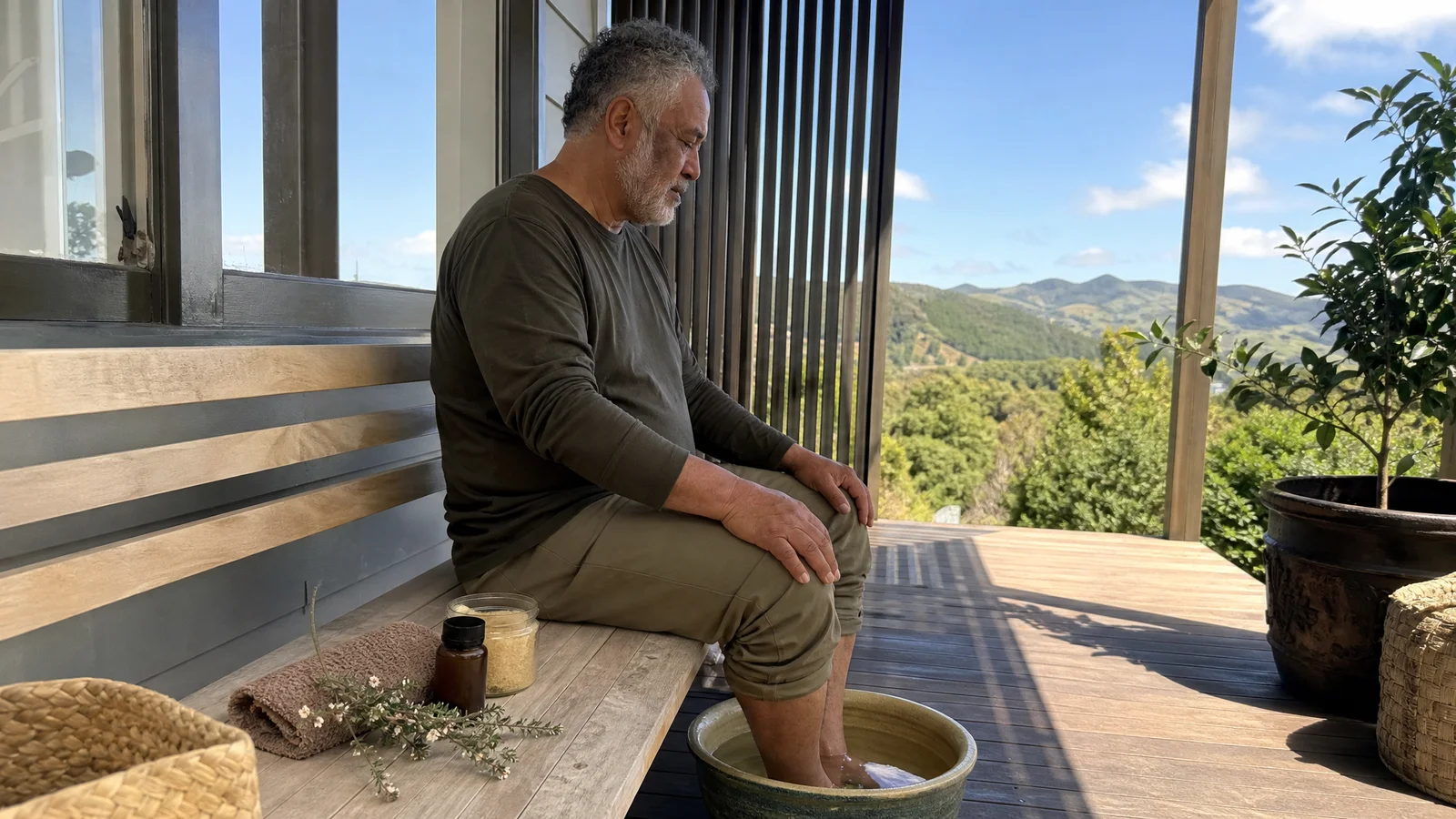
If you want manuka oil in a foot treat, put it in the scrub, not the soak. Essential oil does not dissolve in water, so drops added to a basin float on top and meet your skin undiluted as your feet pass through. A sugar scrub made with a carrier oil sidesteps the problem and is easy to work out by weight.
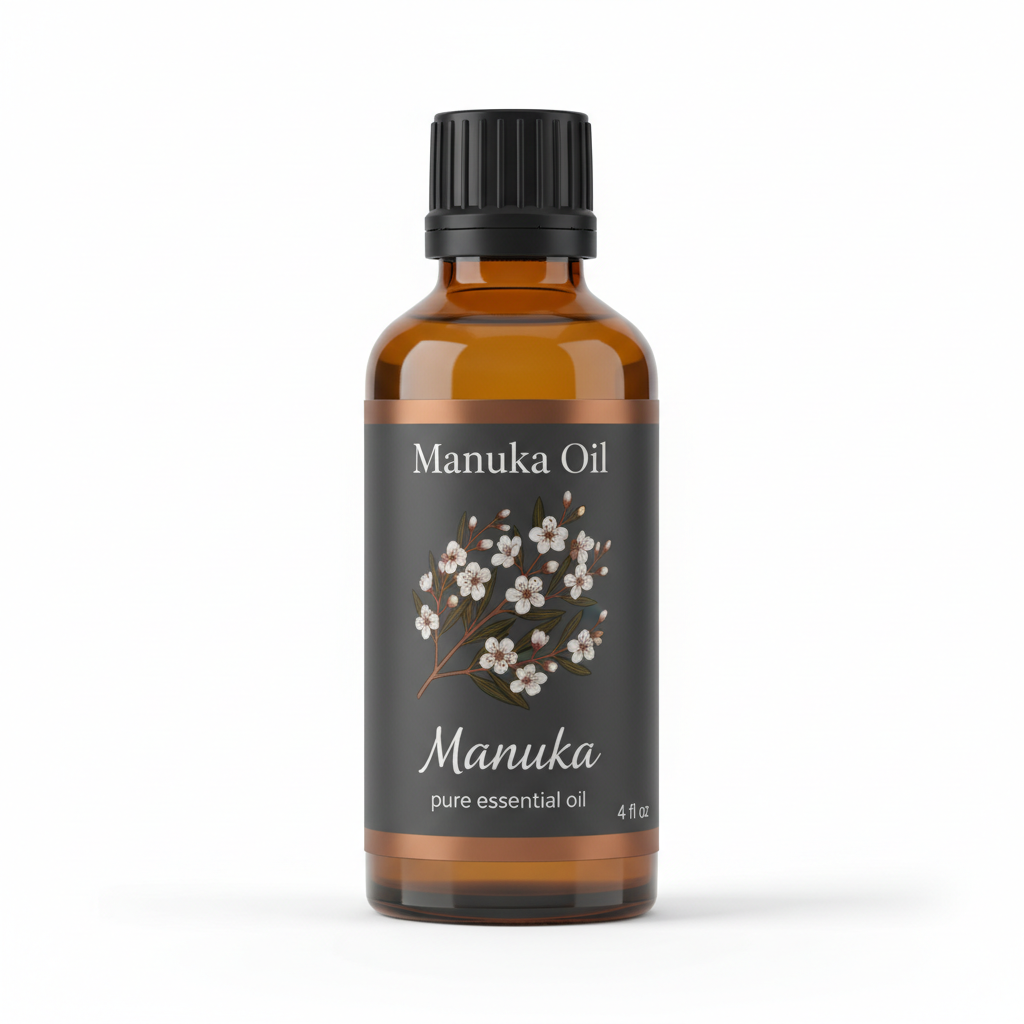
Manuka Essential Oil
Our own Manuka Essential Oil, in sizes from 0.5 oz to bulk.
From $18.99
Shop Now →Why the basin is the weak link
The Tisserand Institute says it directly: essential oils do not mix with water, they float in tiny droplets on the surface, and you should not drop them into a bath and step in. Its bath safety page lists what carries oil in water, namely foaming products formulated for added oils, dispersants such as Solubol and polysorbate 20, and a modified tapioca starch powder. It also lists what does not: Epsom salt and other salts, baking soda, cornstarch, milk, glycerin, witch hazel, aloe and low-proof alcohol.
That last list is the surprise, because plenty of foot soak recipes online tell you to stir the oil into Epsom salt first. By Tisserand's account that disperses nothing. Dispersants add an extra ingredient to learn about, and manuka's scent in a basin of warm water would be faint anyway. So our approach is a plain warm soak if you like one, with the manuka somewhere you control the dilution.
If you have diabetes, skip soaking altogether
The CDC's advice for people with diabetes is to wash feet daily in warm (not hot) water and "Don't soak your feet." That is advice about soaking itself, whatever is in the water. A scented scrub on feet you cannot fully feel or inspect is a decision to make with your podiatrist or physician. The same goes for broken skin, deep cracks, open blisters or anything that looks infected. If what you really need is help with athlete's foot, odor or a thick nail, start with our guide to sorting the foot problem first, and see our posts on athlete's foot and foot odor.
The scrub, by weight
A sugar scrub contains no water, which keeps things simple. These proportions are our suggestion for a small jar, so adjust the texture by feel.
| Ingredient | Amount | Note |
|---|---|---|
| Granulated sugar | 100 g | Grocery store; a finer sugar is gentler |
| Carrier oil | 50 g | Jojoba or sweet almond; see our carrier oil guide |
| Manuka oil at 0.5% | 0.75 g, about 17 drops | 0.5% of the 150 g total |
| Manuka oil at 1% | 1.5 g, about 34 drops | The upper end we would suggest for a rinse-off scrub |
The drop counts come from the relative density of 0.896 on our Certificate of Analysis and the convention of 20 drops per millilitre, so 0.75 g is about 0.84 ml. A scale reading to 0.1 g beats counting. Our dilution guidance is 0.5% to 2% in a carrier with a patch test first. Because a scrub is rinsed off within a minute or two, 1% is a comfortable ceiling for a first jar, and we do not describe any percentage as proven safe.
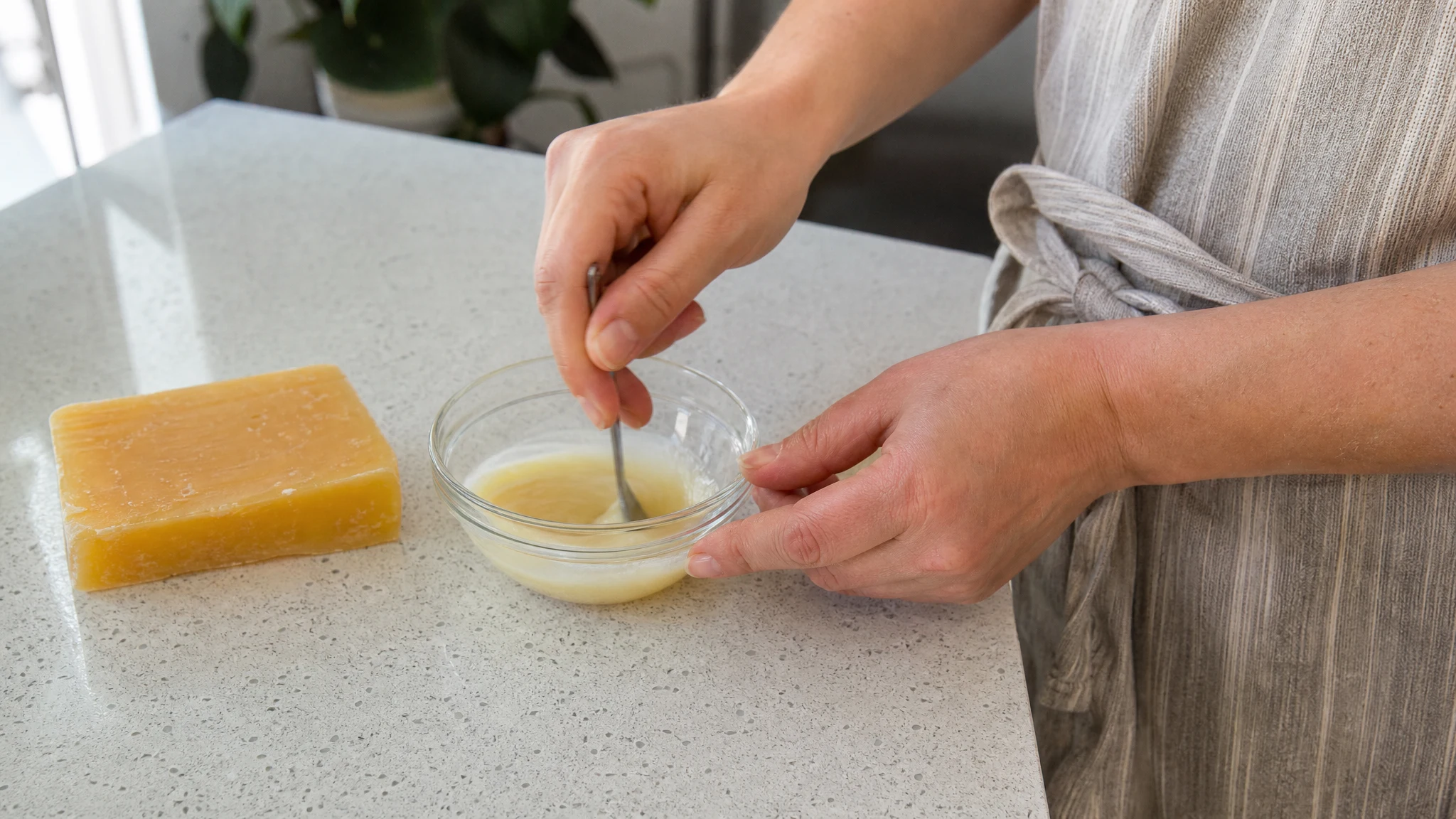
Stir the manuka oil into the carrier first, then fold that into the sugar. Mixing the oil into a liquid before it meets the sugar spreads the scent evenly instead of leaving a few grains carrying most of it. Pack it into a clean, dry glass jar with a lid and label the date.
Keep it dry
A scrub with no water in it does not need a preservative, which is the main argument for it over a wet recipe. It stops being water-free the moment wet hands go in. FDA's fact sheet for small businesses notes that microbial contamination can make a cosmetic adulterated. That rule is aimed at products for sale, but the logic holds for a jar on a shower shelf: scoop with a dry spoon, keep it out of the spray, make small batches, and discard it if it smells off or changes colour.
Using it without a slip or a reaction
- Patch test first. DermNet describes essential oil allergy as a delayed reaction, usually 24 to 72 hours after exposure. A dab on the inner forearm, washed off after a minute, and a three day wait costs you nothing.
- Rinse the floor too. Oil and sugar slurry makes a slippery shower, so rinse it away and hold on to something.
- Keep it off the eyes. Wash your hands after scrubbing and keep the oil away from children and pets.
- Skip raw or cracked skin. Sugar on irritated skin is a reason to wait, whatever oil is in it.
If you react, stop, wash the area and read our side effects guide, or start with the sensitive skin guide if you already know your skin is touchy.
A few small touches
Scrubs are forgiving, so enjoy making one. Use a finer sugar if you like a softer feel and a coarser one if you want more grip, and stir slowly so the grains do not crush. Press the mix into the jar with the back of a spoon and wipe the rim clean before you put the lid on; a tidy jar is nicer to reach for. Keep it on a shelf at foot level in the bathroom, out of the spray, so it gets used.
What to expect
The sugar does the exfoliating, as grains rub away dry surface skin, and the carrier oil leaves a soft film. What manuka adds is aroma, and a deep one. We describe it as earthy, honeyed and warm, a drop or two goes a long way, and the Certificate of Analysis we publish for one batch records "Sweet, Honey, Herbal". We do not claim the oil softens, calms or relaxes anything. It is the scent that makes the jar a pleasure to open.
Manuka Essential Oil
Manuka Essential Oil from our own shop, in sizes from 0.5 oz to bulk.
From $18.99
Shop Now →Sources & Further Reading
- Tisserand Institute, Safety Guidelines - Tisserand Institute. tisserandinstitute.org/safety/safety-guidelines
- Tisserand Institute, Bath Safety: how to use essential oils safely in the bath. tisserandinstitute.org/safety/bath-safety
- CDC, Your Feet and Diabetes. cdc.gov/diabetes/diabetes-complications/diabetes-and-your-feet
- FDA, Small Businesses & Homemade Cosmetics: Fact Sheet. fda.gov/cosmetics
- DermNet, Allergic contact dermatitis to essential oils. dermnetnz.org/topics/allergic-contact-dermatitis-to-essential-oils