Manuka, Lavender and Cedarwood Diffuser Blend Ratios
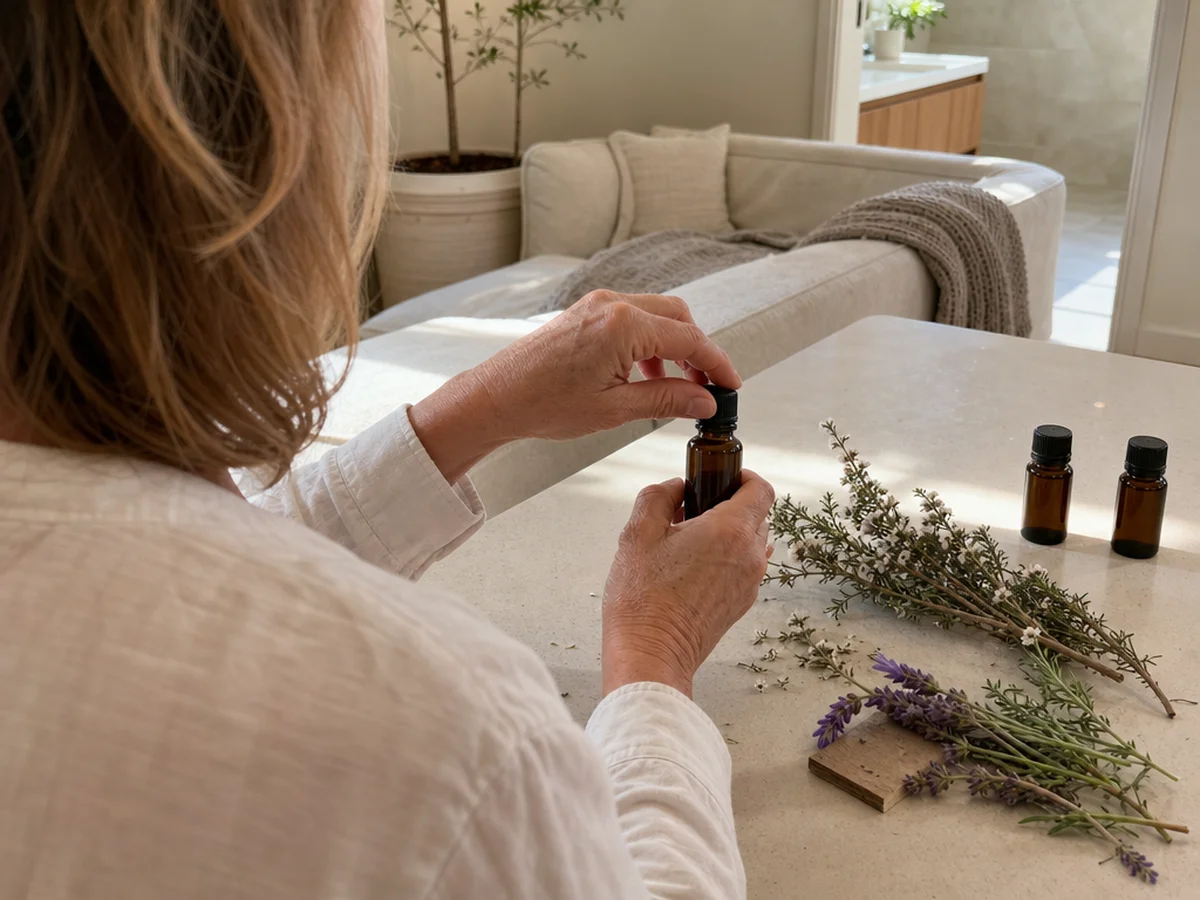
Some blends feel like a walk: lavender at the start, something resinous in the middle, and a low, warm finish that lingers after you have left the room. Manuka, lavender and cedarwood is a combination built for that arc, and it is a fun one to work out by the drop. We sell the manuka; lavender and cedarwood come from a craft or aromatherapy supply shop, and the ratio below is a starting point for your own nose to adjust.
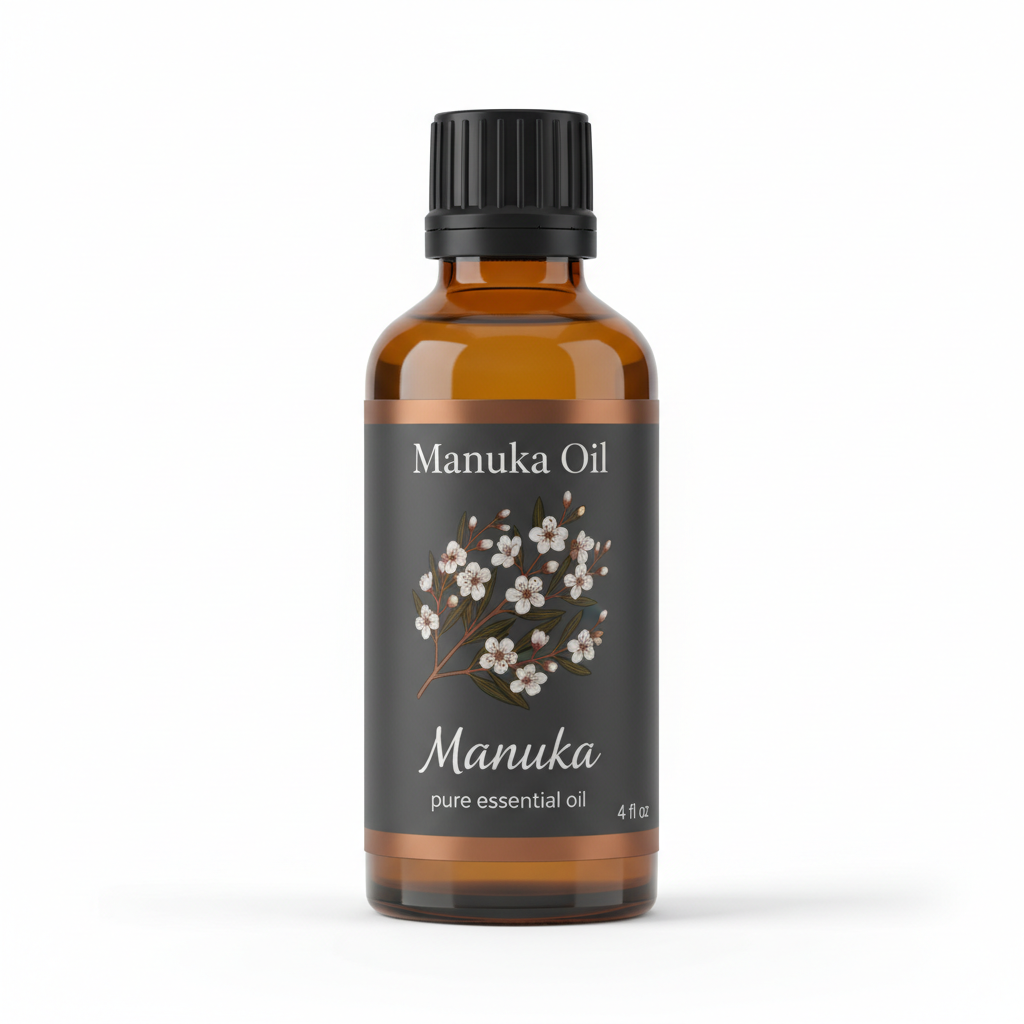
Manuka Essential Oil
Our own Manuka Essential Oil, in sizes from 0.5 oz to bulk.
From $18.99
Shop Now →Why these three
We describe manuka as earthy, honeyed and warm, a heavier, lower note that settles into a blend like a wood oil, and we list lavender and cedarwood among the oils that go well with it. Lavender brings a familiar herbal-floral lift on top, manuka supplies honeyed depth in the middle, and cedarwood adds a dry, woody base. There is no sensory study behind that pairing, so think of it as informed craft reasoning rather than a tested result. Our pairing guide compares the other partners.
The ratio, in drops
As a suggestion, try 4 parts manuka, 4 parts lavender and 2 parts cedarwood. Manuka and lavender are equal, and the cedarwood is a smaller base. The thinking is that manuka is already a low note, so it does not need to dominate, and a second heavy note in a smaller share keeps the result from turning muddy. It is a judgment, not a measurement, and the first thing you should change after smelling it.
| Stock size | Total drops | Manuka | Lavender | Cedarwood |
|---|---|---|---|---|
| 0.5 ml trial | 10 | 4 | 4 | 2 |
| 2.5 ml | 50 | 20 | 20 | 10 |
| 5 ml | 100 | 40 | 40 | 20 |
This is arithmetic at roughly 20 drops per millilitre, and drop size varies with the bottle opening and the oil, so weigh on a 0.01 g scale if you want repeatable results. For our manuka, the batch on our Certificate of Analysis has a relative density of 0.896, so 1 ml weighs about 0.896 g and 40 drops (about 2 ml) is about 1.8 g. Count into a small dark glass bottle, label it, and keep it where young children cannot reach; the Tisserand Institute advises exactly that for essential oils.
What the blend smells like as it opens
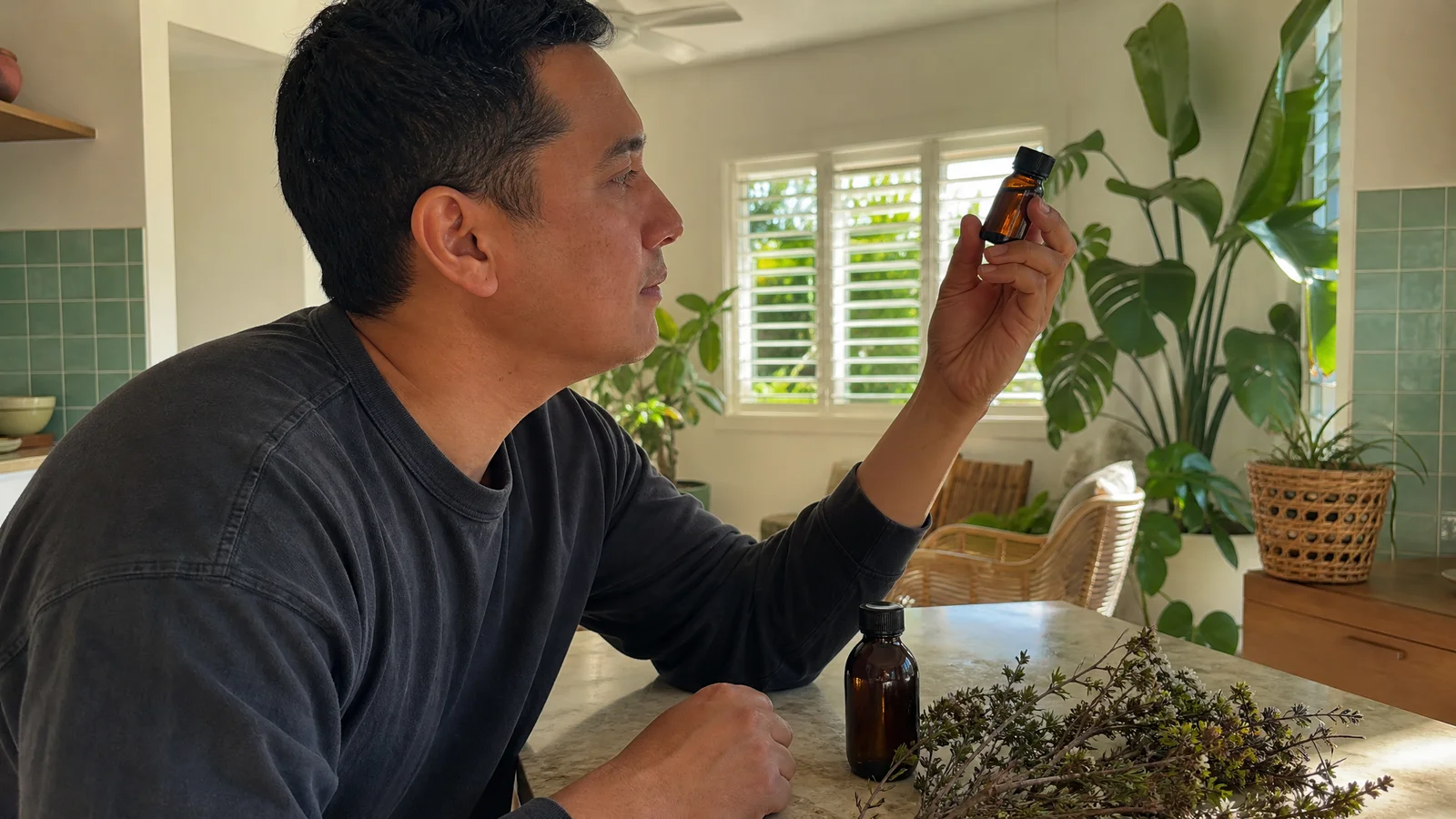
Blends change in the air, so give this one time. Smell the mixed stock from a few inches away right after you make it, and again after a few minutes. You may notice the lavender first, then the honeyed warmth of manuka coming through, and the cedarwood settling underneath as a dry, woody finish. It is worth letting the stock rest a day before you decide.
Choosing your lavender and cedarwood
"Cedarwood" and "lavender" each cover several plants. Buy each oil by its full botanical name and ask the supplier for its own safety and dilution guidance. Where a supplier's figure is lower than anything here, use theirs. We do not have a numeric limit for those oils to give you, so we will not invent one.
Keeping and using the stock
Oils oxidise with light, air and warmth. In a tea tree oil study, peroxide levels on a window sill rose from under 50 to over 500 ppm within four days, and the oxidized oil was about three times a stronger sensitizer than fresh oil in guinea pigs. That is a different oil and an animal model, so for this blend it is inference, but the practical lesson is easy: make small stocks, keep them capped, dark and cool, and replace one whose smell has turned sharp.
For a diffuser, the Tisserand Institute suggests diffusing for 30 to 60 minutes on, then 30 to 60 minutes off. The number of drops depends on your diffuser, so follow its manufacturer's instructions and use the stock to keep the proportions right. If there is a pet in the house, ask a veterinarian before diffusing anything. If you are pregnant, Tisserand advises asking a doctor or suitable practitioner first. And as with all our oil, keep it away from eyes and children.
A skin version
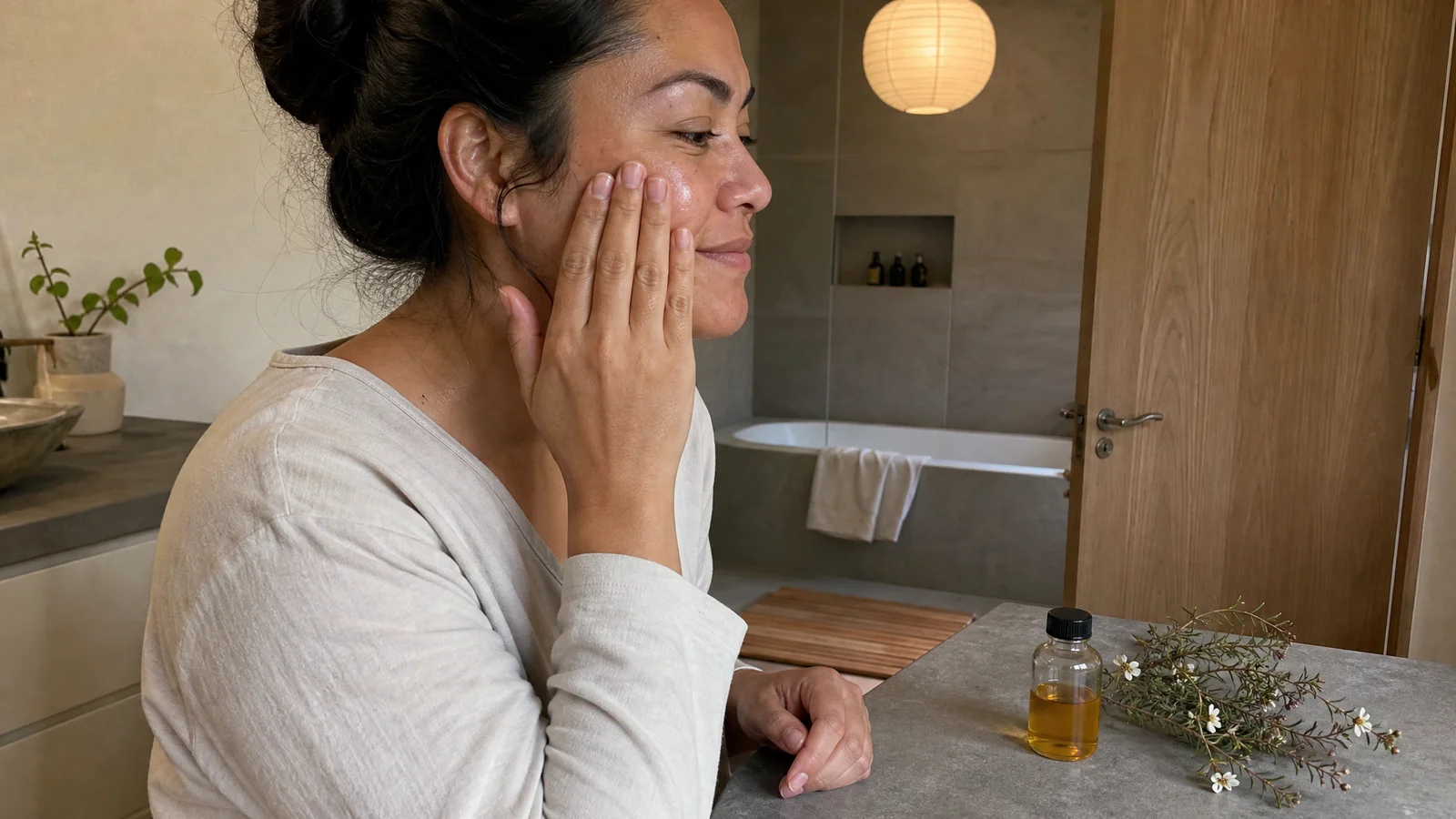
We recommend diluting to 0.5% to 2% in a carrier oil with a patch test first. With a blend, the total essential oil share is what to watch, and each partner oil has its own limits. As an example of the arithmetic, 6 drops of the stock in 30 ml of carrier makes a 1% total blend, with about 2.4 drops of manuka, or roughly 0.4% manuka. Whether that total is appropriate for lavender and cedarwood depends on their suppliers' guidance. Patch test the finished blend, and watch the spot for a few days, since reactions can be delayed. Our carrier oil article covers bases, and the sensitive skin article helps if your skin reacts easily.
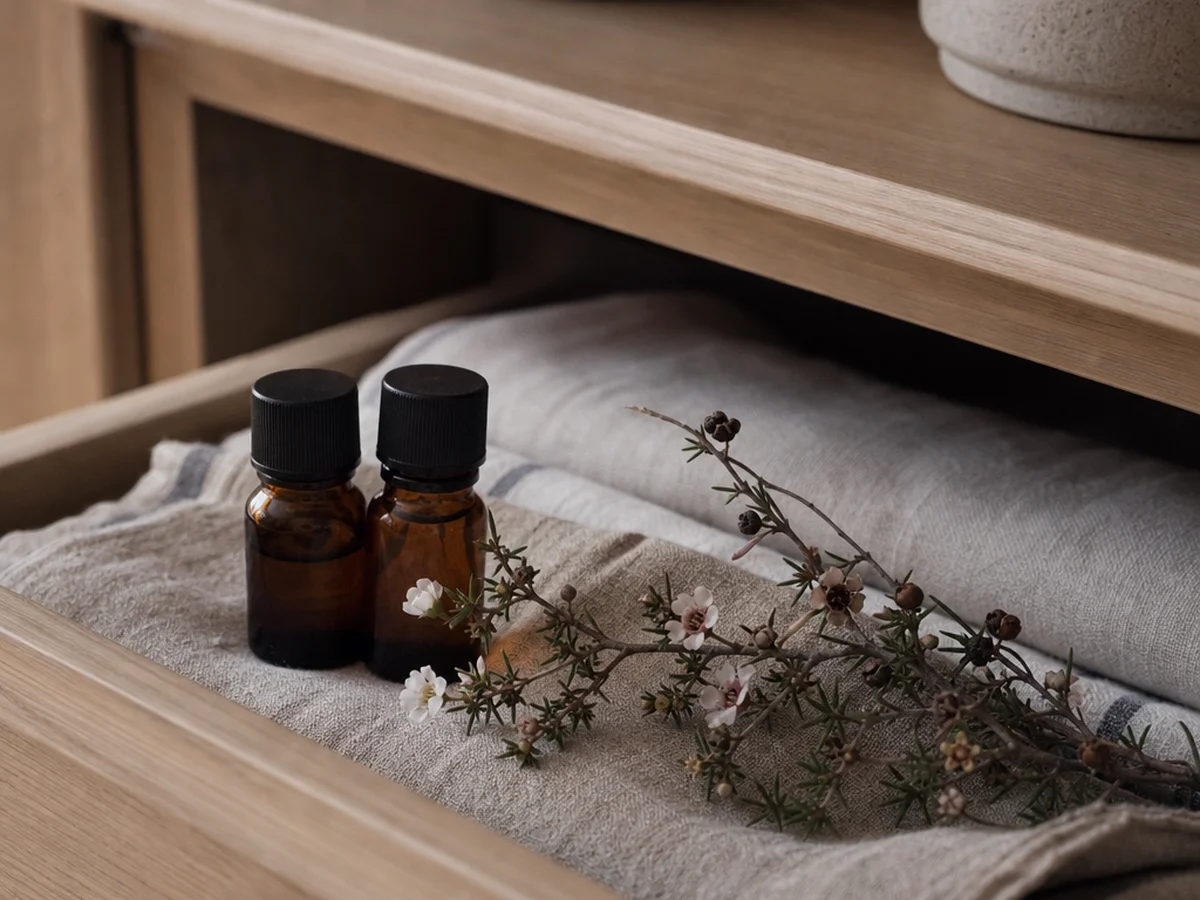
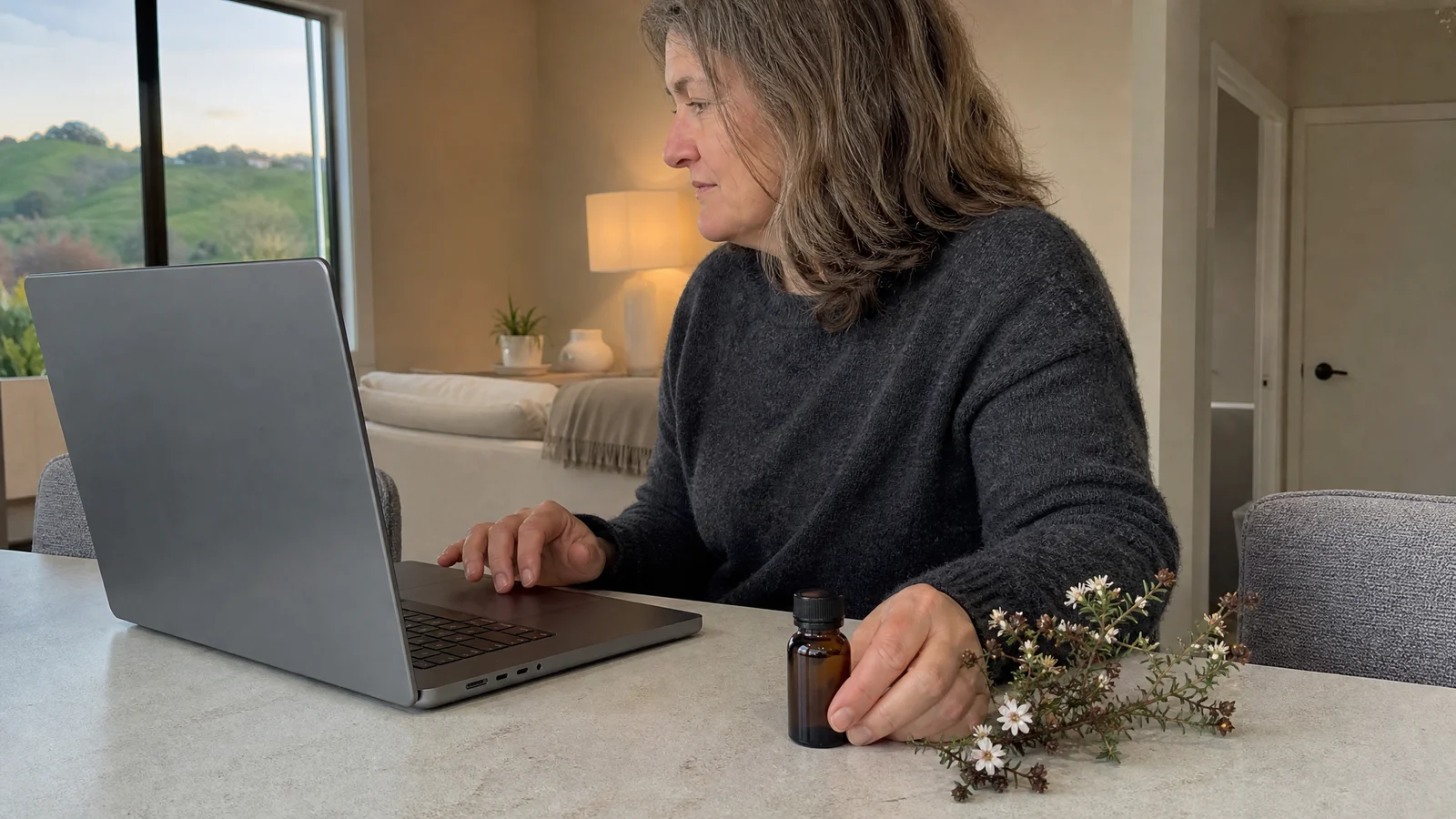
A small notebook helps. Write the date, the drop counts and one line about the smell, so that when you love a batch you can make it again. If you want to try a variation, change only one oil at a time, perhaps a drop more cedarwood for a drier finish or a drop less lavender for more honeyed depth.
Tuning by nose
We make no claim that this blend relaxes you or helps you sleep; the FDA treats claims like that as drug claims, and a scent is simply something you either enjoy or do not. Adjust one oil by one or two drops at a time, smell again after a few minutes, and write each change down. A blend you cannot reproduce is not a recipe. Our scent article explains how we describe manuka, which helps when you set a ratio by words.
Write your counts down, trust your nose, and let the first batch be a draft.
Manuka Essential Oil
Manuka Essential Oil from our own shop, in sizes from 0.5 oz to bulk.
From $18.99
Shop Now →