Manuka Balm Recipe: A 30 g Tin Made by Weight
A 30 g tin of balm needs only about three drops of manuka oil at 0.5%. That tiny number is the whole reason this recipe is worth doing by weight: with so little scent oil in the mix, the difference between a good tin and a heavy-handed one is a drop or two.
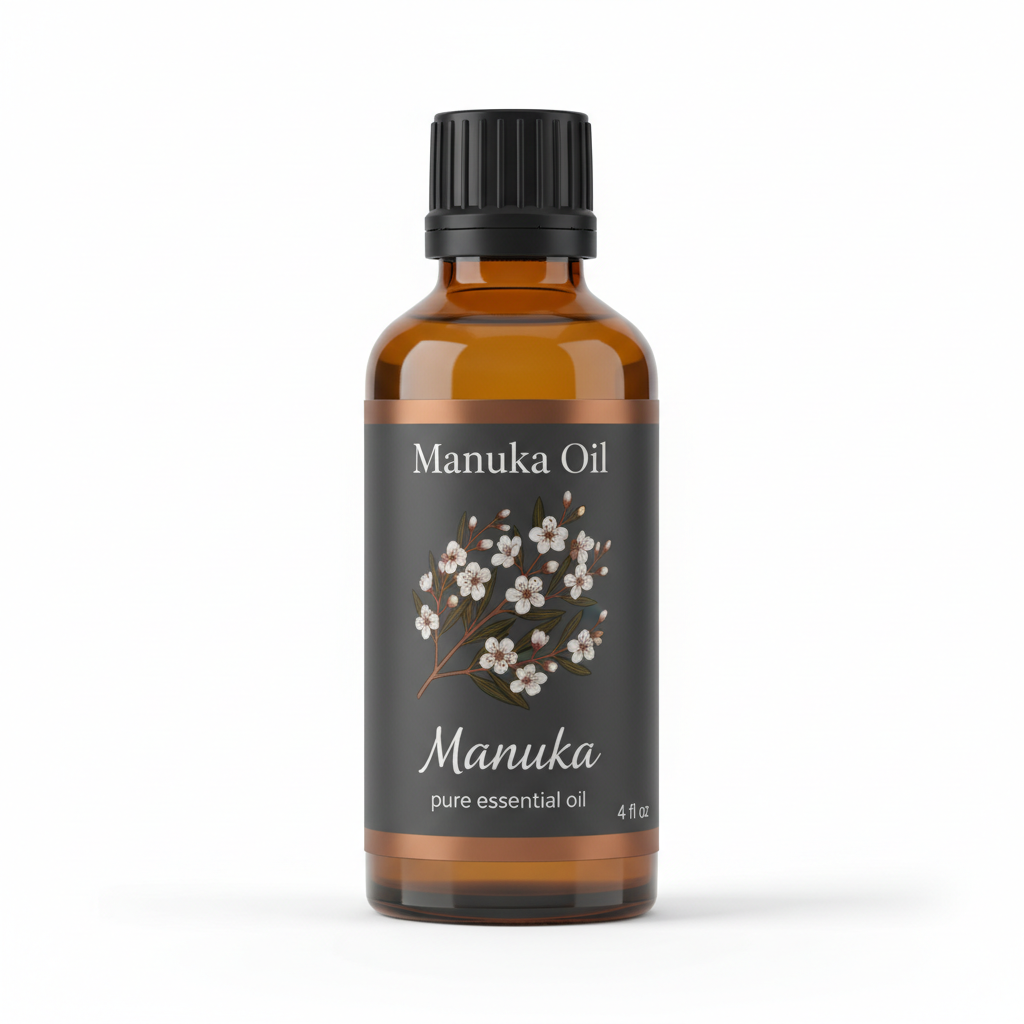
Manuka Essential Oil
Our own Manuka Essential Oil, in sizes from 0.5 oz to bulk.
From $18.99
Shop Now →Decide the load first
Our dilution guidance is 0.5% to 2% in a carrier, roughly 3 to 12 drops per ounce, with a patch test first and the low end for anything near the face. A balm is meant to stay on the skin, unlike a shampoo, so we recommend starting at 0.5% and not going above 1% for a first tin. The table converts those shares into amounts for 30 g, using 0.896 g per ml for the batch on our Certificate of Analysis and about 20 drops per ml.
| Share of a 30 g tin | Oil in grams | Oil in ml | About how many drops |
|---|---|---|---|
| 0.5% | 0.15 g | 0.17 ml | 3 |
| 1% | 0.30 g | 0.33 ml | 7 |
| 2% | 0.60 g | 0.67 ml | 13 |
At three drops, one drop is a third of the load, and droppers that deliver 15 or 25 drops per ml shift the real percentage noticeably. A scale reading to 0.01 g solves it. Without one, make a larger batch of 150 g with 0.75 g of oil at 0.5% and fill several tins. The maths scales neatly: every 10 g of finished balm carries 0.05 g of oil at 0.5%. Weigh the finished batch rather than judging by the tin, since wax and butter fill a tin to different weights.
The base
PureNature, a New Zealand supplier, suggests 12 to 17% wax for a soft balm and 17 to 22% for a harder balm or stick, and advises keeping butters and solid fats below 10% in total, because they are heat sensitive and a butter-heavy balm can turn soft in summer. Putting those ranges to work gives this working formulation for 30 g:
| Ingredient | Grams | Share | Where to find it |
|---|---|---|---|
| Beeswax | 4.50 g | 15% | Craft, soap or cosmetic supply shop |
| Shea butter | 2.40 g | 8% | Same |
| Carrier oil such as jojoba or sweet almond | 22.80 g | 76% | Grocery, pharmacy or supply shop |
| Vitamin E or another oil antioxidant | 0.15 g | 0.5% | Supply shop |
| Manuka oil | 0.15 g | 0.5% | Our shop |
That adds up to 30.00 g. The 0.5% antioxidant figure also comes from PureNature. A separate supplier Q&A makes a useful point about shelf life: in a water-free balm, the main concern is not microbes but the oxidation of the oils and waxes, which is why an antioxidant matters more than a preservative. Our carrier oil guide helps you pick an oil that keeps well.
Making it
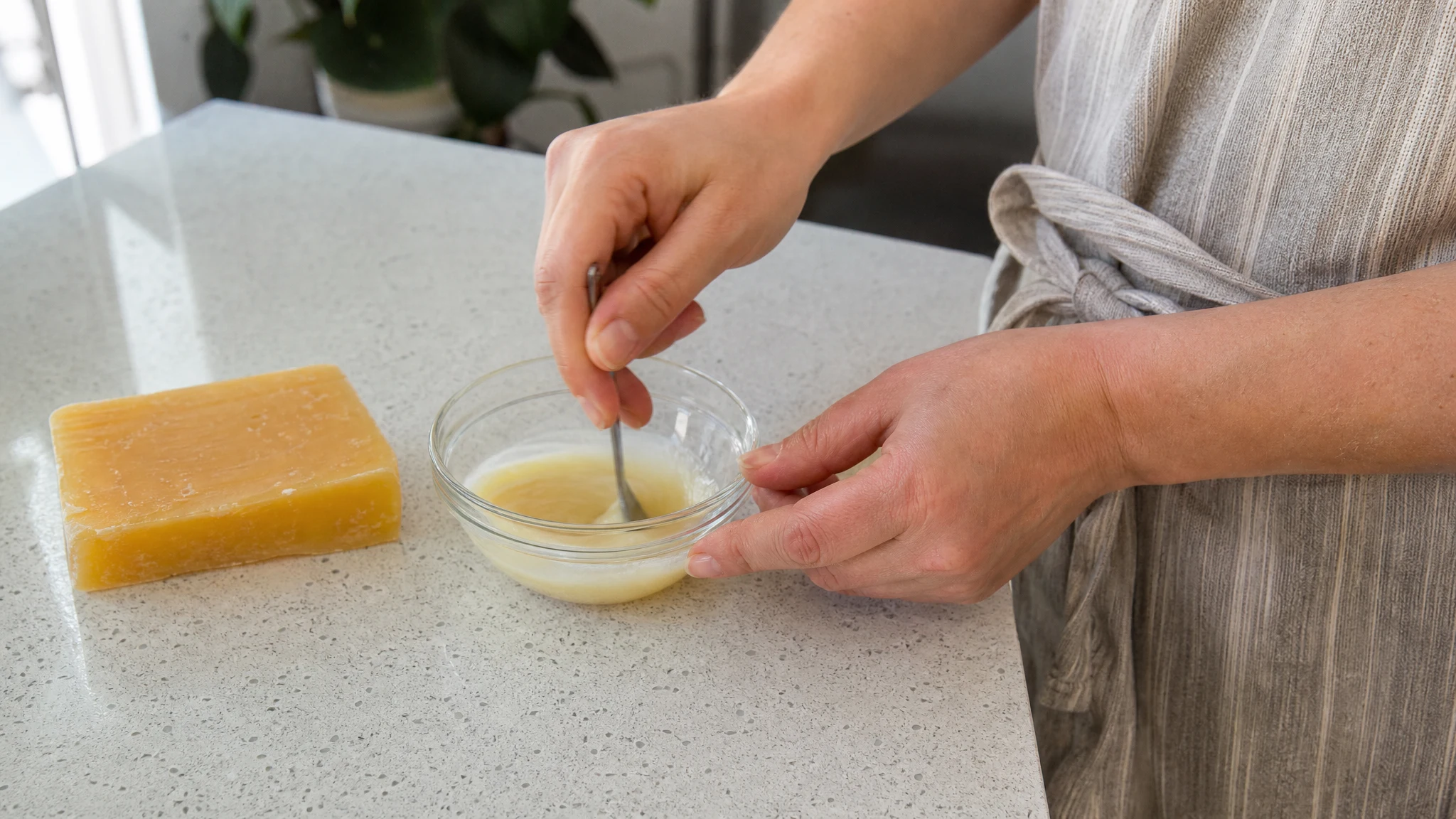
- Weigh the wax, shea and carrier oil into a heatproof jar.
- Melt them gently in a water bath until the wax is fully liquid. A butter-rich balm does not need more heat than that.
- Take the jar off the heat, then stir in the antioxidant and the manuka oil. Essential oils are volatile, so adding them last keeps more of the aroma.
- Pour while liquid into a clean, dry tin. PureNature recommends a dry, sterilised container and letting the balm cool completely before putting on the lid, since covering it warm can trap condensation.
- Leave it undisturbed until it sets, then lid and label with the date.
If the balm is too soft, nudge the wax toward 17%. If it is too firm, drop toward 12%. A balm with no water in it is simple on one count, as PureNature puts it: oils will not support microbial growth. Add any water-based ingredient and that no longer applies, so keep this one water-free.
What the finished tin feels like
Once the balm has set, press a fingertip into it and notice how it behaves: a good balm should soften at skin temperature and spread without dragging. Warm a small amount between your fingers before you smooth it on, and you will notice the scent open up, deep, sweet and a little spicy. Because we use so little oil, the aroma is soft rather than loud, which is how we like it.
Shelf life and sensitivity
Our 2 to 3 years describes the oil in its tightly capped bottle kept cool and dark, not a finished balm. Date your tin and discard it if it smells off. As for skin, DermNet describes essential oil contact allergy as delayed, appearing 24 to 72 hours after exposure, so rub a little of the finished balm on a small area and wait three days before you rely on it. The steps for what to do after a reaction are in our side effects guide. Keep the balm away from your eyes, and we would not use it as a lip balm, because our oil is not for internal use.
A scented balm, and that is enough
The phrase "healing salve" changes a cosmetic into a different kind of product. FDA explains that intended use decides it, with the example that a massage oil intended simply to lubricate the skin and impart fragrance is a cosmetic, while one meant to relieve muscle pain is a drug. The same logic applies here. This balm is for fragrance and skin feel on intact skin. If you want a salve for a cut, rash or sore, that question belongs with a pharmacist or doctor.
A small note on tins: choose a metal or glass tin with a snug lid and wipe the rim after pouring, so the lid closes cleanly. Keep the tin in a drawer, not a hot car or a sunny window, because a balm that has melted and re-set can feel grainy.
For other leave-on projects, see the facial oil and the shea hair mask.
Manuka Essential Oil
Manuka Essential Oil from our own shop, in sizes from 0.5 oz to bulk.
From $18.99
Shop Now →Sources & Further Reading
- PureNature NZ, Balms: A Beginner's Guide. purenature.co.nz/blogs/blog/balms-a-beginners-guide
- MySkinRecipes, Antioxidants for Water-Free Lip Balm Shelf Life. myskinrecipes.com/expert/qa
- DermNet, Allergic contact dermatitis to essential oils. dermnetnz.org/topics/allergic-contact-dermatitis-to-essential-oils
- FDA, Is It a Cosmetic, a Drug, or Both? (Or Is It Soap?). fda.gov/cosmetics