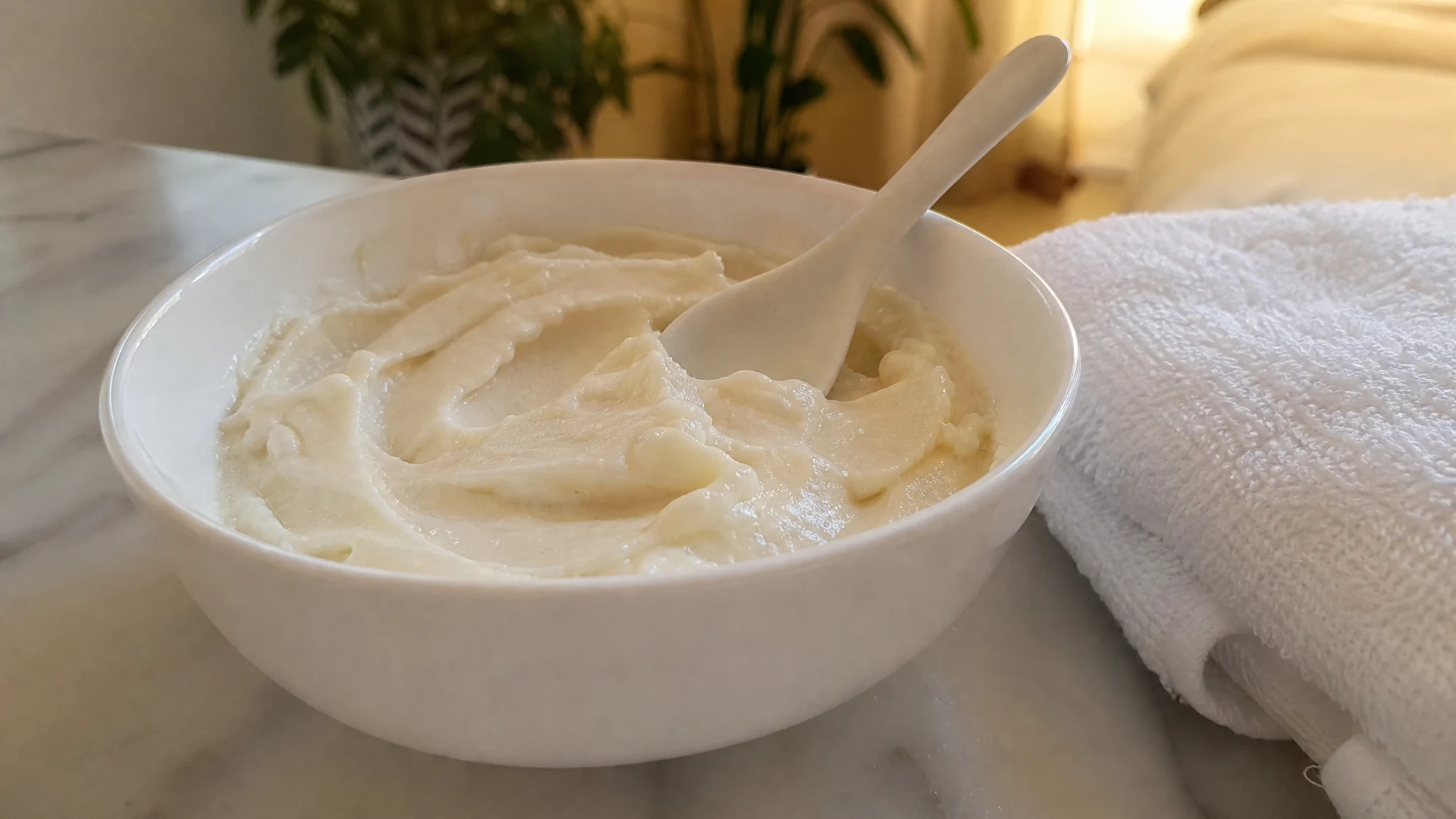
Manuka Shea Butter Hair Mask: A 60 g Recipe by Weight
A shea butter hair mask is about as simple as a recipe gets: a soft butter, a little liquid oil and a few drops of something that smells good. Manuka oil, with its warm, honeyed aroma, is a lovely candidate for that last part. Here is how to work out the quantities for a 60 g jar, and what to expect from the result.
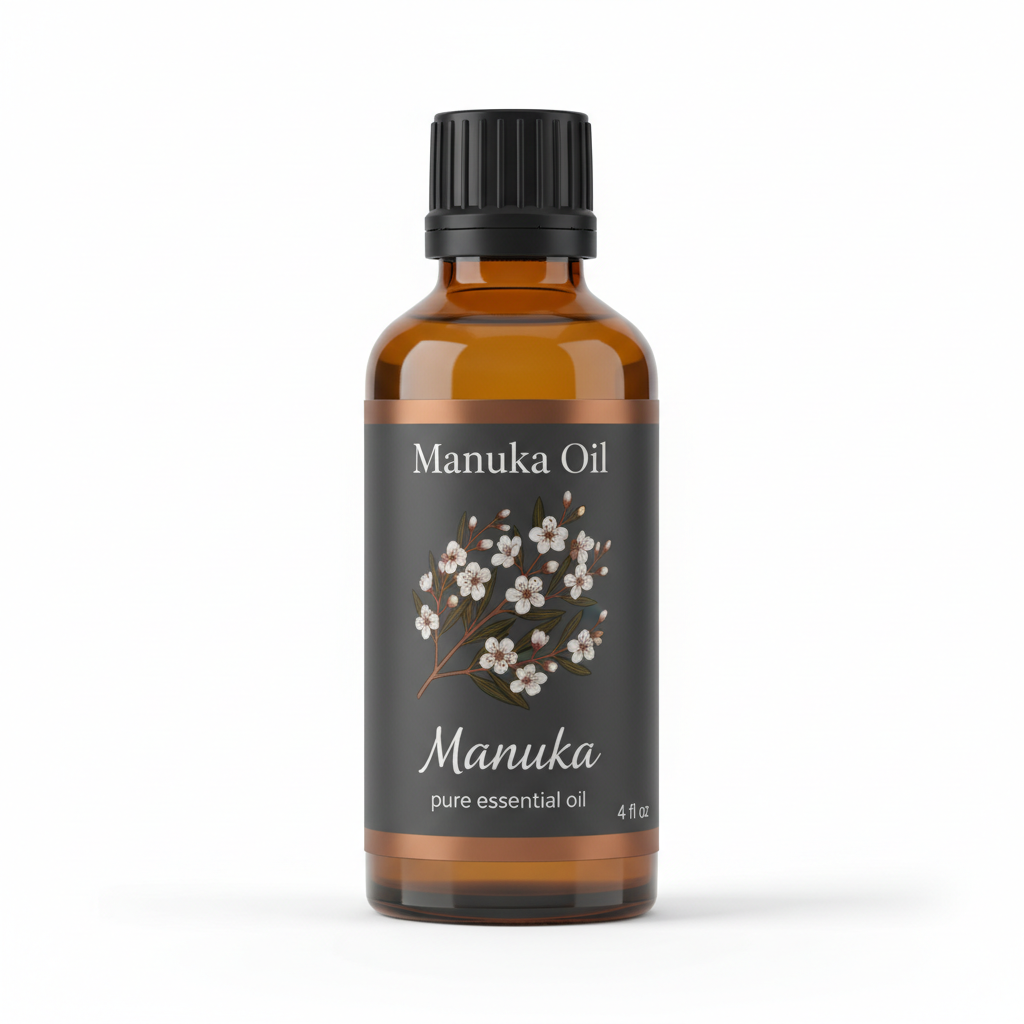
Manuka Essential Oil
Our own Manuka Essential Oil, in sizes from 0.5 oz to bulk.
From $18.99
Shop Now →What the research says about oils and hair
The best known experiment on oils and hair compared three oils. In a 2003 paper, coconut oil was the only one of coconut, sunflower and mineral oil that reduced protein loss from both undamaged and damaged hair, whether it was used before or after washing. The authors point to coconut oil's main fatty acid, lauric acid, a small straight chain they say can get into the hair fibre. Mineral oil, a hydrocarbon, has no affinity for hair protein, and sunflower oil has bulkier chains.
The useful lesson is that "oil on hair" is not one thing, and a result for one oil does not carry over to another. The study did not test shea butter or an essential oil, so we read a shea mask as a soft, rich coating that leaves hair feeling smooth, which is reasoning from the above rather than a measured result. If you want to follow the one oil with a published result, coconut oil is a grocery shelf item, though we do not sell it.
What manuka adds
Scent, and a distinctive one. We describe the aroma as earthy, honeyed and warm with a slightly spicy edge, while the Certificate of Analysis we publish for one batch records "Sweet, Honey, Herbal". A drop or two goes a long way, so a mask needs very little. We make no hair growth or dandruff claims for our oil, and FDA treats claims like those as drug claims, which is why our posts on hair growth and dandruff only report what has been studied.
A word on the shea
Shea butter is not one uniform ingredient. A 2014 review found large variation in the reported composition from study to study and called for better work on quality and shelf life. In practice that means two tubs both labelled shea butter can behave differently. Buy a small tub from a craft or cosmetic supplier with a date on it, smell it, and use it while it is fresh, because a stale butter will not be improved by scent. If you have a tree nut allergy, ask an allergist before using shea.
The arithmetic for a 60 g jar
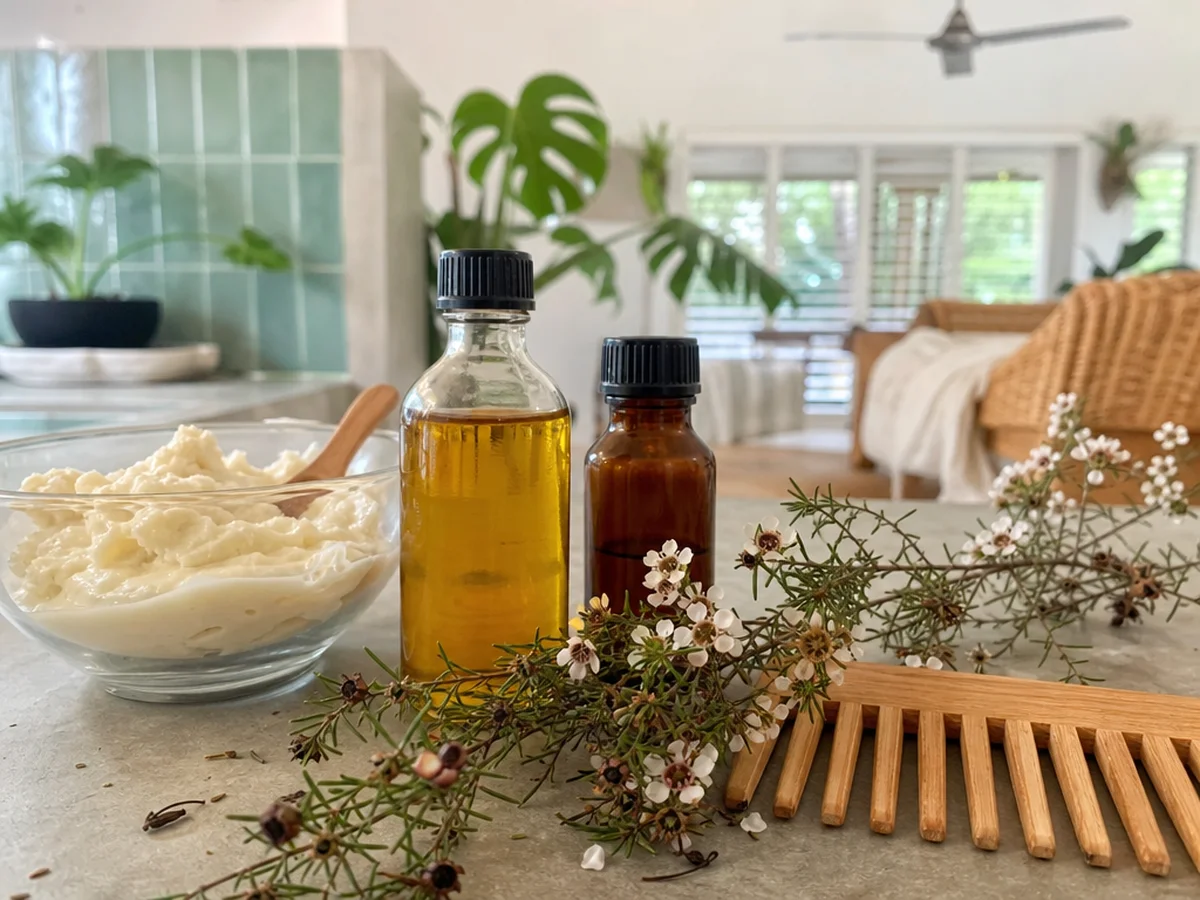
This formulation is worked out by weight, as a starting point:
| Part | Amount | Role |
|---|---|---|
| Shea butter | 40 g | The body of the mask |
| Liquid carrier oil | 20 g | Softens the butter so it spreads; see our carrier oil guide |
| Manuka oil at 0.5% | 0.3 g, about 7 drops | Where we would begin |
| Manuka oil at 1% | 0.6 g, about 13 drops | A step up once you know your skin is happy |
| Manuka oil at 2% | 1.2 g, about 27 drops | Top of our range; we would not start here |
The drop counts use the relative density of 0.896 from our published certificate and the rough convention of 20 drops per millilitre, so 0.3 g is about 0.33 ml, or seven drops. Our dilution guidance is 0.5% to 2% with a patch test first, and we suggest starting at the low end. A mask is rinsed out, so exposure is lower than for a leave-on oil, but the scalp is skin and the contact lasts as long as you leave it on. It is reasonable to keep the first sessions short.
Making it
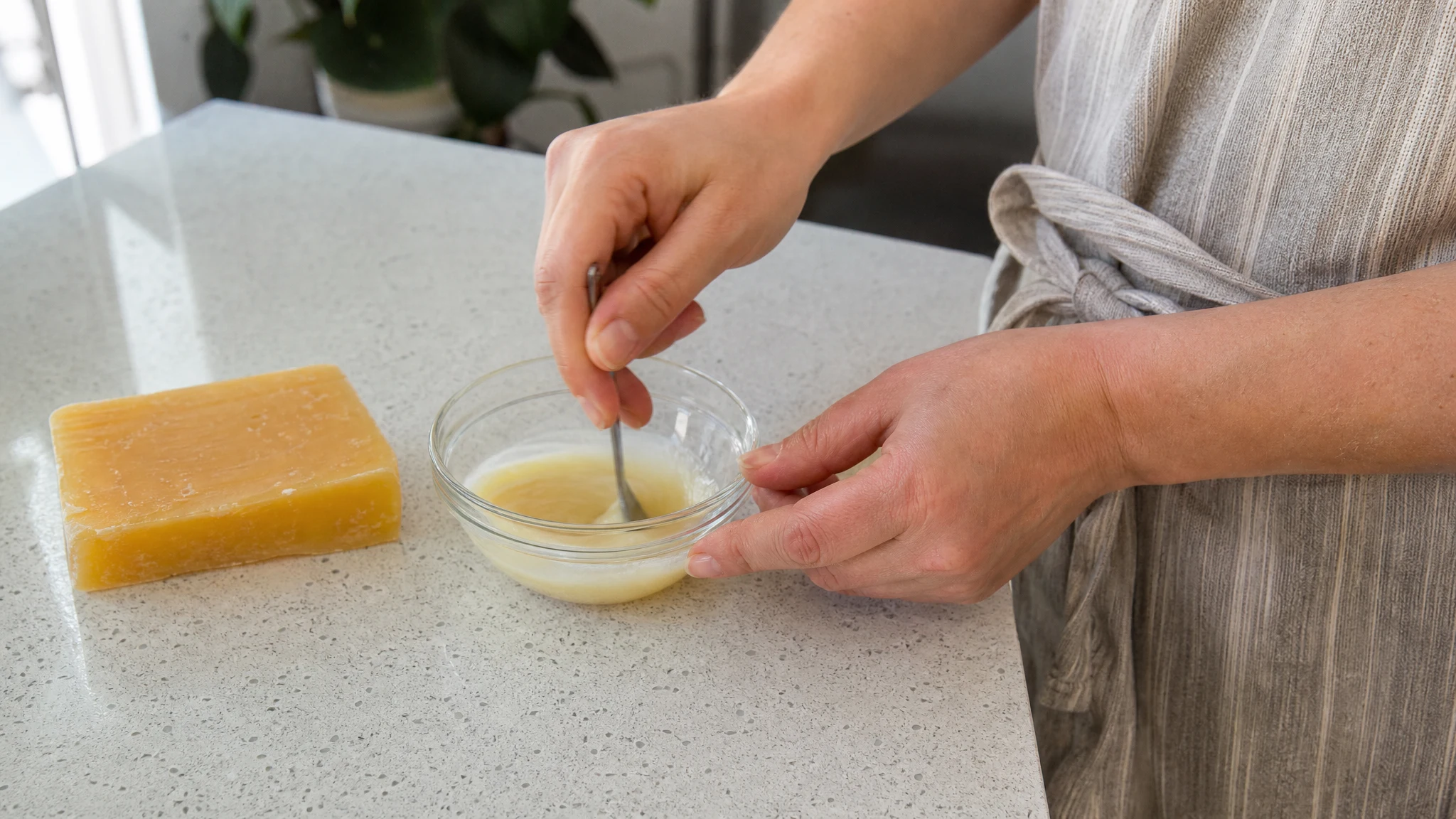
- Melt the shea butter gently in a heatproof bowl over hot water, then stir in the liquid oil.
- Let the mixture cool until it just starts to set, then add the manuka oil. Heat drives off scent, so adding it late keeps more of it.
- Stir well, spoon into a clean, dry jar, and label it with the date and the percentage.
- Patch test a dab on the inner forearm and wait three days. DermNet describes essential oil allergy as a delayed reaction appearing roughly 24 to 72 hours after exposure.
- Work it through the lengths and ends first, and keep it off the scalp and away from eyes and ears the first time.
- Wash out with shampoo. A butter mask will not rinse out with water alone, which follows from how fats and water behave, so expect to shampoo twice if it is thick.
Fine or oily hair can go limp under a heavy mask, and using it too often can leave a film. Water from damp fingers can spoil the jar, so use a clean spoon and make small batches. If your scalp itches or turns red, wash it off and read our side effects guide. If you would rather scent something you already use, the shampoo post works that out in drops and grams.
Making it your own
Once the base is working for you, small changes are easy to keep track of. Change one thing at a time, whether that is the percentage of manuka, the liquid oil or the amount of shea, and write it on the jar. If the mix feels too stiff in a cool room, a touch more liquid oil loosens it; if it feels greasy, a touch more shea firms it up. Small adjustments, noted down, add up to a mask that suits your hair.
Take a moment to smell the finished jar as well. The honeyed warmth of the manuka against the soft butter is the whole reason for the recipe, and if you do not love it at 0.5% you will not love it more at 2%.
Who should skip it
Anyone with a rash, redness with flaking or noticeable thinning on the scalp should see a dermatologist before trying a scented mask. If you are pregnant, ask an OB/GYN or midwife first. We keep our oil away from children, and this is not a mask for a child. And if you have reacted to fragranced products before, leaving the manuka out and using just shea and a carrier oil is a perfectly good version of this recipe.
Make a small jar, smell it, and let your hair tell you whether it likes it.
Manuka Essential Oil
Manuka Essential Oil from our own shop, in sizes from 0.5 oz to bulk.
From $18.99
Shop Now →Sources & Further Reading
- Rele AS, Mohile RB, 2003. Effect of mineral oil, sunflower oil, and coconut oil on prevention of hair damage. J Cosmet Sci. PMID 12715094
- Honfo FG, et al., 2014. Nutritional composition of shea products and chemical properties of shea butter: a review. Crit Rev Food Sci Nutr. PMID 24261539
- DermNet, Allergic contact dermatitis to essential oils. dermnetnz.org/topics/allergic-contact-dermatitis-to-essential-oils
- FDA, Is It a Cosmetic, a Drug, or Both? (Or Is It Soap?). fda.gov/cosmetics