Manuka Oil in a Winter Skin Routine: Where It Fits
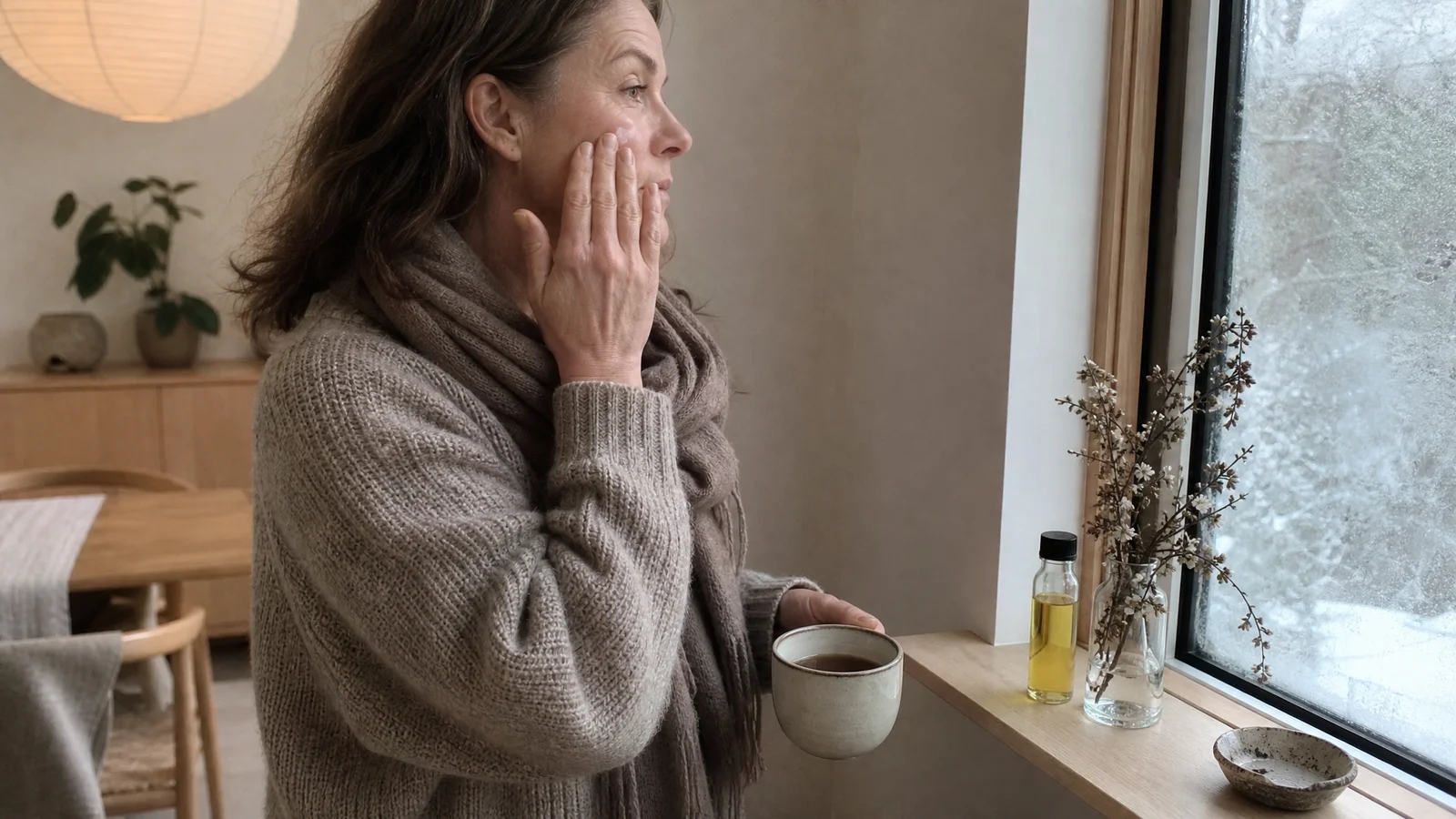
When the heating goes on and the air outside turns cold, skin tends to complain, and the instinct is to reach for something special. Here is our honest take as an oil shop: the hardworking part of a winter routine is a plain emollient and a few small habit changes, and manuka oil is a pleasant aromatic extra, not the fix.
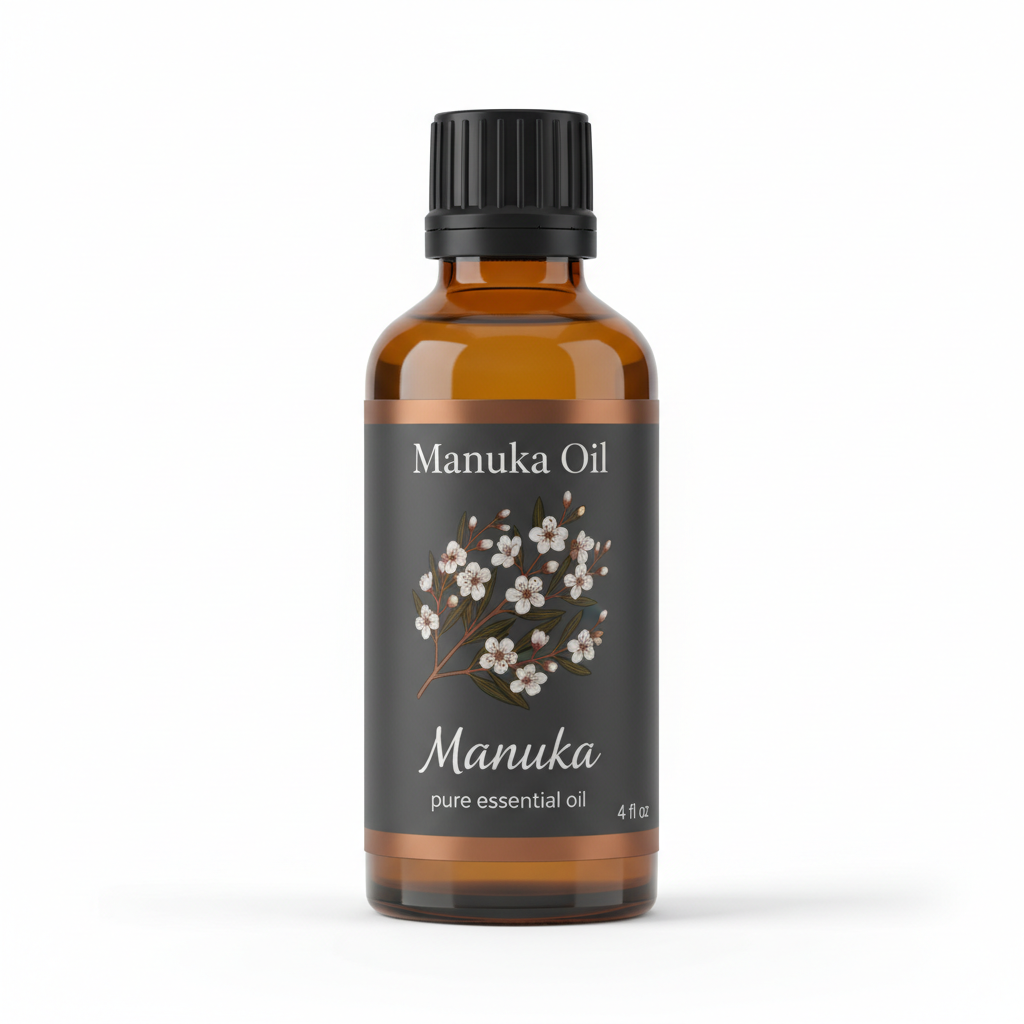
Manuka Essential Oil
Our own Manuka Essential Oil, in sizes from 0.5 oz to bulk.
From $18.99
Shop Now →Start with what is drying your skin
DermNet's dry skin page, written by dermatologist Amanda Oakley, lists the usual culprits: cool, windy weather, air conditioning, direct heat from a fire or fan heater, too much bathing, and contact with soap, detergents and solvents. It calls moisturisers and emollients the mainstay, applied liberally and often, especially after bathing, and recommends lukewarm water and less frequent bathing.
Reading that list, the practical lesson is that you can usually remove a couple of causes for free. Turn the heater away from your legs, shorten the shower, swap the foaming hand soap you use ten times a day. Then use an emollient on damp skin soon after washing. We do not sell creams, lotions or carrier oils, so a pharmacy or supply shop is where that base comes from. Skin that is cracked, weeping or very itchy is a question for a dermatologist or your doctor, and our articles on eczema and sensitive skin explain why we keep manuka out of that conversation.
What manuka oil brings to a winter routine
Aroma, and we think it is a lovely one. We describe it as earthy, honeyed and warm with a slightly spicy edge, which suits the season. The certificate we publish for one batch records the smell as "Sweet, Honey, Herbal". We do not claim it moisturises or repairs skin, and the research on manuka oil is largely laboratory work: the 2020 review of the literature notes that clinical trials are lacking and that data on dosing and toxicology are limited.
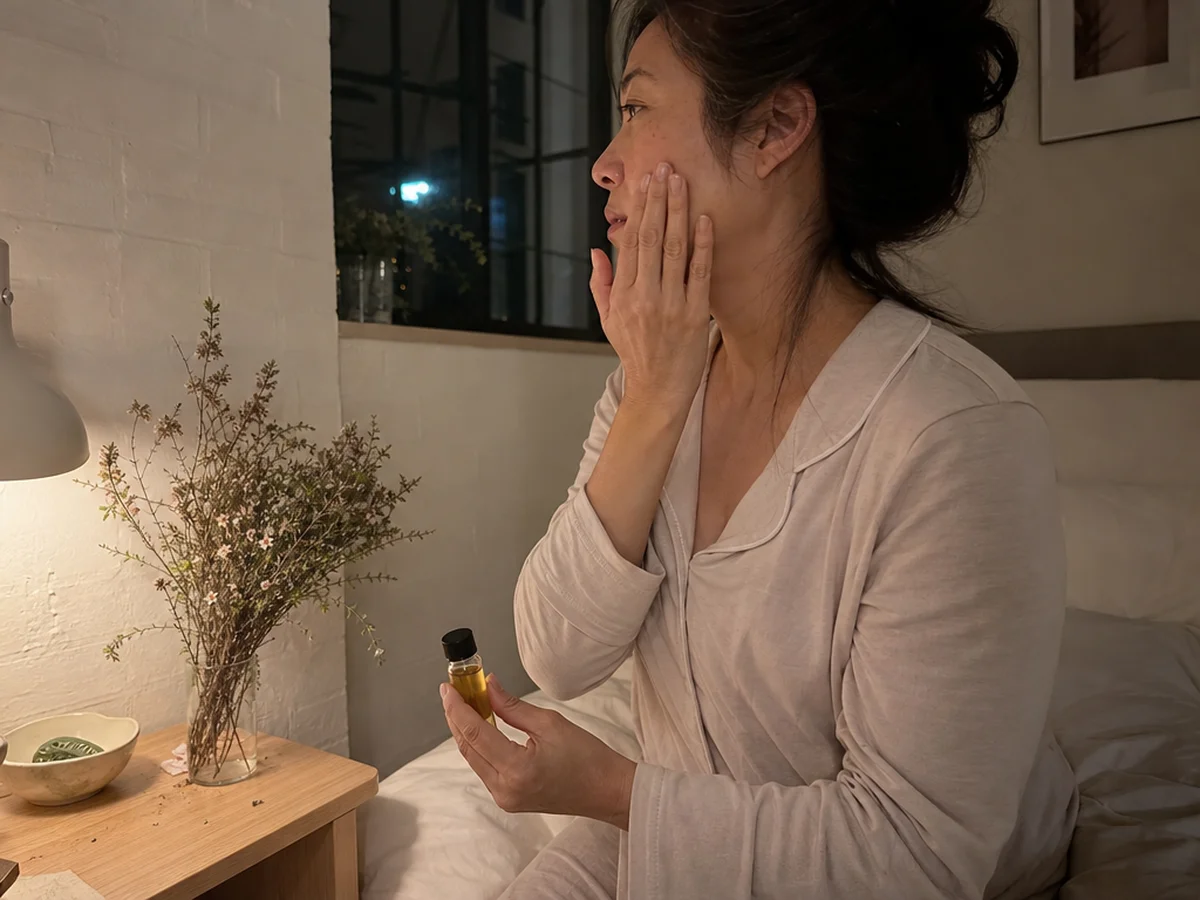
That is a good reason to keep amounts small. Allergic contact dermatitis to essential oils, DermNet explains, is a delayed reaction that generally appears 24 to 72 hours after exposure, neat oils are advised against, and people who react to one oil often react to others. So if your skin is already unsettled, adding a new fragrant ingredient makes any redness harder to read. You will not know whether it was the cold, the soap, the heater or the oil.
If you decide to add it
Our guidance is to dilute manuka oil to 0.5% to 2% in a carrier oil and patch test first, starting at the low end for anything near the face. We offer that as our recommendation rather than a safety clearance: Tisserand states that undiluted essential oils should not be applied to the skin and that dilution and risk are directly linked, and we have no IFRA figure for manuka to quote. At about 20 drops to the millilitre, which is a rough convention, the sums look like this:
| Carrier oil | 0.5% | 1% | 2% |
|---|---|---|---|
| 15 ml | 1.5 drops | 3 drops | 6 drops |
| 30 ml (1 fl oz) | 3 drops | 6 drops | 12 drops |
| 50 ml | 5 drops | 10 drops | 20 drops |
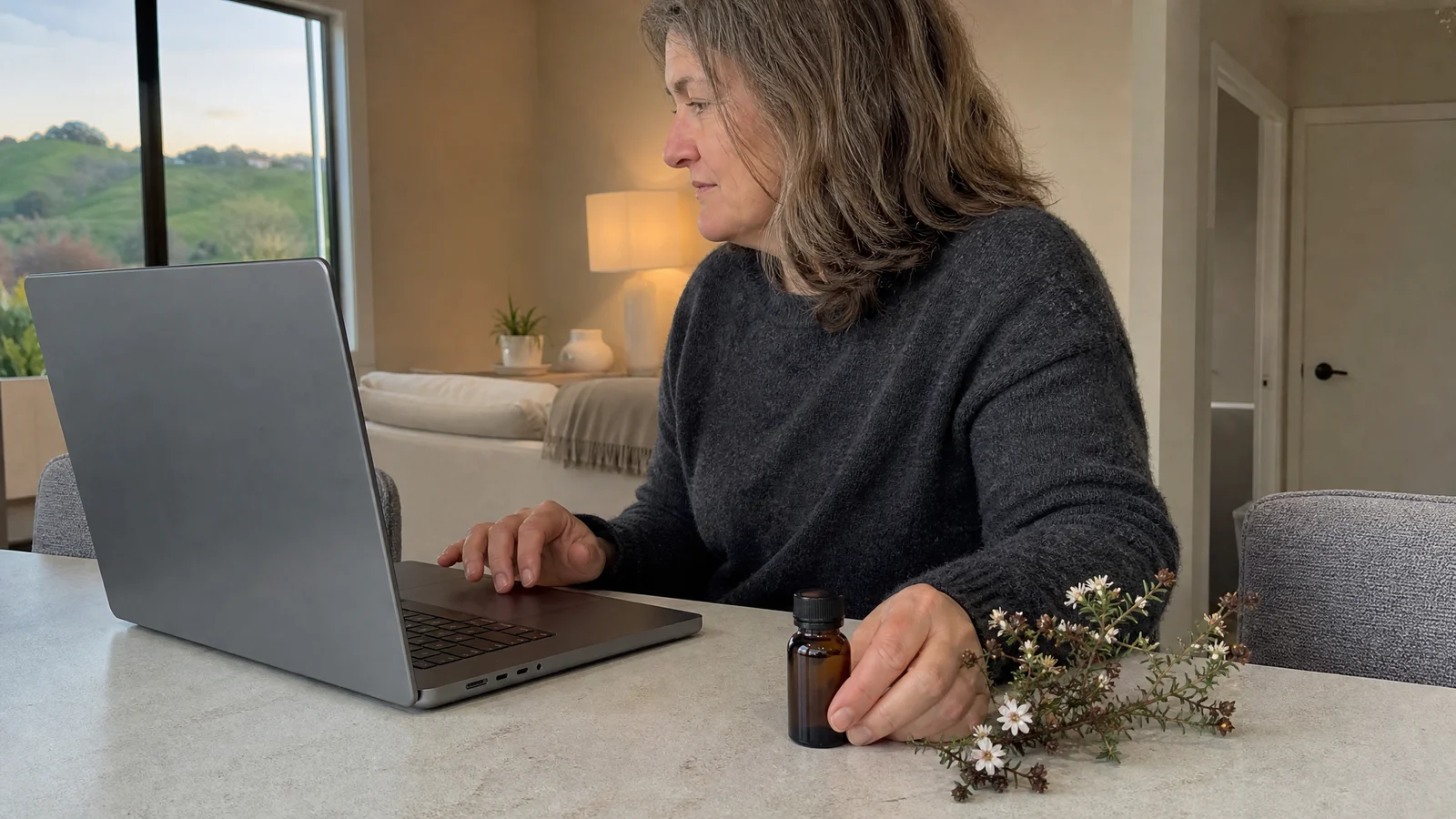
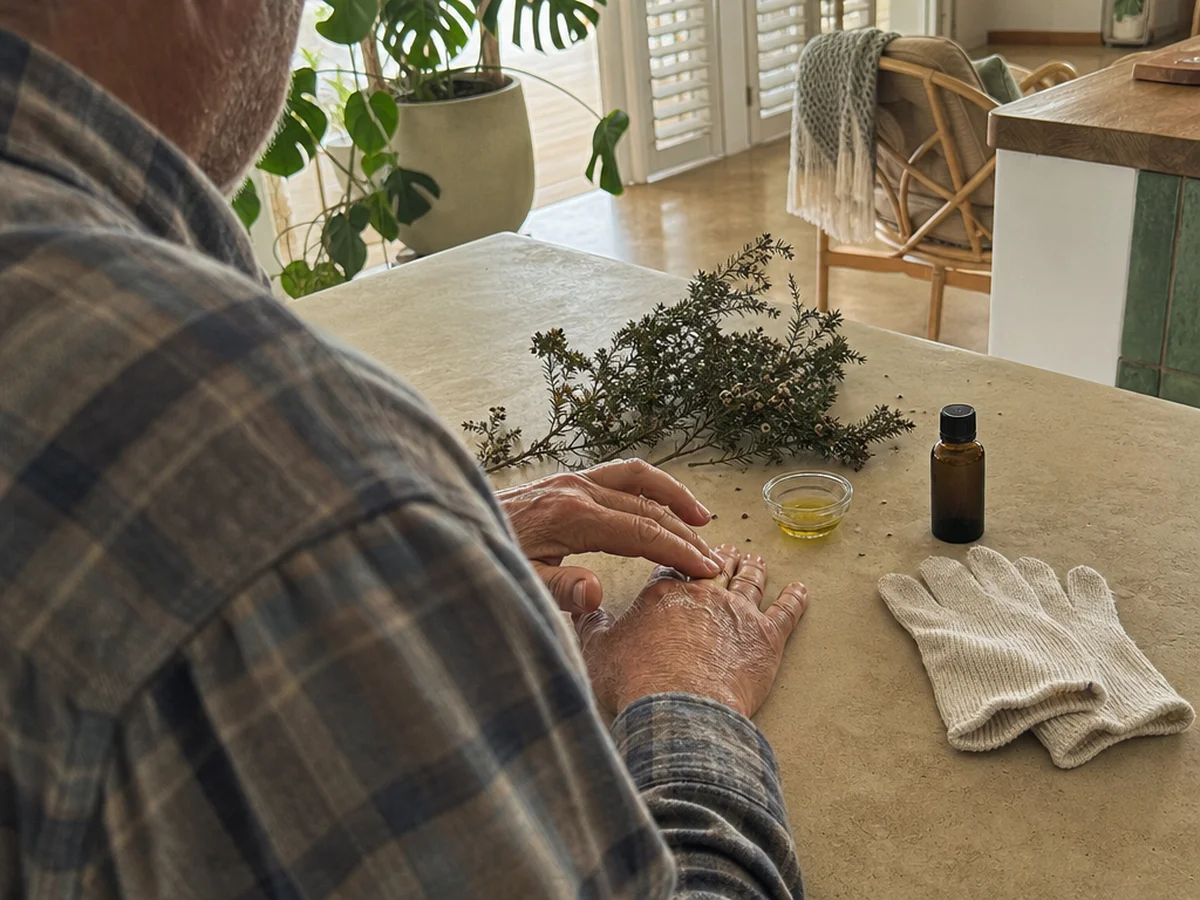
Our suggestion for winter is the 0.5% column, tried first on a small patch of forearm. DermNet describes clinic patch tests as removed at 48 hours and read again 48 to 96 hours after that, so a quick dab and a few hours is not long enough to catch a delayed reaction. Wait for a clear result before it goes anywhere near your face, and think twice about hands you wash constantly, since cracked skin there deserves a clinician rather than a fragrance.
If you notice redness, itching, swelling or blistering, particularly a day or two later, stop and ask a pharmacist or dermatologist. Our side effects article covers reporting a reaction. Pregnant? Tisserand advises seeing a doctor or suitable practitioner before using essential oils. For children, ask a pediatrician. Keep the oil away from eyes, children and pets, and never swallow it.
Small comforts that cost nothing
Not everything in a winter routine needs to go on your skin. Keep a pair of cotton gloves by the door for the cold walk to the car. Choose soft socks, and give your boots a day off between wears. Small habits like these change how the season feels, and they leave plenty of room for something pleasant on the side.
The easiest way to enjoy it in winter
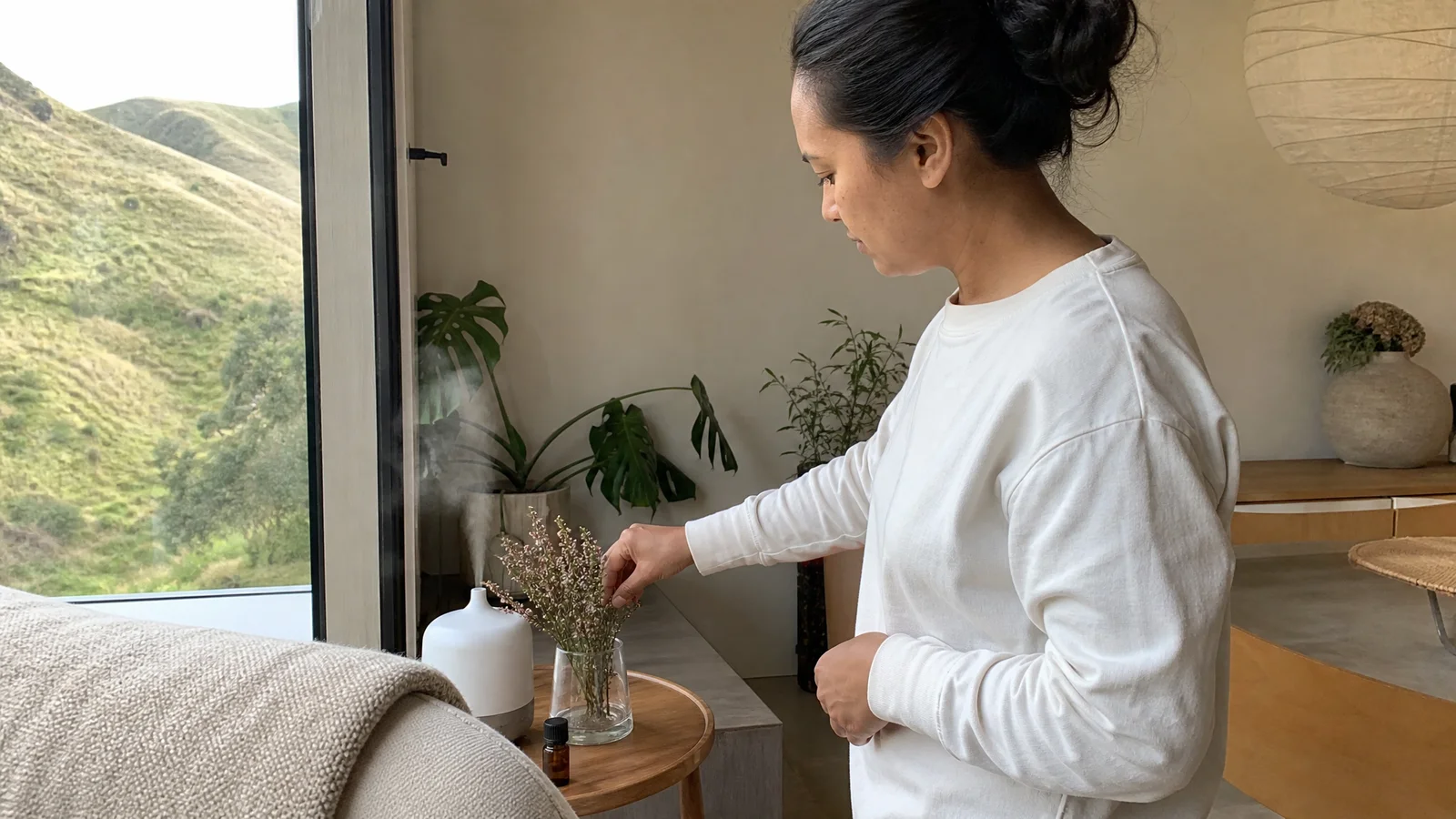
Winter air indoors is dry and closed, and aroma is where manuka shines, so a diffuser keeps it off your skin entirely. Tisserand suggests running it 30 to 60 minutes on and 30 to 60 minutes off with some fresh air, and DermNet notes airborne contact dermatitis from fragrance diffusers, so even this is worth doing in moderation. Our pairing guide suggests what to blend it with, and cedarwood and sweet orange make particularly cosy winter partners.
When you do light the diffuser, keep the blend simple. A couple of drops of manuka with cedarwood makes a warm, woody room, and a touch of sweet orange brightens it. Open the bottle first and take a breath, and you will know quickly whether it is the right scent for the evening.
So: answer the cold with a cooler shower and a good emollient, and let manuka be the warm, honeyed note in the room once your skin has stopped complaining.
Manuka Essential Oil
Manuka Essential Oil from our own shop, in sizes from 0.5 oz to bulk.
From $18.99
Shop Now →Sources & Further Reading
- Oakley A. Dry Skin (Xeroderma): Causes, Treatments, and More - DermNet. dermnetnz.org/topics/dry-skin
- Ismail FF, Nixon RL. Allergic contact dermatitis to essential oils. DermNet. dermnetnz.org
- Mathew C et al., 2020. Mānuka Oil-A Review of Antimicrobial and Other Medicinal Properties. PMC7694078
- Tisserand Institute. How to Use Essential Oils Safely. tisserandinstitute.org/safety/safety-guidelines